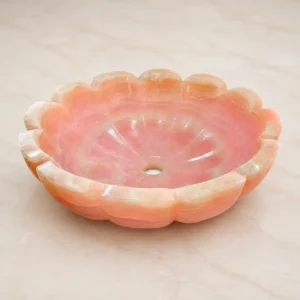
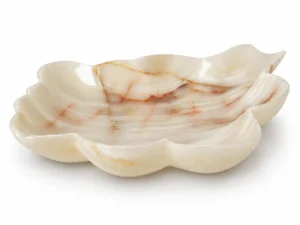
Multi Green Onyx Sink & Wash Basin hand-polished natural onyx with striking green amber bands. Use as décor or a vessel sink. Direct from Pakistan.
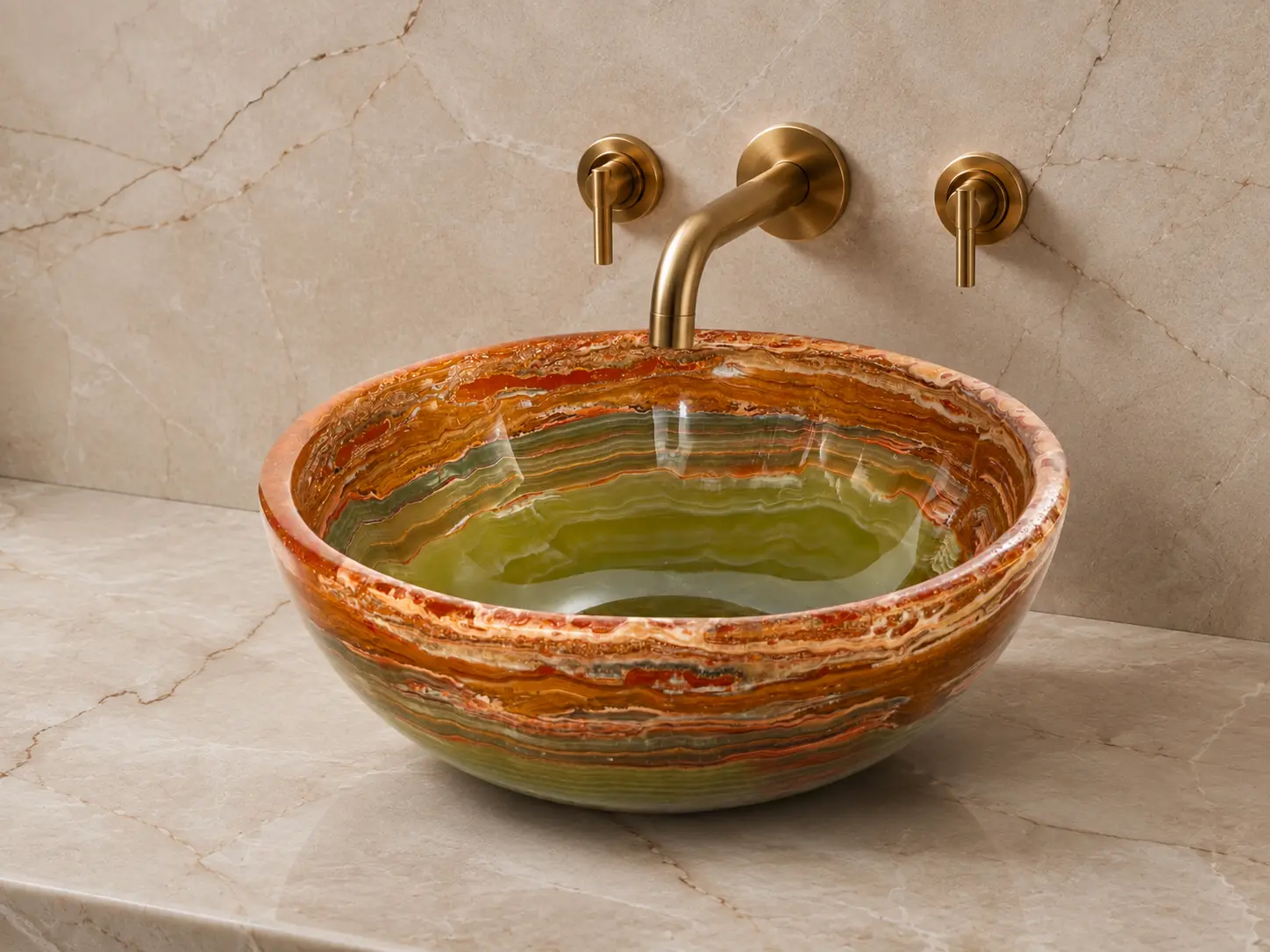
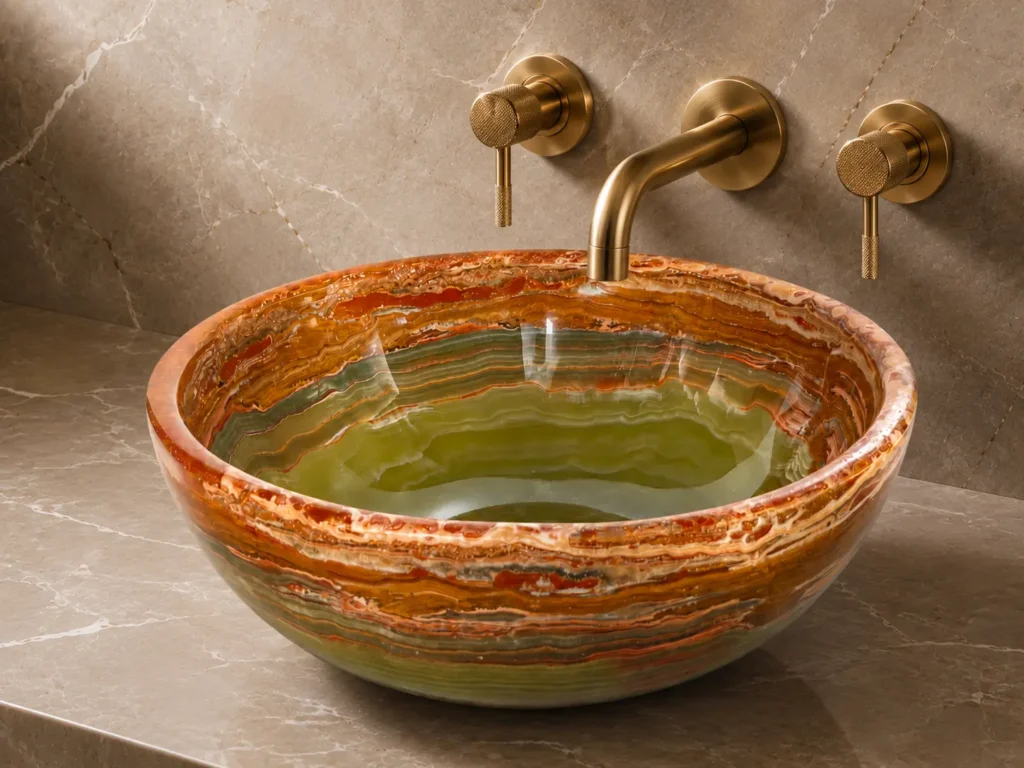
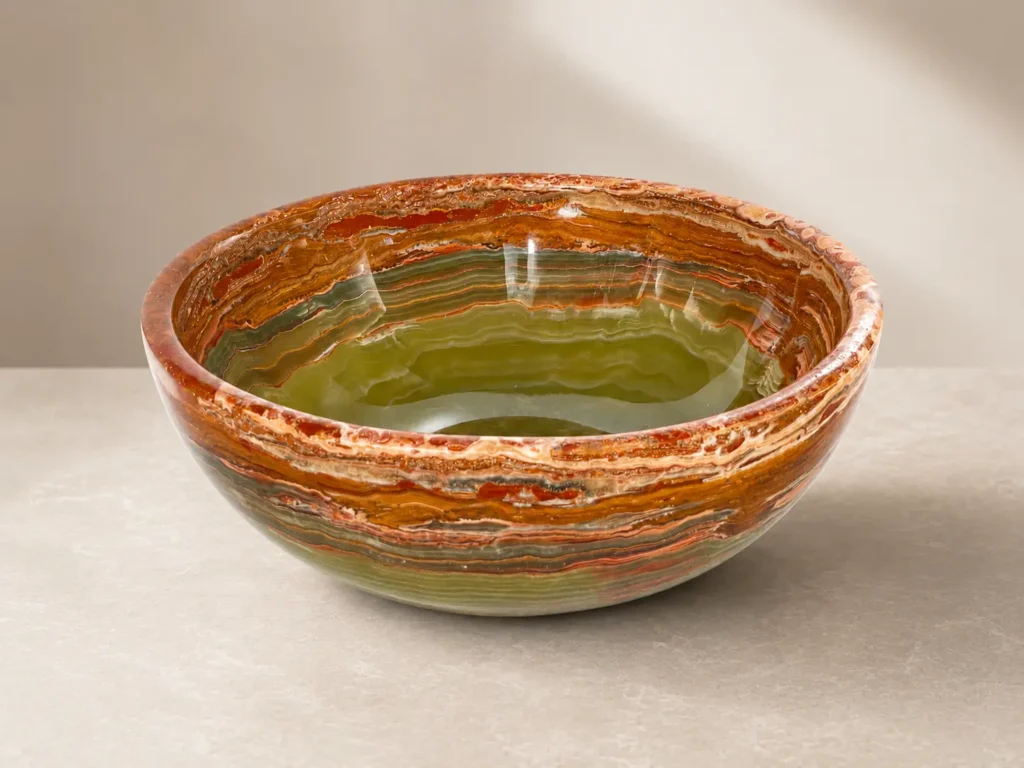
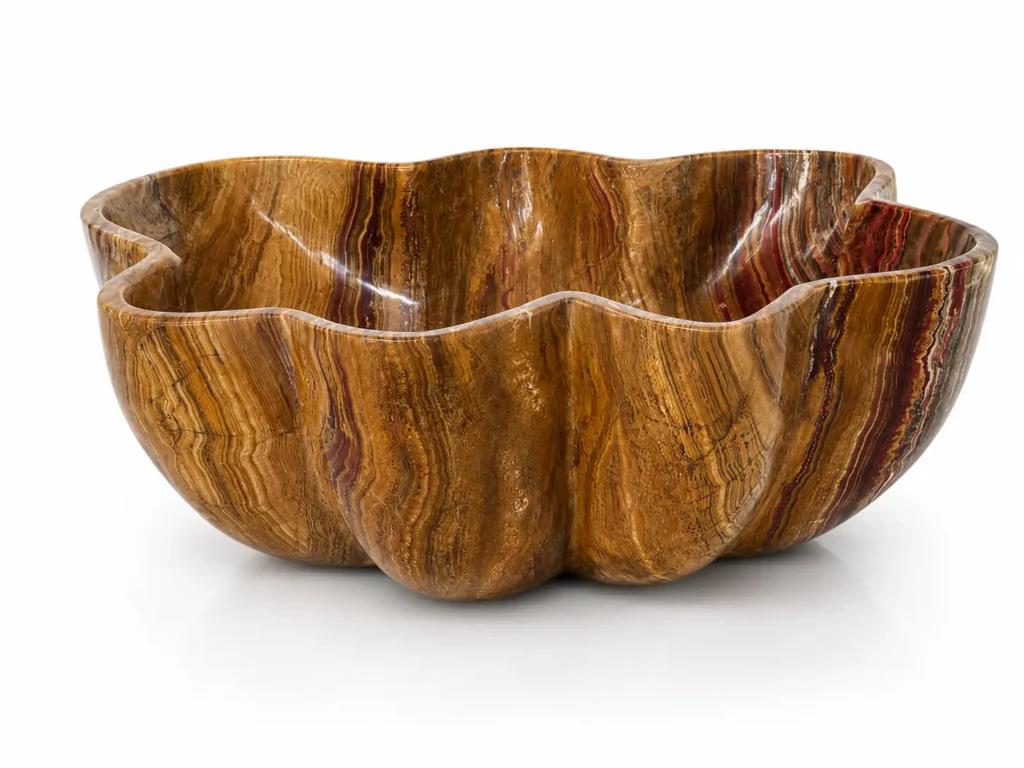
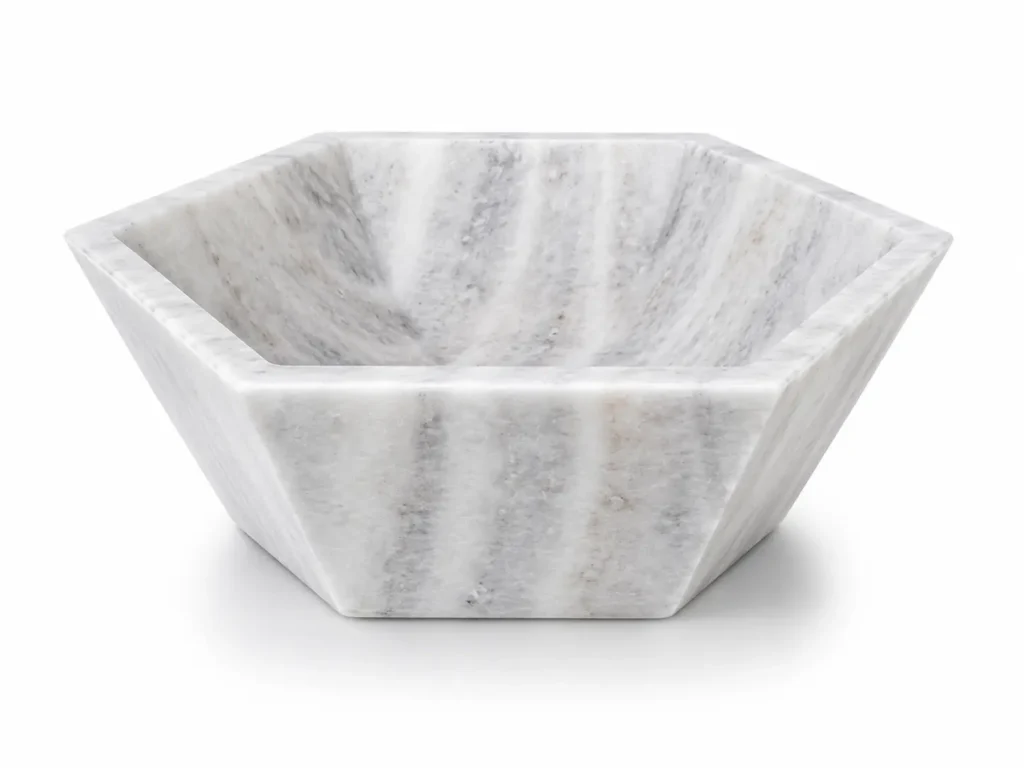
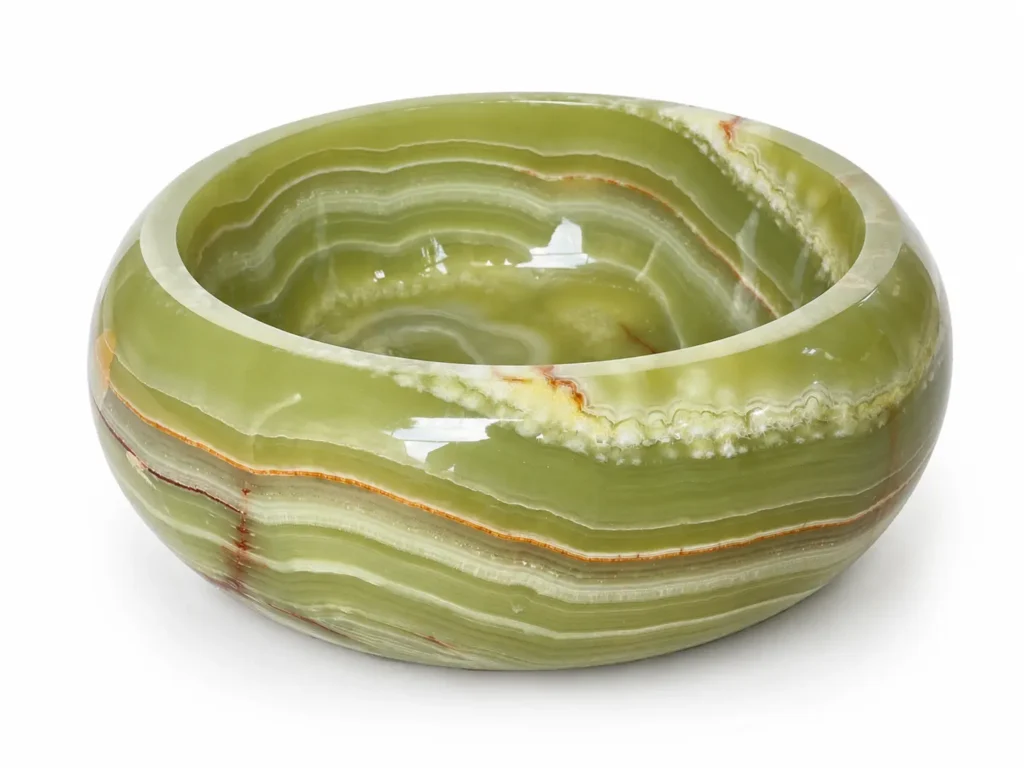
There is a moment that happens with every genuine onyx piece the first time it catches direct light the stone stops looking like a solid object and starts looking like something alive. The Multi Green Onyx Bowl from Pakistan Marble & Onyx is built entirely around that moment. Cut from a single block of natural banded onyx, hollowed by hand, and polished until the surface reflects like glass, this piece carries deep olive-green, amber-orange, and warm rust tones stacked in the kind of rippling, sedimentary lines that only nature can produce.
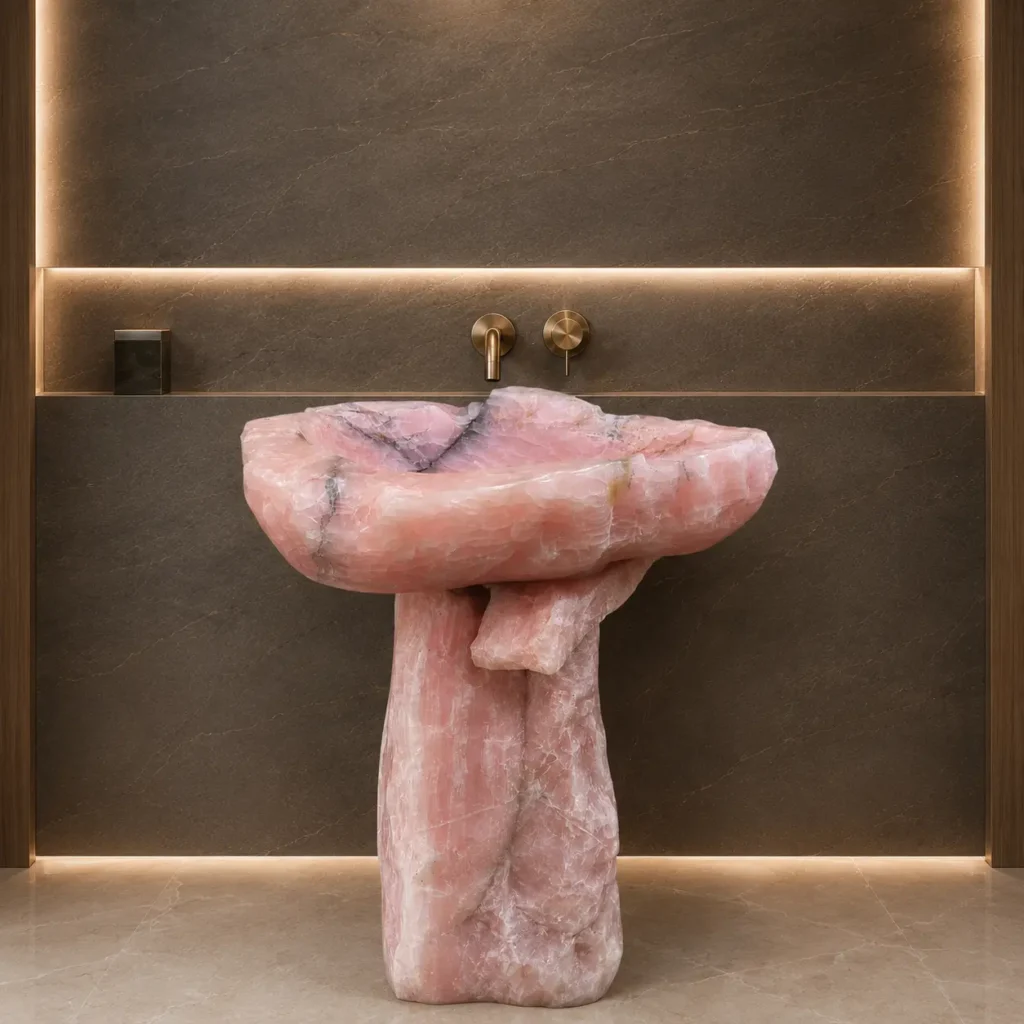
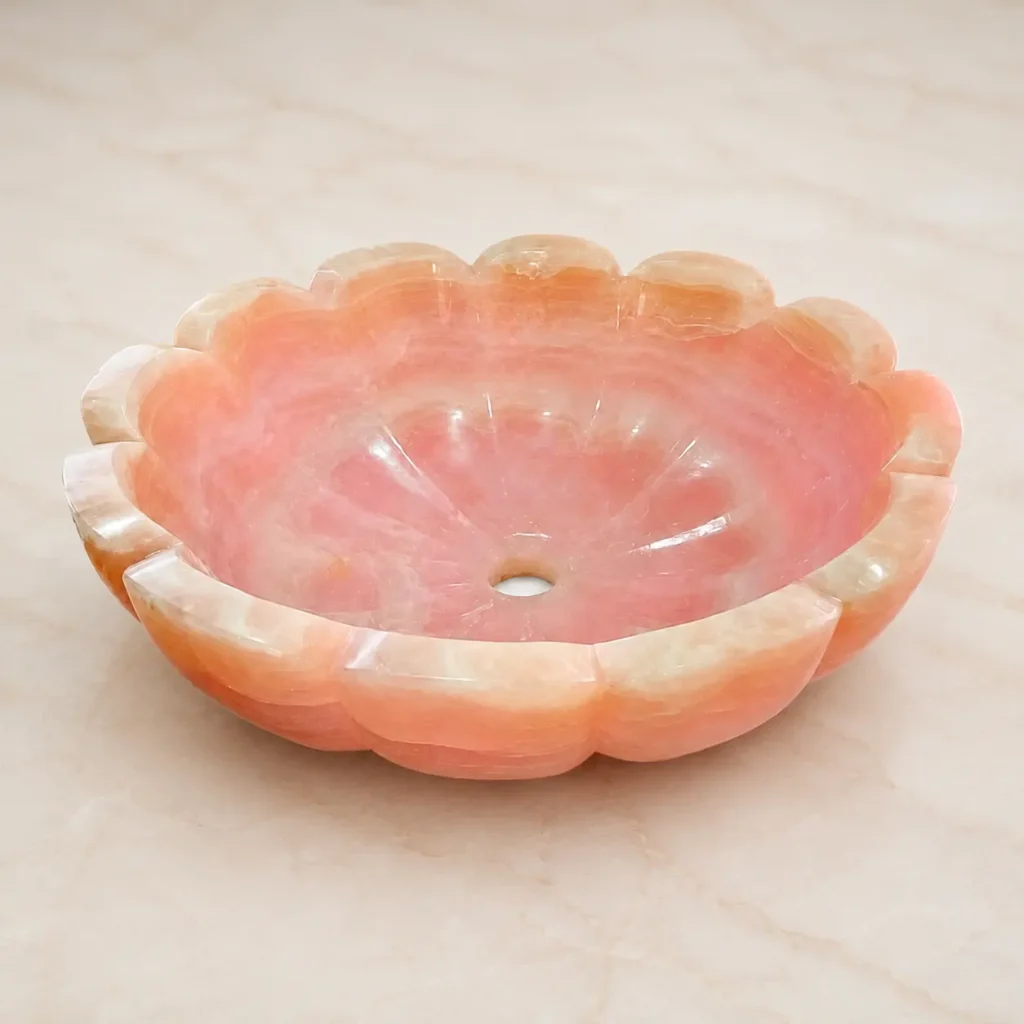
This exact shape and finish also makes it one of our most requested vessel sinks and wash basins customers use the same profile as a tabletop centerpiece in a living room or as a fully plumbed bathroom basin sitting on top of a vanity counter. Whichever way you plan to use it, everything on this page the stone, the sourcing, the manufacturing process, and the care instructions applies equally.
We are a Pakistan based marble supplier and onyx manufacturer, sourcing raw stone directly from the quarries of Balochistan and finishing every piece in our own workshops. That means when you buy this bowl, you are not buying through three layers of importers and markup you are buying close to the source, from the people who cut, shape, and polish the stone themselves.
What Makes This Bowl Different
Natural Banding, Not Painted Pattern
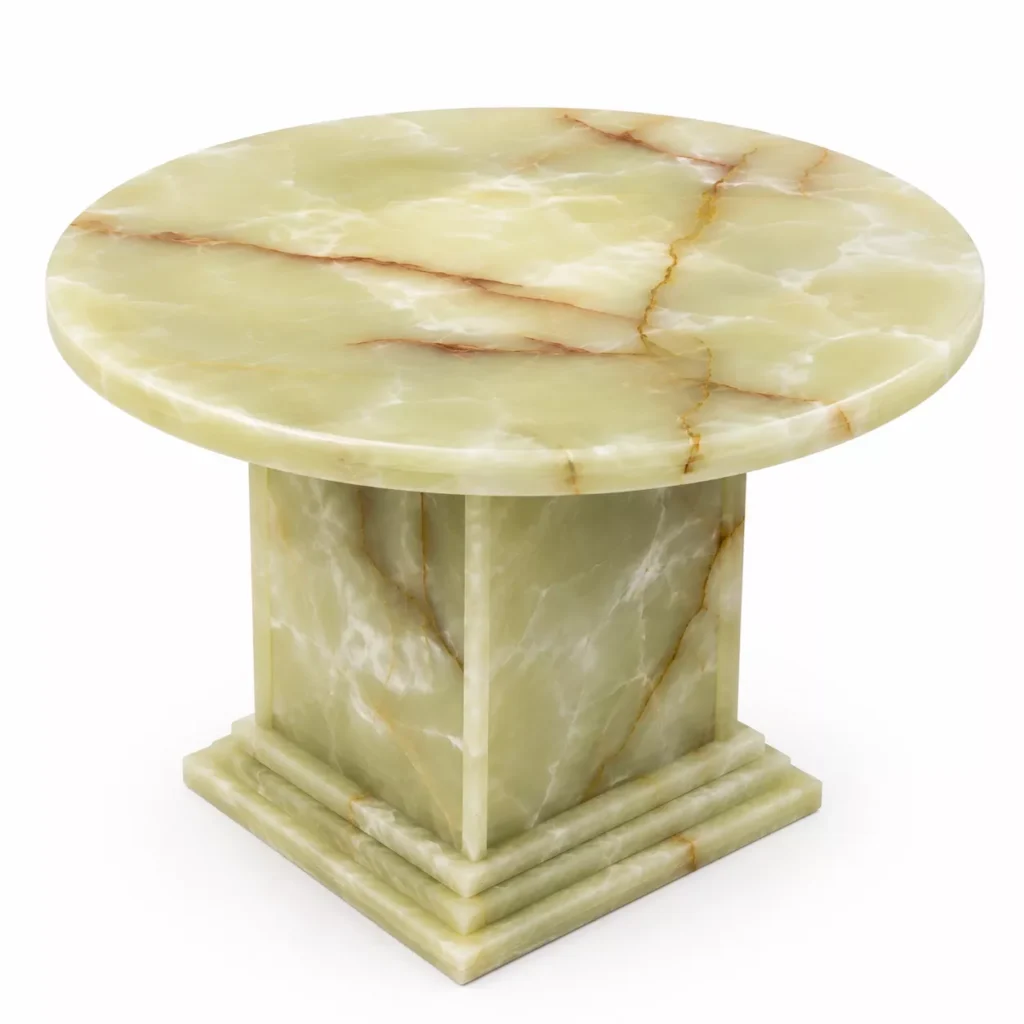
The swirling lines of green, gold, cream, and rust in this bowl are mineral banding, formed as groundwater rich in dissolved calcium carbonate deposited layer after layer inside underground cavities over thousands of years. Nothing is dyed or printed. When we cut a block, we are cutting into a record of geological time, and the pattern you see is simply where that particular slice fell within the deposit.
Translucency
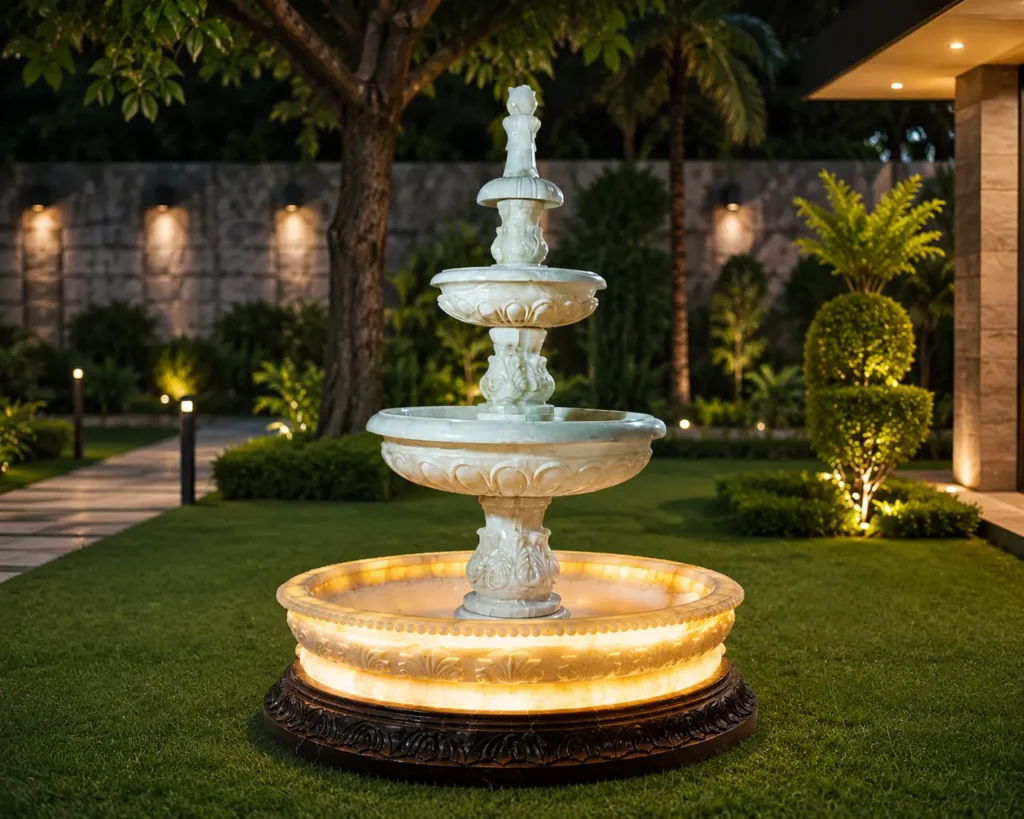
Because onyx is a form of calcite with a crystalline structure, it allows light to pass through thin sections. Hold this bowl up to a lamp or place it near a sunlit window and the thinner areas near the rim will glow amber and green from within. This is one of the main reasons designers choose onyx over marble or ceramic for statement pieces marble is opaque, onyx is not.
Hand-Finished Polish
Every bowl goes through a multi-stage polishing process using progressively finer abrasives until the surface reaches a mirror-like shine. This isn’t a machine-only process our polishers hand-check the interior curve and rim of every single piece, because onyx bands can vary in hardness, and a purely mechanical pass often leaves subtle ridges where softer bands wear faster than harder ones.
One-of-One by Nature
Because the pattern depends on exactly where in the deposit the block was cut, no two multi green onyx bowls are identical. The piece you receive is the specific piece photographed (or one from the same block family, depending on how you order), not a mass-manufactured replica.
About Multi Green Onyx: The Stone Itself
What “Onyx” Means in the Stone Trade
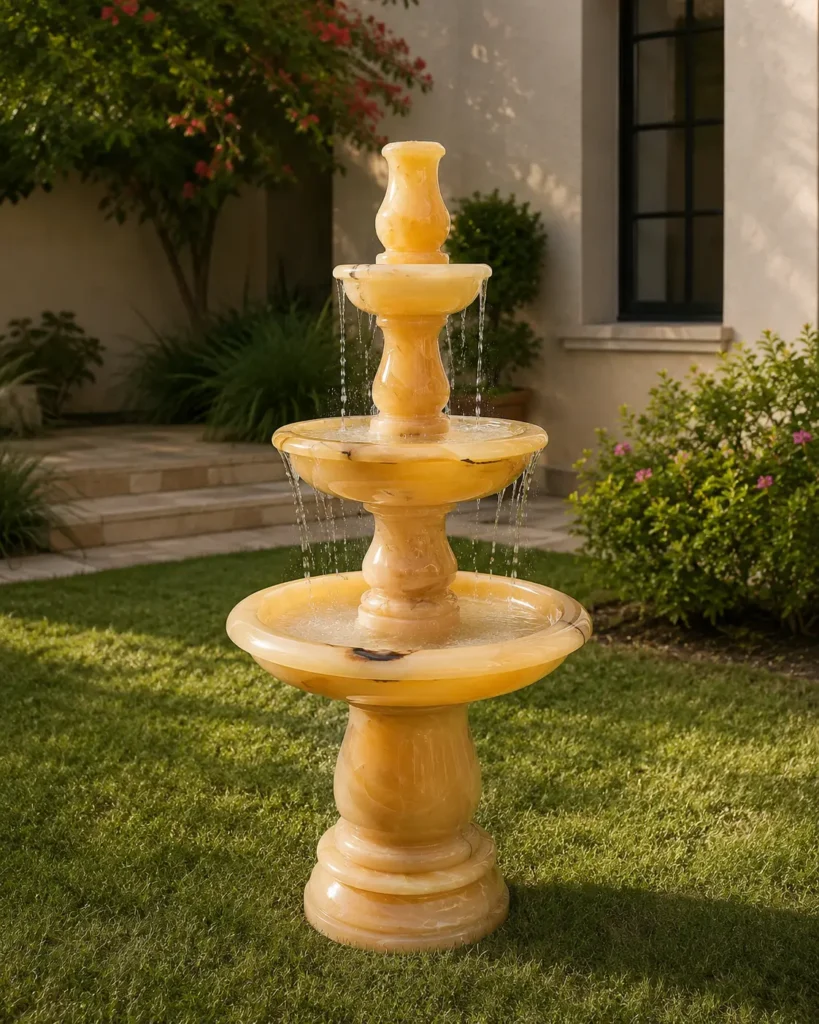
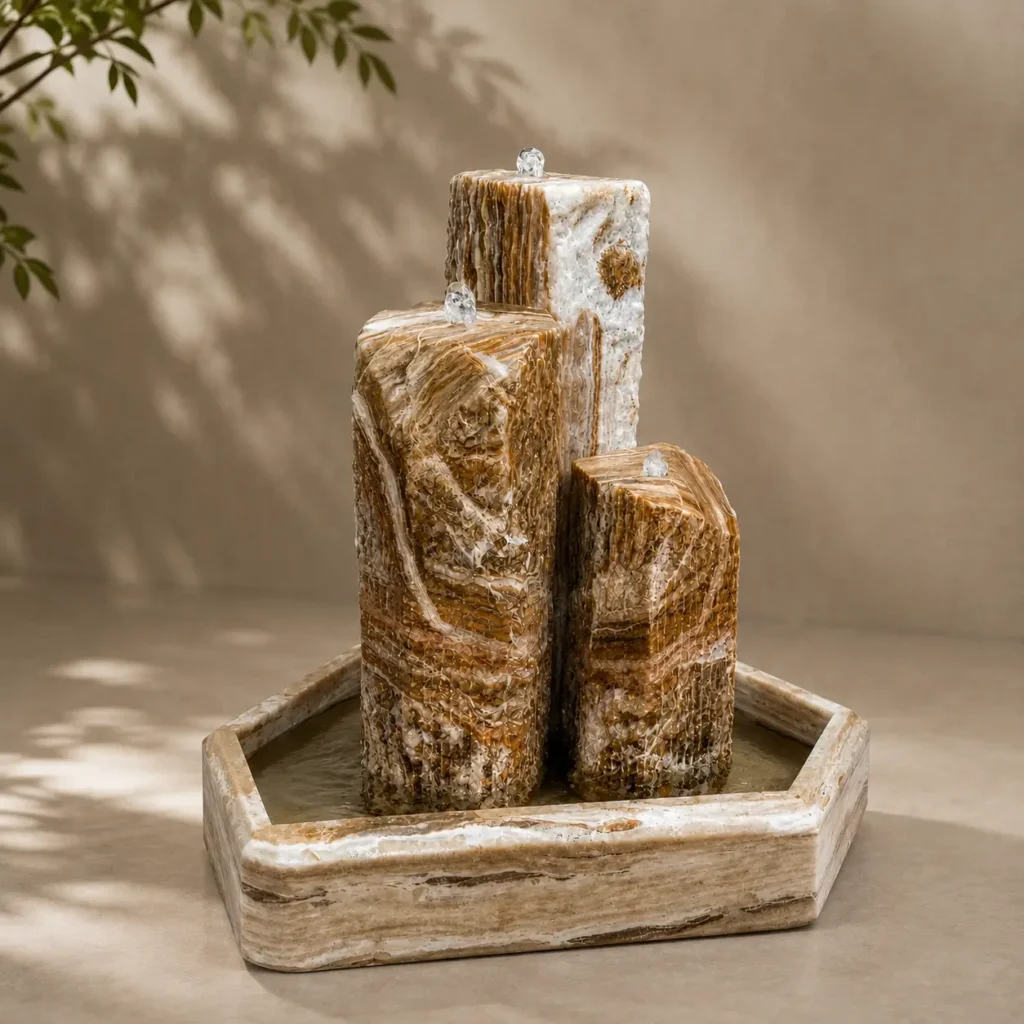
In the natural stone industry, “onyx” refers to a translucent, banded form of calcite or aragonite — different from the gemstone/jewelry sense of the word, which usually refers to chalcedony. Decorative onyx (sometimes called “onyx marble”) is technically a type of travertine or limestone formed through the same calcite-deposition process, just with visually striking banding and higher translucency.
Why It’s Called “Multi Green”
“Multi green onyx” describes pieces where green is the dominant or co-dominant tone, running alongside amber, honey, cream, and sometimes deep red-brown bands as seen in this bowl, where the exterior carries rust and amber tones and the interior basin shifts into deep olive green. Onyx is graded and named largely by its dominant color family: green onyx, honey/gold onyx, white onyx, black onyx, pink onyx, and multi-color onyx that blends several of these in one piece.
Hardness and Durability
Onyx sits at roughly 3 on the Mohs hardness scale softer than granite or quartzite, similar to marble. This means it can be scratched by harder materials (steel utensils, knives, keys) and can etch when exposed to acidic substances like lemon juice or vinegar. This is completely normal for the material and is part of why onyx pieces are typically decorative or used for dry-goods rather than as chopping surfaces or daily food-prep bowls.
Why Onyx Costs More Than Marble
Onyx blocks are rarer, harder to extract without cracking due to natural fissures, and require slower, more careful cutting and polishing. A single flawed cut can destroy a large section of a block. This is reflected in pricing — genuine natural onyx pieces are priced higher than comparable marble pieces of the same size, and pricing also varies bowl-to-bowl depending on how dramatic and clean the banding is.
6. Where This Onyx Comes From: Pakistan’s Onyx Belt
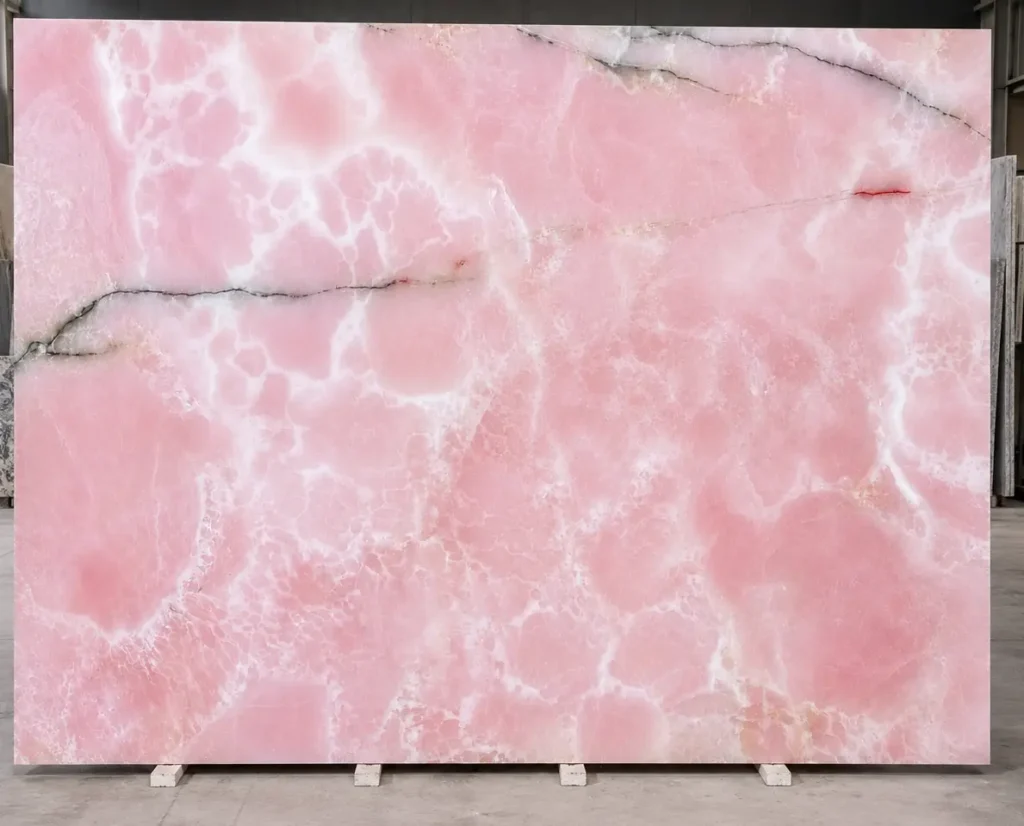
Pakistan holds some of the most significant onyx and marble deposits in the world, concentrated primarily in Balochistan (Chagai, Kalat, and surrounding districts) and parts of Khyber Pakhtunkhwa. These deposits are known internationally for producing green, honey/gold, and richly multi-toned onyx that is exported to markets across the Middle East, Europe, North America, and East Asia.
As a Pakistan marble supplier and manufacturer, Pakistan Marble & Onyx works directly with quarry operators in these regions. This direct-sourcing model matters for three reasons:
- Traceability — we know which block, which quarry, and roughly which depth a given piece came from, which helps us match customers to specific color families with more confidence.
- Consistency of supply — for wholesale and trade buyers, a direct quarry relationship means more reliable lead times than buying through resellers.
- Price — cutting out import layers keeps pricing more competitive for both retail customers and bulk/trade buyers.
7. How the Bowl Is Made | From Block to Finished Piece
Step 1: Block Selection
Raw onyx blocks are inspected at the quarry or yard for natural fissures, color depth, and banding pattern. Blocks with dramatic, continuous banding (like the green-and-amber pattern in this bowl) are set aside specifically for decorative bowls and vases rather than tiling or slabs, since bowl-cutting can showcase concentric banding in a way flat slabs cannot.
Step 2: Rough Cutting
The block is cut into a rough cylindrical or bowl-shaped blank using diamond-tipped saws. This stage removes the bulk of excess material while preserving the section of stone with the best color and banding.
Step 3: Turning and Hollowing
Using lathes and hand tools, the exterior profile is shaped and the interior is hollowed out to the desired wall thickness. Wall thickness is a critical decision here — thinner walls increase translucency and give a more dramatic glow effect, but require more careful handling; thicker walls are more forgiving for everyday use.
Step 4: Shaping and Rim Finishing
The rim and base are refined by hand to ensure the bowl sits flat and the rim line is smooth and even, since onyx’s variable hardness across bands can cause uneven wear if rushed.
Step 5: Multi-Stage Polishing
The surface is polished through a sequence of increasingly fine abrasive grits, finishing with a compound that brings out the stone’s natural gloss and deepens the visual translucency of the banding.
Step 6: Quality Inspection
Each piece is checked for hairline cracks, pitting, and consistency of polish, both inside and outside the bowl, under direct light to catch any dull patches before packaging.
Step 7: Packing for Shipping
Given the fragility of natural stone, bowls are individually wrapped and boxed with cushioning material designed to prevent chipping at the rim (the most vulnerable point) during transit — an important detail for both domestic delivery and international export.
Multi Green Onyx vs. Other Materials
Onyx vs. Marble
Marble is opaque and typically shows veining rather than concentric banding; onyx is translucent and shows layered bands that can glow when backlit. Marble is slightly harder on average and marginally more forgiving for surfaces that see regular use, while onyx is generally chosen specifically for its light-transmitting, decorative qualities rather than heavy daily use.
Onyx vs. Ceramic or Glass Bowls
Ceramic and glass bowls are manufactured to identical specifications every time; a natural onyx bowl is never perfectly identical to another, even from the same production batch. Onyx also has significant weight and thermal mass compared to ceramic or glass, giving it a more substantial, grounded feel on a table or shelf.
Green Onyx vs. Honey/Gold Onyx vs. White Onyx
- Green onyx leans toward olive, sage, and forest tones, often mixed with amber.
- Honey/gold onyx is dominated by warm amber, caramel, and gold bands.
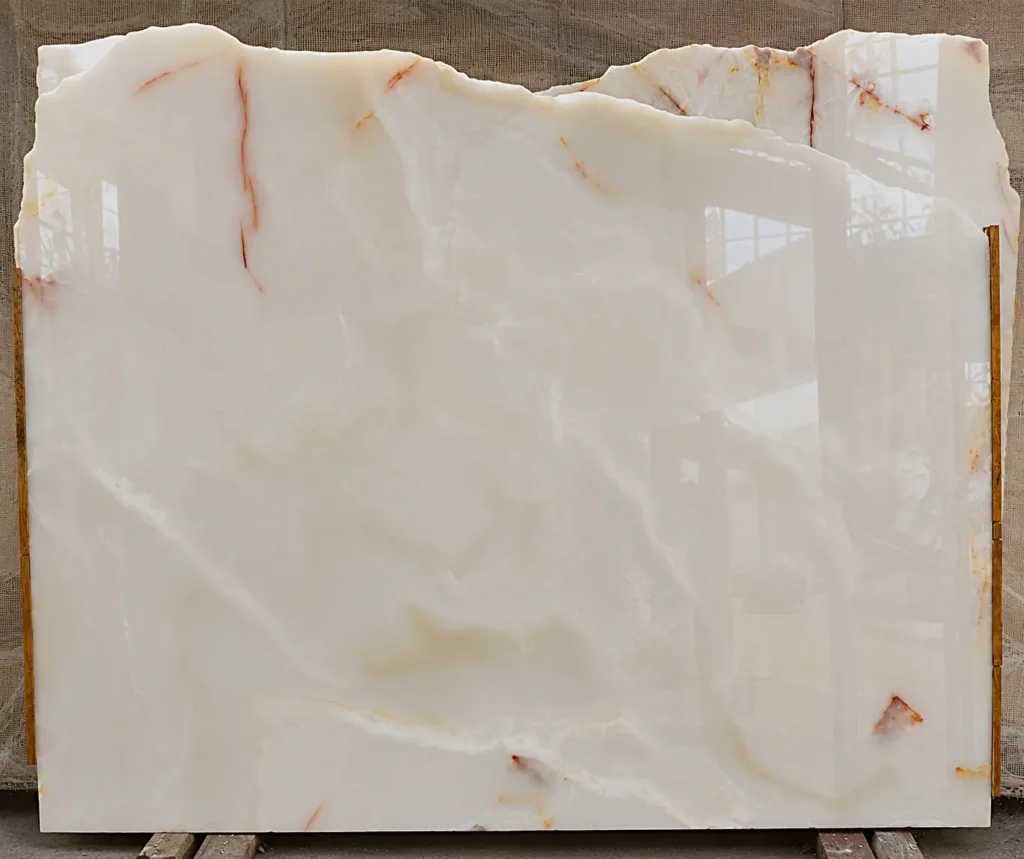
- White onyx is pale and highly translucent, often used for backlit panels and lighting fixtures.
- Multi-color onyx (like this bowl) combines two or more of these families in a single piece, which is generally considered the most visually dramatic and sought-after category for statement décor pieces.
Using This Piece as a Vessel Sink / Wash Basin
Beyond décor, this shape is manufactured on request as a fully functional onyx wash basin (vessel sink) for bathrooms, powder rooms, and hospitality settings. Here’s what to know if you’re considering it for a bathroom installation rather than a tabletop bowl:
Drain hole and plumbing compatibility. When ordered as a basin, we cut a drain hole sized to standard vessel-sink drain fittings so it can connect to conventional bathroom plumbing. Let us know at the time of order that you need the sink configuration, since décor bowls are typically produced without a drain hole.
Vessel-style mounting. Like most natural stone basins, this piece is designed as a vessel sink — it sits fully on top of the counter or vanity surface rather than being recessed into a cutout, which is the standard mounting style for onyx and marble basins because it showcases the full exterior banding rather than hiding it under the counter edge.
Sealing is more important for sink use. A basin sees daily water contact, so sealing becomes a maintenance requirement rather than an optional step — we recommend sealing before first use and re-sealing on a more frequent schedule (roughly every 3–6 months, depending on water hardness) compared to a purely decorative bowl.
Backlighting for bathroom basins. Because onyx is translucent, some clients install a small light inside the vanity cabinet directly beneath the basin, so the green and amber banding glows through the stone whenever the vanity light is on — a popular feature request for spa-style or boutique-hotel bathrooms.
Faucet compatibility. As a vessel-mounted basin, it pairs with vessel-height faucets or wall-mounted faucets rather than standard deck-mounted faucets designed for drop-in sinks; check your faucet’s rated height and reach before finalizing your vanity layout.
Weight and counter support. Natural stone basins are considerably heavier than ceramic or composite sinks, so confirm with your installer or contractor that the vanity or counter surface is rated to support the additional weight, particularly for larger basin sizes.
If you want this piece specifically as a wash basin rather than a decorative bowl, mention it when ordering so we can confirm drain placement, basin depth, and sealing before it ships.
Suggested Uses for the Multi Green Onyx Bowl (and Wash Basin)
- Centerpiece bowl for dining tables, entryway consoles, or coffee tables
- Fruit bowl for dry fruit, citrus, or decorative arrangements (avoid prolonged wet contact)
- Catch-all bowl for keys, jewelry, or small accessories near an entryway
- Potpourri or decorative filler bowl
- Corporate or wedding gifting — onyx pieces are commonly chosen as premium, one-of-a-kind gifts precisely because no two are alike
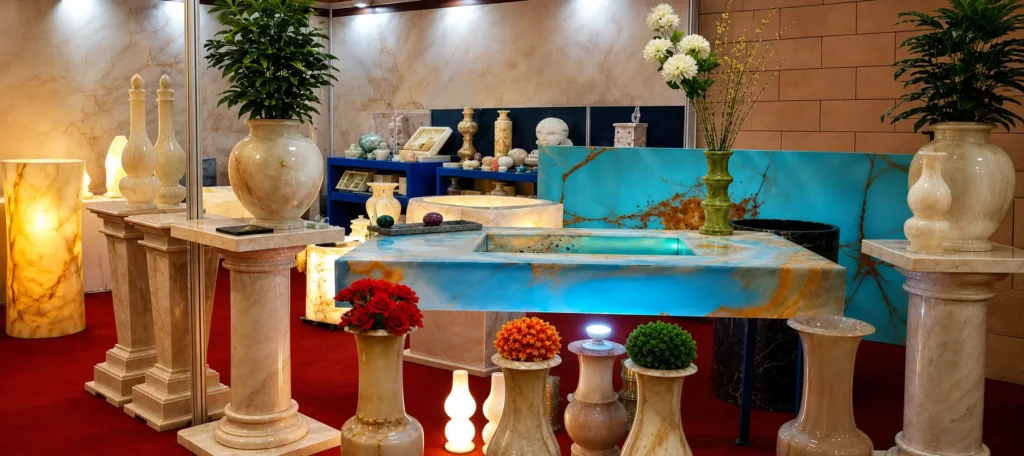
- Hospitality and retail display — hotels, spas, and boutique retailers use onyx bowls as ambient, light-catching display pieces near windows or under accent lighting
- Interior design and staging — designers use statement onyx bowls as focal points in otherwise neutral rooms, often placed where natural or accent lighting can pass through the stone
- Bathroom vessel sink / wash basin — mounted on top of a vanity counter with a drain fitting, this same piece functions as a statement bathroom basin for residential powder rooms, master baths, or boutique hotel and spa bathrooms
- Backlit vanity feature — installed with a light source beneath or behind the basin to highlight the natural translucency of the onyx banding during use
Care and Maintenance
Proper care will keep the polish and color depth of a multi green onyx bowl looking new for years:
- Keep it dry when possible. Onyx is porous relative to sealed materials, so standing water or acidic liquids (citrus juice, vinegar, wine) left in contact for extended periods can dull the polish or cause etching.
- Wipe, don’t soak. Clean with a soft, damp cloth and mild pH-neutral soap; avoid submerging the bowl or using abrasive scrubbers.
- Avoid acidic and abrasive cleaners. Skip vinegar-based cleaners, bleach, and anything containing citric or acetic acid — these can etch the surface.
- Dry immediately after cleaning. Standing moisture is the most common cause of dulled polish over time.
- Consider periodic sealing. A quality stone sealant applied every 6–12 months (more if the bowl is used for wet or acidic contents) helps maintain shine and reduces porosity-related staining.
- Avoid sudden temperature changes. Don’t move the bowl directly from a cold environment to hot water or direct heat, as thermal shock can stress natural fissures in the stone.
- Handle by the body, not just the rim, especially for larger or thinner-walled pieces, since the rim is the most vulnerable point for chipping.
- Use trivets or soft pads underneath if placing the bowl on delicate furniture, since the stone’s weight and slightly textured base can mark softer wood finishes over time.
Why Buy From Pakistan Marble & Onyx
Direct manufacturer, not a reseller. We cut, shape, and polish onyx and marble in our own facilities using stone sourced directly from Pakistani quarries, which means more consistent quality control and more competitive pricing than buying through import intermediaries.
Trade and wholesale friendly. We regularly supply interior designers, hotel groups, retail showrooms, and export buyers, and can accommodate bulk orders, custom sizing, and private-label packaging for trade clients.
Genuine, unfinished-to-order stone. Every piece is natural — we do not sell dyed, resin-composite, or reconstituted stone as genuine onyx, and we’re transparent when a lower-cost line uses composite materials versus 100% natural stone.
Export experience. We regularly ship natural stone products internationally and package specifically to survive long-distance transit, which is one of the more technically demanding parts of exporting fragile decorative stone.
Direct quarry relationships in Balochistan, giving us better visibility into upcoming block availability, color families, and realistic lead times than buyers working through multiple layers of distribution.
Frequently Asked Questions
Q1: Is this bowl made from real natural onyx, or is it dyed/composite stone? This bowl is cut from genuine natural onyx sourced from Pakistani quarries. The green, amber, and rust bands are natural mineral deposits, not dye or printing. We clearly label any composite or reconstituted stone products separately and do not market them as natural onyx.
Q2: Can I use this bowl to hold food, like fruit? Yes, it’s suitable for dry foods such as whole fruit, nuts, or dried goods. We don’t recommend using it to hold acidic liquids (like citrus juice) for extended periods, since onyx can etch or dull with prolonged acid contact.
Q3: Why does the color vary from the photos? Because onyx is a natural stone, banding, tone, and translucency vary from block to block and even within the same block. The photos represent the general color family and pattern style; if you need a guaranteed exact match, contact us and we can send current photos of available pieces before shipping.
Q4: How do I clean and maintain an onyx bowl? Wipe with a soft, damp cloth and mild pH-neutral soap, dry immediately, and avoid acidic or abrasive cleaners. Periodic sealing (every 6–12 months) helps maintain the polish and reduce porosity-related staining.
Q5: Is onyx durable enough for everyday use? Onyx is softer than granite or quartzite (similar hardness to marble), so it can scratch or etch if treated like a cutting or heavy-use surface. It’s best suited to decorative and light-duty use rather than daily food prep.
Q6: What’s the difference between this multi green onyx and honey/gold onyx? Multi green onyx is dominated by green and olive tones mixed with amber and rust bands, while honey/gold onyx leans entirely into warm caramel and golden tones. Multi-color pieces like this bowl combine several tonal families in one piece, which is generally the rarer and more dramatic option.
Q7: Do you sell wholesale or to trade/hospitality buyers? Yes. As a Pakistan-based marble and onyx manufacturer, we regularly work with interior designers, hotels, retail buyers, and international importers on bulk and custom orders. Contact us directly for trade pricing and lead times.
Q8: Can you make custom sizes or shapes of this bowl? Custom sizing, depth, and rim styles can often be arranged for trade or bulk orders since we control our own cutting and polishing process. Reach out with your specifications and we’ll confirm feasibility and lead time.
Q9: How is the bowl packaged for shipping, especially internationally? Each bowl is individually wrapped and cushioned with reinforced packaging focused on protecting the rim, which is the most vulnerable point during transit. We have experience packing and exporting natural stone pieces internationally.
Q10: Will the bowl glow or look translucent in normal room lighting? The translucency effect is most visible with direct or backlighting — near a window, under a spotlight, or with a light placed behind or beneath the bowl. In ambient indoor lighting, the color and banding are still clearly visible, but the dramatic “glow” is strongest with direct light.
Q11: What’s the difference between onyx and marble? Marble is opaque with vein-like patterns, while onyx is translucent with concentric or wavy banding that can transmit light. Onyx is generally chosen for decorative, light-catching pieces, while marble is more commonly used for surfaces, flooring, and countertops.
Q12: Does the bowl come with a care guide or warranty? A basic care guide is included with every order. As with all natural stone, normal wear such as minor surface changes from misuse (acid exposure, impact, etc.) is not covered, but manufacturing defects are.
Q13: Where exactly in Pakistan does this onyx come from? Most of our green and multi-color onyx is sourced from quarries in Balochistan, particularly the Chagai and Kalat regions, which are internationally recognized as a major source of high-quality banded onyx.
Q14: Can this bowl be used outdoors? We don’t recommend prolonged outdoor use, as direct sun exposure, rain, and temperature swings can affect the polish and stress natural fissures in the stone over time. It’s best suited to indoor décor.
Q15: How long does shipping take? Domestic delivery timelines and international export timelines vary by destination and order size; contact us directly with your location for an accurate estimate, especially for bulk or trade orders requiring custom crating.
Q16: Can I order this as a wash basin or vessel sink instead of a decorative bowl? Yes — the same shape and stone can be produced as a functional wash basin with a drain hole cut for standard vessel-sink plumbing fittings. Let us know at the time of order that you need the sink configuration, since decorative bowls are typically made without a drain hole.
Q17: Does an onyx wash basin need special plumbing? No special plumbing is required beyond what’s standard for any vessel-style sink — it connects to a conventional drain and P-trap and pairs best with vessel-height or wall-mounted faucets rather than standard deck-mounted faucets designed for drop-in sinks.
Q18: Is an onyx basin waterproof? Sealed onyx handles regular water contact well for basin/sink use, but because the stone is naturally porous, sealing before first use and re-sealing every 3–6 months (depending on water hardness) is recommended to maintain water resistance and prevent staining.
Q19: Will the basin support the weight of a heavy vanity faucet or hard water buildup over time? The basin itself is structurally solid stone and supports standard vessel faucets without issue; hard water spotting can occur over time on any natural stone sink and is addressed with routine cleaning and periodic sealing rather than being a structural concern.
Styling Ideas | Where to Place a Multi Green Onyx Sink and Bowl
Dining table centerpiece: Placed at the center of a dining table, the bowl works well filled with citrus, pomegranates, or seasonal greenery. Because the interior basin in this piece shifts into deep olive green, warm-toned fruit like oranges, lemons, or persimmons creates strong color contrast against the stone.
Entryway console: A single onyx bowl on an entry console, used as a catch-all for keys and small items, tends to become the first thing guests notice when they walk in, especially if the console sits near a window where afternoon light can pass through the rim.
Living room coffee table: On a neutral coffee table, this bowl functions as a low-maintenance sculptural object even when empty — the banding alone carries visual weight without needing to be styled with additional props.
Under-cabinet or shelf lighting: For maximum translucency effect, place the bowl on a shelf with a small accent light positioned slightly behind or below it. This is the styling approach most interior designers use to showcase onyx’s light-transmitting qualities in a way that’s hard to replicate with photographs alone.
Hotel lobbies and spa reception counters: Because onyx reads as a premium, nature-driven material, hospitality designers frequently use large onyx bowls as reception-area focal points, sometimes paired with backlighting built into the counter itself.
Retail window and boutique displays: Boutiques selling home goods, jewelry, or artisanal products often use onyx bowls as a neutral but striking display base, since the stone’s color depth photographs well under both natural light and studio lighting.
A Buyer’s Guide to Choosing the Right Onyx Piece
If you’re comparing multiple onyx bowls or deciding between colors, here’s a practical framework we walk trade and retail customers through:
1. Decide the primary use first. A bowl intended purely as a lit, sculptural centerpiece can have thinner walls and more dramatic translucency. A bowl intended for regular handling (moving fruit in and out daily) should have slightly thicker walls for durability.
2. Choose the color family based on your existing palette. Multi green onyx, like this piece, pairs naturally with warm wood tones, brass or aged-gold hardware, and deep jewel-toned upholstery. Honey/gold onyx pairs more naturally with cream, ivory, and lighter wood finishes. White onyx works best in minimalist, Scandinavian-influenced spaces where translucency itself is the main visual feature.
3. Check for banding direction. Concentric, ring-like banding (common in bowls, since they’re often cut across the deposit) tends to read as more dramatic than straight linear banding, which is more common in slabs and tabletops.
4. Ask about wall thickness if buying for trade/hospitality. Thinner walls maximize glow but are more fragile for high-traffic commercial settings; thicker walls sacrifice some translucency for durability.
5. Confirm sealing status before purchase. Ask whether the piece has been pre-sealed at the factory or whether sealing is the buyer’s responsibility after delivery, since this affects initial care steps.
6. For bulk/trade orders, request block-matched sets. If you need multiple bowls with a visually cohesive look, ask specifically for pieces cut from the same or adjacent blocks, since color and banding can shift meaningfully between different blocks even within the same “multi green” category.
Sustainability and Sourcing Ethics
Natural stone extraction carries real environmental and labor considerations, and as a Pakistan-based manufacturer working directly with quarry operators, we think transparency here matters:
- Direct sourcing reduces middlemen markups and improves traceability back to specific quarry regions in Balochistan, rather than buying anonymous stock through international brokers.
- Offcuts and smaller blocks from larger onyx cutting projects (slabs, tiles) are frequently repurposed into bowls, coasters, and smaller décor items, reducing waste from the primary cutting process.
- Durability as sustainability: unlike many manufactured décor materials, a well-cared-for natural stone bowl can realistically last generations, which is part of the broader case for natural stone over disposable, trend-driven décor.
- We encourage trade buyers with specific sourcing, labor, or environmental documentation requirements to reach out directly, as requirements vary significantly by destination market and buyer.
Multi Green Onyx Bowl | Quick Comparison Table
| Feature | Multi Green Onyx | White Onyx | Honey/Gold Onyx | Ceramic Bowl | Glass Bowl |
|---|---|---|---|---|---|
| Natural material | Yes | Yes | Yes | No (fired clay) | No (manufactured) |
| Translucent | Yes | Highest | Yes | No | Yes (different mechanism) |
| Unique per piece | Yes | Yes | Yes | No | No |
| Typical hardness (Mohs) | ~3 | ~3 | ~3 | ~6-7 (glaze) | ~5.5 |
| Best for daily wet use | No | No | No | Yes | Yes |
| Best for backlit display | Strong | Strongest | Strong | No | Moderate |
| Relative price point | Higher | Higher | Higher | Lower | Lower |
| Needs periodic sealing | Yes | Yes | Yes | No | No |
Glossary | Understanding Onyx Terminology
Banding: The layered lines of color visible in onyx, formed by successive mineral deposits over time.
Translucency: The stone’s ability to allow light to pass through, most visible in thinner sections near the rim of a bowl.
Calcite: The primary mineral composing most decorative onyx, also found in marble and limestone.
Onyx marble: An industry term for banded, translucent calcite/travertine stone — distinct from true chalcedony “onyx” used in jewelry.
Etching: Dulling or discoloration of a stone’s polished surface caused by contact with acidic substances.
Block-matched: A set of pieces cut from the same or adjacent raw stone block, ensuring closely related color and banding across multiple items.
Sealing: Applying a penetrating stone sealant to reduce porosity and protect against staining and etching.
About Pakistan Marble & Onyx
Pakistan Marble & Onyx operates as both a marble supplier and an onyx manufacturer, meaning we handle the full chain from raw block sourcing through to finished, ready-to-ship décor and surface products. Our workshops process both marble and onyx, but onyx remains one of our most requested categories precisely because of the color drama and translucency that Pakistani deposits are known for internationally.
We work with three broad categories of buyers:
Retail and individual customers purchasing single statement pieces — bowls, vases, coasters, and small décor items — for their own homes.
Interior designers and architects sourcing one-off or small-batch pieces for residential and commercial projects, often with specific color-matching or sizing requirements tied to a broader design scheme.
Trade, wholesale, and export buyers — including hotel groups, retail chains, and international importers — placing bulk orders that require consistent quality control, custom packaging, and reliable freight documentation for cross-border shipping.
Across all three categories, our approach stays the same: source genuine stone directly from Pakistani quarries, finish it by hand in our own facilities, and communicate clearly about what’s natural, what’s composite, and what realistic lead times and pricing look like — rather than overselling uniformity that natural stone simply can’t guarantee.
A Note on Photography and Natural Variation
Every product photo on our site is of an actual piece we have produced, not a rendered or stock image. That said, because onyx is 100% natural, the exact piece in a photo may already be sold by the time you order, in which case you’ll receive a piece from the same color family and block group, and we’re happy to send current photos before your order ships if an exact match matters to you.
More Buyer Questions | Sizing, Ordering, and Support
How do I know what size bowl fits my space? As a general guide, smaller bowls (roughly 6–8 inches across) work well as accent pieces on shelves or side tables, mid-size bowls (9–12 inches) are the most common choice for dining table centerpieces and entryway consoles, and larger bowls (13 inches and up) tend to work best as standalone floor-adjacent or large-console statement pieces. If you’re ordering for a specific space, measuring the surface it will sit on and leaving at least a few inches of clearance around the bowl will help you judge proportion before ordering.
Can I order matching pieces, like a bowl and coaster set, in the same color pattern? Where stock allows, we can put together matched sets cut from the same or adjacent onyx blocks so the color and banding feel cohesive across pieces. This is worth requesting directly if you’re building a coordinated set rather than a single item.
What happens if my piece arrives damaged? Because natural stone is fragile in transit despite reinforced packaging, we ask customers to inspect pieces immediately on arrival and document any shipping damage with photos so we can resolve it quickly, whether that means a replacement, repair guidance, or another resolution depending on the situation and destination.
Do you offer engraving or personalization on onyx pieces? For select pieces and larger trade orders, light custom engraving or personalization may be possible depending on the piece and the design requested; reach out directly with your idea and we’ll confirm feasibility.
How do payment and international shipping typically work for larger orders? For trade and bulk orders, we typically discuss quantity, sizing, packaging requirements, and destination country upfront so we can quote accurate freight and provide the documentation needed for customs clearance. Retail single-item orders follow standard checkout and shipping processes.
Every multi green onyx bowl leaving our workshop has already gone through rough cutting, hand-hollowing, multi-stage polishing, and a final quality inspection before it’s packed for shipping. Because the stone is completely natural, what you’re really buying isn’t just a bowl — it’s a cross-section of a mineral deposit that took thousands of years to form, cut and finished by hand in Pakistan and shipped directly from the source.
If you’re a designer, retailer, or trade buyer looking to source multi green onyx or other onyx/marble décor pieces in volume, reach out to Pakistan Marble & Onyx directly for current block availability, trade pricing, and lead times.
What is a multi green onyx bowl? A multi green onyx bowl is a decorative or functional bowl carved from natural onyx stone that displays layered bands of green, amber, cream, and rust running through translucent calcite. Each bowl is unique because the banding forms naturally underground over thousands of years, meaning no two pieces are identical. Pakistan Marble & Onyx hand-selects raw onyx blocks from Balochistan’s quarries, then cuts, hollows, and polishes each bowl to a high-gloss finish that lets light pass through the thinner sections of stone, creating a warm, glowing effect.
Can this bowl be used as a bathroom sink or wash basin? Yes. This same piece can be finished as a vessel sink / wash basin, mounted on top of a bathroom counter or vanity with a drain hole cut into the base and connected to standard plumbing. Because onyx is naturally water-resistant when sealed, it is a popular choice for statement bathroom basins where the translucent, backlit banding effect can be shown off with under-counter or vanity lighting.
Where does green onyx come from? Pakistan is one of the world’s leading sources of natural onyx, particularly from the Chagai and Kalat districts of Balochistan, where mineral-rich groundwater deposited calcite in banded layers over geological time. This is the same source region that supplies green, honey, and multi-colored onyx to global markets.
Is onyx safe to use as a bowl? Polished onyx is food-safe for dry items such as fruit, potpourri, keys, or jewelry, but it is porous compared to sealed ceramics, so it is not recommended for prolonged contact with acidic liquids or as a daily-use liquid vessel without a sealant.
Is this bowl made from real natural onyx, or is it dyed/composite stone?
This bowl is cut from genuine natural onyx sourced from Pakistani quarries. The green, amber, and rust bands are natural mineral deposits, not dye or printing. We clearly label any composite or reconstituted stone products separately and do not market them as natural onyx.
Can I use this bowl to hold food, like fruit?
Yes, it’s suitable for dry foods such as whole fruit, nuts, or dried goods. We don’t recommend using it to hold acidic liquids (like citrus juice) for extended periods, since onyx can etch or dull with prolonged acid contact.
Why does the color vary from the photos?
Because onyx is a natural stone, banding, tone, and translucency vary from block to block and even within the same block. The photos represent the general color family and pattern style; if you need a guaranteed exact match, contact us and we can send current photos of available pieces before shipping.
How do I clean and maintain an onyx bowl?
Wipe with a soft, damp cloth and mild pH-neutral soap, dry immediately, and avoid acidic or abrasive cleaners. Periodic sealing (every 6–12 months) helps maintain the polish and reduce porosity-related staining.
Is onyx durable enough for everyday use?
Onyx is softer than granite or quartzite (similar hardness to marble), so it can scratch or etch if treated like a cutting or heavy-use surface. It’s best suited to decorative and light-duty use rather than daily food prep.
What’s the difference between this multi green onyx and honey/gold onyx?
Multi green onyx is dominated by green and olive tones mixed with amber and rust bands, while honey/gold onyx leans entirely into warm caramel and golden tones. Multi-color pieces like this bowl combine several tonal families in one piece, which is generally the rarer and more dramatic option.
Do you sell wholesale or to trade/hospitality buyers?
Yes. As a Pakistan-based marble and onyx manufacturer, we regularly work with interior designers, hotels, retail buyers, and international importers on bulk and custom orders. Contact us directly for trade pricing and lead times.
Can you make custom sizes or shapes of this bowl?
Custom sizing, depth, and rim styles can often be arranged for trade or bulk orders since we control our own cutting and polishing process. Reach out with your specifications and we’ll confirm
How is the bowl packaged for shipping, especially internationally?
Each bowl is individually wrapped and cushioned with reinforced packaging focused on protecting the rim, which is the most vulnerable point during transit. We have experience packing and exporting natural stone pieces internationally.
Will the bowl glow or look translucent in normal room lighting?
The translucency effect is most visible with direct or backlighting near a window, under a spotlight, or with a light placed behind or beneath the bowl. In ambient indoor lighting, the color and banding are still clearly visible, but the dramatic “glow” is strongest with direct light.
What’s the difference between onyx and marble?
Marble is opaque with vein-like patterns, while onyx is translucent with concentric or wavy banding that can transmit light. Onyx is generally chosen for decorative, light-catching pieces, while marble is more commonly used for surfaces, flooring, and countertops.
Does the bowl come with a care guide or warranty?
A basic care guide is included with every order. As with all natural stone, normal wear such as minor surface changes from misuse (acid exposure, impact, etc.) is not covered, but manufacturing defects are.
Where exactly in Pakistan does this onyx come from?
Most of our green and multi-color onyx is sourced from quarries in Balochistan, particularly the Chagai and Kalat regions, which are internationally recognized as a major source of high-quality banded onyx.
Can this bowl be used outdoors?
We don’t recommend prolonged outdoor use, as direct sun exposure, rain, and temperature swings can affect the polish and stress natural fissures in the stone over time. It’s best suited to indoor décor.
How long does shipping take?
Domestic delivery timelines and international export timelines vary by destination and order size; contact us directly with your location for an accurate estimate, especially for bulk or trade orders requiring custom crating.
Can I order this as a wash basin or vessel sink instead of a decorative bowl?
Yes, the same shape and stone can be produced as a functional wash basin with a drain hole cut for standard vessel-sink plumbing fittings. Let us know at the time of order that you need the sink configuration, since decorative bowls are typically made without a drain hole.
Can I order this as a wash basin or vessel sink instead of a decorative bowl?
Yes, the same shape and stone can be produced as a functional wash basin with a drain hole cut for standard vessel-sink plumbing fittings. Let us know at the time of order that you need the sink configuration, since decorative bowls are typically made without a drain hole.
Does an onyx wash basin need special plumbing?
No special plumbing is required beyond what’s standard for any vessel style sink it connects to a conventional drain and P-trap and pairs best with vessel-height or wall-mounted faucets rather than standard deck-mounted faucets designed for drop-in sinks.
Is an onyx basin waterproof?
Sealed onyx handles regular water contact well for basin/sink use, but because the stone is naturally porous, sealing before first use and re-sealing every 3–6 months (depending on water hardness) is recommended to maintain water resistance and prevent staining.
Will the basin support the weight of a heavy vanity faucet or hard water buildup over time?
The basin itself is structurally solid stone and supports standard vessel faucets without issue; hard water spotting can occur over time on any natural stone sink and is addressed with routine cleaning and periodic sealing rather than being a structural concern.