A travertine coffee table is a living room centerpiece crafted from natural travertine stone a porous, sedimentary limestone formed near mineral hot springs prized for its warm beige, ivory, and walnut tones, its fossil like texture, and its ability to anchor both minimalist and organic interior styles. Pakistan Marble & Onyx is a Pakistan based manufacturer, supplier, wholesaler, and exporter of travertine coffee tables including round travertine-ball-base designs, sculptural pedestal tables, and custom architectural pieces shipped worldwide to importers, interior designers, hospitality groups, and retail furniture brands.
Travertine Coffee Table: The Complete Buying, Design, and Wholesale Sourcing Guide by Pakistan Marble & Onyx
What Is a Travertine Coffee Table?
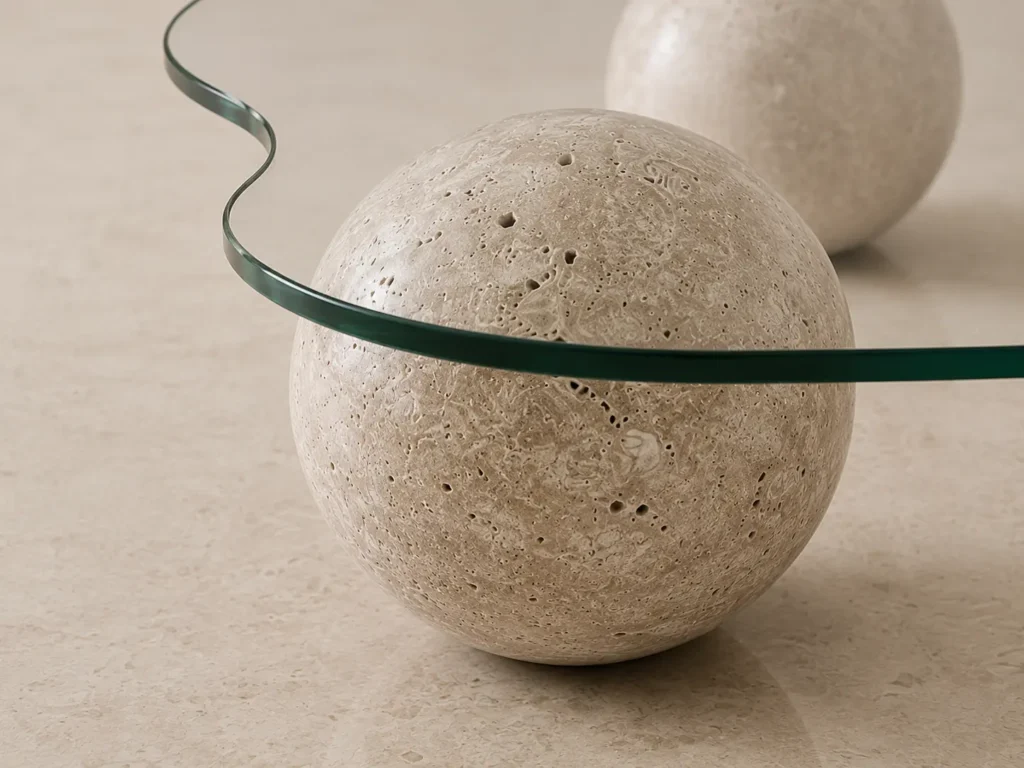
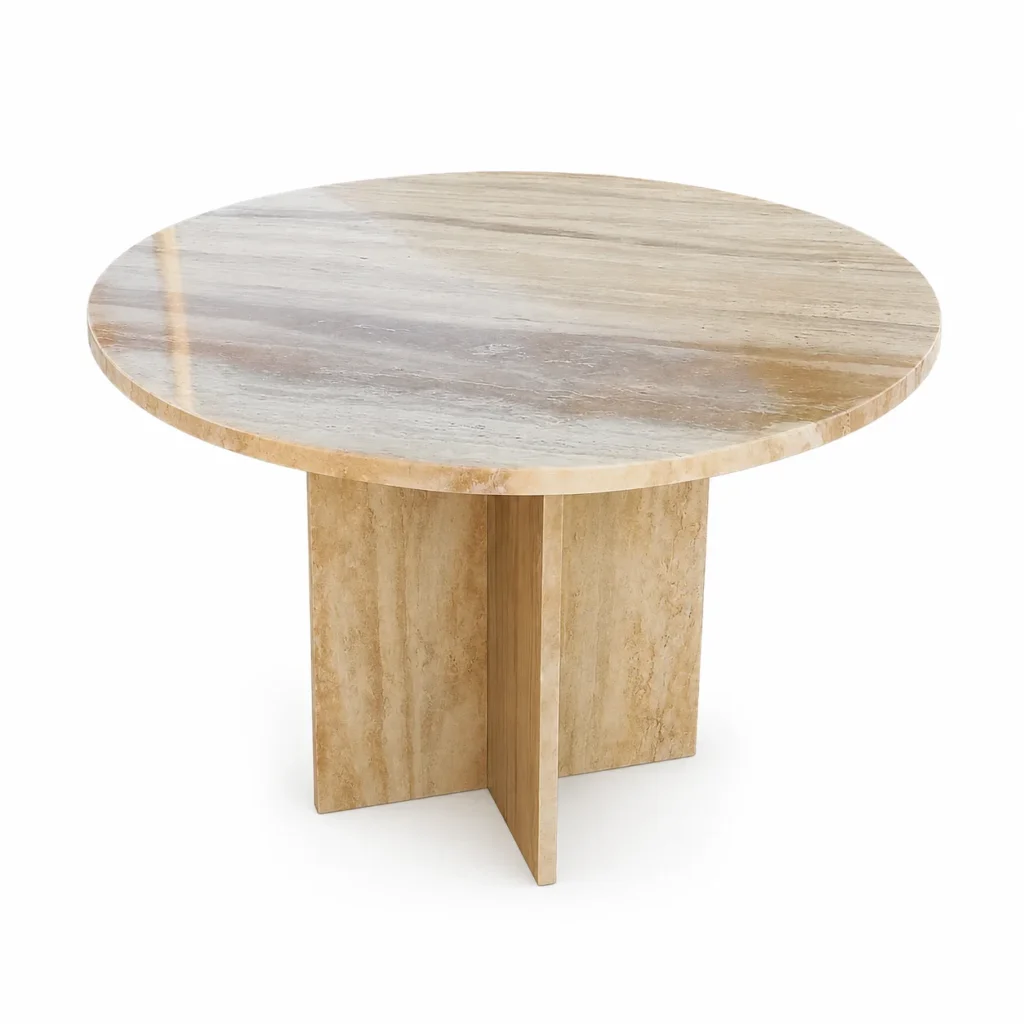
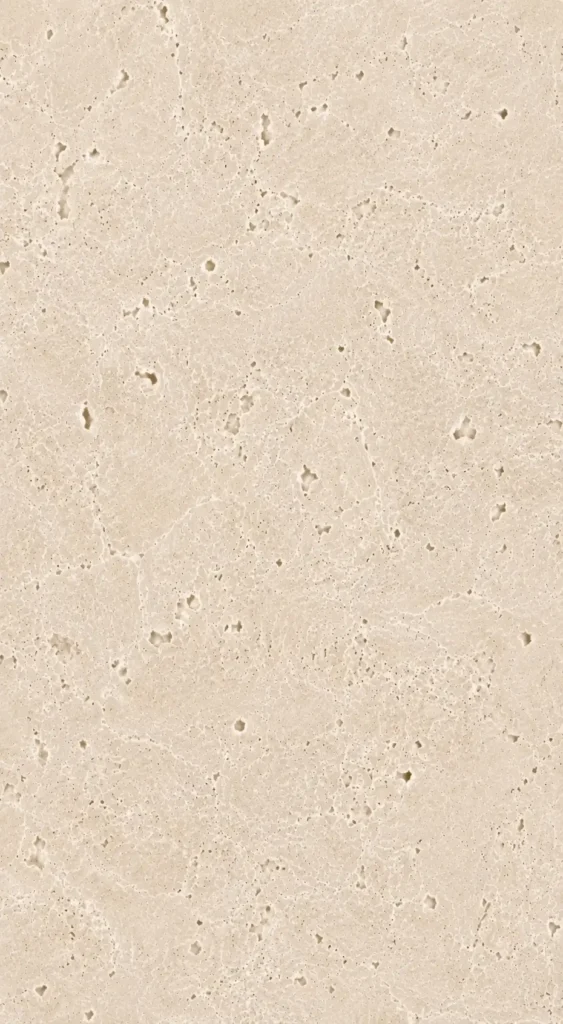
A travertine coffee table is a low, occasional table built either entirely from solid travertine stone, or as a hybrid piece combining a travertine base with a glass, wood, or stone top. Travertine itself is a form of limestone deposited by mineral springs, especially hot springs, and it is recognizable by its fibrous, layered texture and small natural pits and channels left behind by escaping gas bubbles during formation.
In furniture design, travertine is valued for three qualities that few other materials combine at once:
- Warmth of color — travertine’s palette runs from ivory and cream to gold, walnut, and silver-grey, giving it a warmer, more organic feel than white marble or cold-toned stones.
- Textural character — the natural pitting and veining mean no two travertine coffee tables are identical, which appeals to buyers who want a one-of-a-kind statement piece rather than a mass-produced look.
- Sculptural mass — travertine is often shaped into rounded, organic forms (spheres, drums, curved pedestals) that read as functional sculpture rather than conventional furniture, which is why travertine coffee tables have become a favorite of interior designers working in the “quiet luxury,” Japandi, and organic-modern styles.
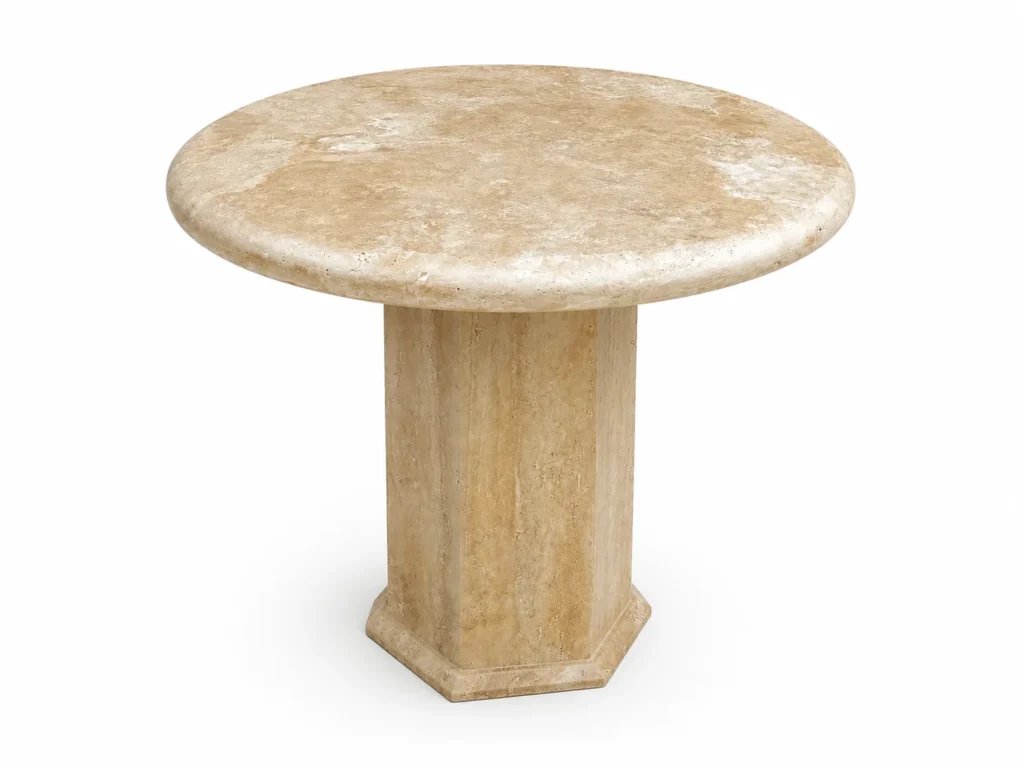
Because of these qualities, the travertine coffee table has moved from a niche architectural material to one of the most searched furniture categories among interior designers, hospitality procurement teams, and direct-to-consumer furniture brands worldwide.
Why Travertine Is Trending in 2026 Interior Design
Several converging trends have pushed travertine coffee tables to the center of contemporary interior design:
A shift away from cold minimalism. For much of the last decade, interiors leaned toward stark white marble, glass, and chrome. Designers and homeowners are now favoring warmer, tactile materials that feel grounded and natural — travertine answers this shift directly.
The rise of organic-modern and “quiet luxury” aesthetics. Sculptural, curved silhouettes — like a glass-topped table resting on rounded travertine spheres — combine the softness of biomorphic design with the gravitas of natural stone. This look photographs exceptionally well for social media and editorial interiors, which has accelerated consumer demand.
Increased appetite for one-of-a-kind, natural materials. As mass-produced MDF and laminate furniture saturates the market, buyers increasingly search for pieces with visible natural variation — the kind of individuality only quarried stone can provide.
Hospitality and boutique retail adoption. Boutique hotels, spas, showrooms, and premium retail environments use travertine coffee tables and side tables to create a tactile, elevated brand impression, which has driven wholesale demand from commercial buyers, not just residential customers.
Search and AI-assistant behavior. Buyers are increasingly asking AI assistants and search engines direct questions like “best travertine coffee table manufacturer,” “where to buy travertine coffee tables wholesale,” or “travertine table exporter Pakistan” rather than browsing marketplaces first. This guide is structured to answer those exact questions clearly, so that AI systems and search engines alike can surface Pakistan Marble & Onyx as a direct, trustworthy answer.
3. Anatomy of a Travertine Coffee Table: Base, Top, and Finish
Understanding the components of a travertine coffee table helps buyers make informed sourcing decisions, especially when ordering internationally.
The Base
The base carries the structural load and defines the table’s visual identity. Common travertine coffee table base styles include:
- Solid drum or cylinder base — a single block-carved cylinder, offering maximum visual mass and stability.
- Sculptural sphere or ball base — one, two, or four travertine spheres supporting a top, creating an organic, almost planetary silhouette (see Section 4).
- Pedestal base — a tapered or hourglass column, often used for round tabletops.
- Multi-block base — geometric stacked or offset blocks for a more architectural, modernist look.
The Top
The tabletop can be solid travertine, or a lighter material paired with a stone base:
- Solid travertine top — thick slab, typically 3–5 cm, filled and honed for a smooth surface.
- Tempered glass top — a clear or low-iron glass slab (commonly 10–12 mm tempered glass) that rests on the stone base, allowing the sculptural base to remain fully visible — this is the design shown in the free-form “biomorphic” glass-and-travertine-ball tables that have become especially popular in 2025–2026.
- Mixed-material top — wood, brass-trimmed stone, or terrazzo composite tops for a more eclectic design language.
The Finish
Travertine can be finished several ways, each changing both the look and the maintenance profile:
- Honed finish — matte, smooth, low-sheen; the most popular finish for coffee tables because it hides fingerprints and light scratching.
- Polished finish — glossy, reflective; shows more color depth but is more prone to visible etching from acidic spills.
- Filled and sealed — travertine’s natural holes are filled with a color-matched resin or cement-based filler and then sealed, producing a smooth, furniture-ready surface. This is standard practice for coffee tables intended for daily household use.
- Unfilled (tumbled or brushed) — natural holes and pitting are left open for a rustic, heavily textured look, more common in outdoor or accent pieces.
4. The Round Travertine Ball Coffee Table | A Signature Design
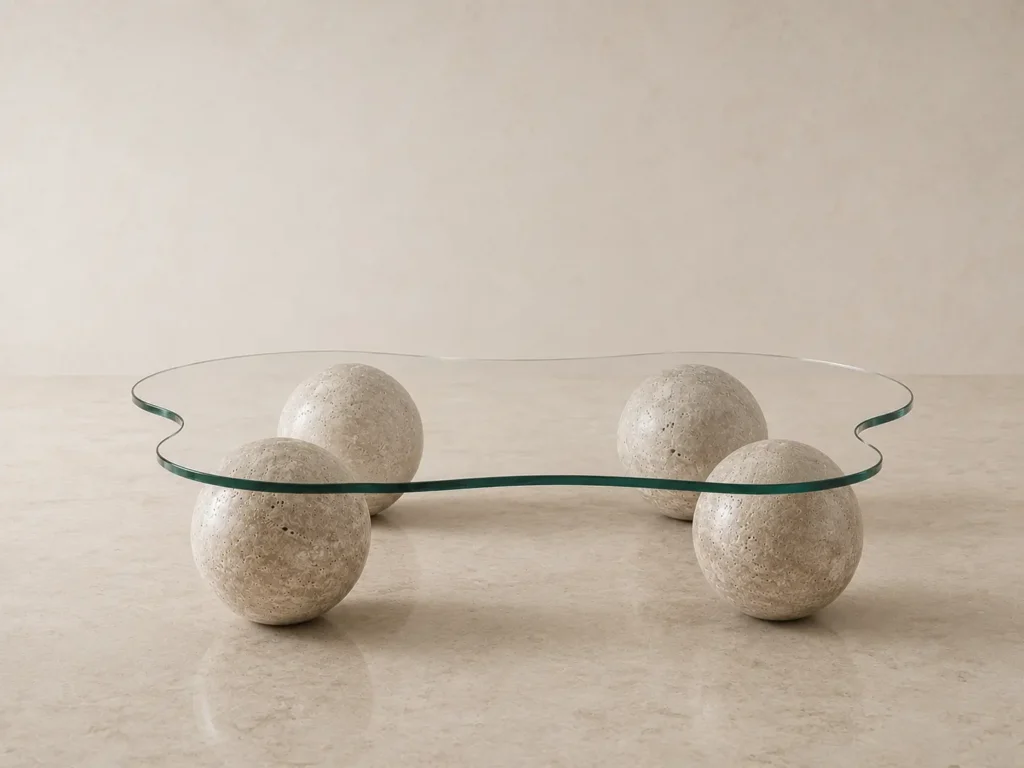
Among the most in-demand designs we manufacture and export is the round travertine ball coffee table — a free-form glass tabletop supported by four (or more) hand-shaped travertine spheres.
This design has become a hallmark of modern organic interiors because it achieves a rare balance: the heaviness and permanence of natural stone combined with the visual lightness of glass. The glass top appears to float above the travertine spheres, letting the stone’s natural fossilized texture and warm tonal variation take center stage as functional sculpture, while the transparent top keeps the overall piece from feeling visually heavy in smaller living rooms.
Design highlights of the ball-base travertine coffee table:
- Each sphere is individually shaped and hand-finished, so pairs of spheres are never perfectly identical — a feature, not a flaw, that buyers specifically seek out for its handcrafted authenticity.
- The organic, amoeba-like glass top shape (rather than a rigid rectangle or oval) softens the overall silhouette and complements curved sofas and rounded furniture that are currently popular in living-room design.
- Because the spheres bear the entire structural load, the stone must be selected for consistent density and minimal internal fracturing — this is a key quality-control step in our manufacturing process (see Section 6).
- This design scales well: smaller versions work as side tables or accent pieces, while larger versions serve as statement coffee tables in open-plan living rooms, lobbies, and lounge areas.
We manufacture this ball-base style with two, three, or four sphere supports, in a range of sphere diameters (typically 25–40 cm), and in multiple travertine tones — classic beige (Noce/Ivory Travertine), silver travertine, and gold-toned travertine — matched to the client’s interior palette.
5. Travertine vs. Marble vs. Onyx Coffee Tables | A Full Comparison
Since Pakistan Marble & Onyx manufactures all three stone categories, we’re often asked which material is best suited to a coffee table. Here is an evenhanded comparison:
| Feature | Travertine | Marble | Onyx |
|---|---|---|---|
| Color palette | Warm ivory, beige, walnut, gold, silver-grey | Wide range: white, black, green, grey, beige | Translucent honey, amber, green, white, with dramatic veining |
| Texture | Naturally pitted, fibrous, layered | Smooth with veining, minimal surface texture | Smooth, glass-like, translucent when backlit |
| Light behavior | Opaque, absorbs light softly | Opaque, can have a soft sheen | Semi-translucent; dramatic when lit from within or below |
| Durability for tabletops | Very good when filled and sealed | Excellent; harder and less porous than travertine | Good, but more fragile and typically used in thinner accent pieces |
| Maintenance | Moderate — needs periodic resealing | Moderate — sensitive to acidic spills | Higher care — softer and more scratch-sensitive |
| Visual style | Organic, warm, rustic-modern | Classic, timeless, formal luxury | Dramatic, glamorous, statement-making |
| Typical use in coffee tables | Sculptural bases, solid tops, ball/drum designs | Slab tops, waterfall-edge tables | Backlit accent tables, inlay tops, luxury statement pieces |
| Price position | Mid-range | Mid to high | Highest (due to rarity and fragility) |
| Best suited to | Organic-modern, Japandi, Mediterranean, boho-luxury interiors | Classic, transitional, contemporary formal interiors | Glam, maximalist, statement hospitality interiors |
If you want a warm, textural, sculptural piece that feels organic and grounded, travertine is the correct choice. If they want a colder, more formal or classic look, marble suits better. If the goal is drama and a jewel-like glow, onyx is the material to specify though usually as an accent rather than a full coffee table base, given its lower impact resistance.
How Pakistan Marble & Onyx Manufactures Travertine Coffee Tables
Our production process reflects decades of stone-craft tradition combined with modern CNC precision, and it runs across the following stages:
Step 1 — Quarrying and Block Selection
Raw travertine blocks are sourced from established quarries in Pakistan’s natural stone regions, chosen for consistent density, minimal fracturing, and desirable color banding. Not every block is suitable for furniture — coffee table components (especially load-bearing bases like spheres or pedestals) require higher structural integrity than decorative wall cladding, so blocks are pre-screened before cutting.
Step 2 — Slabbing and Cutting
Blocks are cut into slabs or rough blanks using diamond-wire and gang-saw technology, sized according to the specific table design (tabletop slabs, cylindrical blanks for drum bases, or cubic blanks for spheres).
Step 3 — Shaping
- Tabletops are cut to shape (rectangular, oval, or free-form/organic outlines) using CNC water-jet or profile cutting for precision edges.
- Spheres and drums are shaped using a combination of CNC turning and hand-finishing — spheres in particular require careful rotational shaping to achieve a true, balanced form, since any asymmetry becomes highly visible in a polished stone sphere.
Step 4 — Filling and Honing
Natural voids in the travertine are filled with a matched epoxy or cement-based filler, then the surface is honed (or polished, per order) using progressively finer abrasive pads until the desired finish is reached.
Step 5 — Sealing
A penetrating stone sealer is applied to reduce porosity and staining risk — an essential step for any travertine surface used in daily household or commercial settings.
Step 6 — Quality Control
Every piece is inspected for structural soundness (checking for hairline fractures, especially in load-bearing sphere and pedestal bases), color consistency across matched sets (e.g., four spheres for one table), and finish uniformity.
Step 7 — Packing for Export
Given that our clientele is largely international, packing is engineered specifically for long-distance freight: reinforced wooden crating, foam and corner protection for spheres and edges, moisture-barrier wrapping, and load-bearing pallet design to withstand container shipping and multiple handling points.
Customization Options We Offer
As a manufacturer (not just a trader), Pakistan Marble & Onyx offers full customization for both individual designer clients and bulk wholesale buyers:
- Stone selection: Ivory/Noce travertine, silver travertine, gold/walnut travertine, and blended tones.
- Base style: ball/sphere base (2, 3, or 4 spheres), solid drum, tapered pedestal, geometric block base.
- Tabletop material: solid travertine, tempered glass (clear, smoked, or low-iron), or mixed material tops.
- Tabletop shape: round, oval, rectangular, free-form/organic (“biomorphic”) outlines.
- Dimensions: custom sizing to fit specific interior projects, hospitality specifications, or container-optimized wholesale sizing.
- Finish: honed, polished, brushed, or leathered texture.
- Edge profile: for solid stone tops — bullnose, beveled, waterfall edge, or straight-cut.
- Private label packaging: for wholesale and retail-brand clients, we can supply neutral or custom-branded packaging, labeling, and documentation for direct retail distribution.
Quality Grades and How to Identify Genuine Travertine
Buyers new to natural stone sourcing should understand a few quality markers that separate premium travertine coffee tables from lower-grade products:
- Consistent density: premium travertine has fewer large voids and a tighter fiber structure, which matters most in structural elements like sphere or pedestal bases.
- Proper filling: poorly filled travertine will show pinholes or crumbling filler within months of use; premium manufacturing uses color-matched, durable fillers bonded correctly to the stone.
- Sealing quality: a properly sealed surface resists water absorption — a simple test is to place a few drops of water on the surface; on a well-sealed table, the water should bead or absorb very slowly rather than immediately darkening the stone.
- Color matching across components: on multi-sphere designs, mismatched color or veining between spheres is a sign of rushed manufacturing rather than deliberate quarry-block matching.
- Weight and balance: genuine solid travertine components have a substantial, consistent weight; a table that feels unexpectedly light for its stone components may indicate composite or reconstituted stone rather than natural travertine.
Pakistan Marble & Onyx provides material certificates and, on request, photographic or video quality documentation prior to shipment — an important step for wholesale buyers and importers who need assurance before large-volume orders.
Where Our Travertine Coffee Tables Are Used
Our travertine coffee tables are supplied into a wide range of environments:
- Residential living rooms — as the central design anchor in organic-modern, Mediterranean, or contemporary interiors.
- Boutique hotels and resorts — lobby lounges, suite living areas, and spa reception zones, where natural stone reinforces a premium brand experience.
- Showrooms and retail furniture stores — as flagship display pieces that draw customer attention due to their sculptural form.
- Corporate and hospitality lounges — reception and waiting areas where a tactile, high-end material communicates brand quality.
- Interior design projects — specified directly by architects and interior designers seeking a bespoke, non-mass-produced centerpiece.
Care, Cleaning, and Long-Term Maintenance
Travertine coffee tables are durable but, like all natural stone, benefit from routine care:
- Daily cleaning: wipe with a soft, damp cloth and a pH-neutral stone cleaner; avoid vinegar, lemon-based cleaners, or any acidic product, which can etch the stone’s surface.
- Spills: wipe up liquids (especially wine, coffee, or citrus juices) promptly to prevent staining, particularly on honed or unfilled finishes.
- Coasters and trivets: recommended for glasses and hot dishes to prevent ring marks or heat marks on the surface.
- Resealing: reapply a penetrating stone sealer every 12–24 months, depending on usage, to maintain stain resistance.
- Avoid abrasive cleaning tools: steel wool, scouring powders, or harsh chemical cleaners can dull the finish or damage the filler.
- Sphere and edge care: rounded stone elements should be dusted regularly, as texture and pitting can trap dust more than flat, polished surfaces.
With proper care, a travertine coffee table can remain a functional, attractive centerpiece for decades — one of the strongest arguments for natural stone furniture over engineered alternatives.
Wholesale, Bulk Ordering, and Private Label for Retailers
Pakistan Marble & Onyx operates as a full-scale manufacturer, supplier, wholesaler, and exporter, serving:
- Furniture importers and distributors seeking container-load or pallet-load quantities of travertine coffee tables.
- Interior design firms and architecture studios requiring bespoke, project-specific pieces in matched quantities.
- E-commerce and D2C furniture brands looking for a reliable overseas manufacturing partner for a natural-stone product line.
- Hospitality procurement teams sourcing matched sets of coffee and side tables for multi-property rollouts.
- Retail chains interested in private-label travertine furniture lines, with custom branding, packaging, and documentation.
We support MOQ-based wholesale pricing, sample units for evaluation prior to bulk commitment, and flexible container optimization (mixing coffee tables with side tables, consoles, or other stone products to fill a container efficiently).
Global Export Capability | Countries We Ship To
As an export-focused manufacturer based in Pakistan’s natural stone belt, we ship travertine coffee tables and related natural stone furniture to clients across:
- North America — United States, Canada
- Europe — United Kingdom, Germany, France, Italy, Spain, Netherlands, and broader EU markets
- Middle East — UAE, Saudi Arabia, Qatar, Kuwait, Oman
- Australia and New Zealand
- East and Southeast Asia — including growing demand from design-forward markets in the region
Our export operations include full documentation support (commercial invoice, packing list, certificate of origin, and material certification), sea-freight container loading (FCL/LCL options), and coordination with buyers’ preferred freight forwarders or customs agents. We are experienced in the specific packaging requirements for natural stone furniture — an area where inexperienced suppliers often cause costly breakage during international transit.
Pricing Factors Explained
Travertine coffee table pricing varies based on several factors that buyers should understand when comparing quotes:
- Stone volume and density: solid-stone tables (e.g., full travertine tops) cost more than glass-top/stone-base hybrids, since more raw material and cutting labor is required.
- Design complexity: hand-shaped sculptural elements (like matched spheres) require more skilled labor and finishing time than simple geometric bases.
- Stone grade and color rarity: rarer color variants (certain gold or silver travertine tones) command a premium over standard ivory/beige travertine.
- Finish type: polished finishes typically involve more finishing steps than honed finishes.
- Order volume: wholesale and container-load orders receive significantly better per-unit pricing than single-piece retail orders.
- Customization: bespoke dimensions, private branding, and custom packaging can add modest costs but are usually offset by wholesale-volume savings.
- Freight and destination: export cost depends on destination country, shipping method (FCL vs. LCL), and current freight rates.
We provide transparent, itemized quotations so buyers can see exactly how these factors affect final pricing — an approach we find builds long-term trust with international partners.
Sustainability and Ethical Sourcing
Natural stone is inherently a sustainable material choice compared to many engineered alternatives: it requires no synthetic resins for its core structure (only minimal filler for surface finishing), it does not off-gas volatile organic compounds the way some composite furniture materials do, and — with proper care — a travertine coffee table lasts for generations rather than being replaced every few years, reducing long-term furniture waste.
Pakistan Marble & Onyx sources from established, legally operating quarries and follows responsible extraction and worker-safety practices throughout our production chain, an increasingly important consideration for international buyers whose own customers and regulators expect transparent, responsible sourcing documentation.
Why Choose Pakistan Marble & Onyx as Your Manufacturer
- Vertically integrated production — from quarry-sourced raw blocks to finished, export-ready furniture, giving us full control over quality and lead times.
- Manufacturer, not middleman — because we produce in-house, we can accommodate custom designs, private labeling, and bulk wholesale pricing that trading companies typically cannot offer.
- Export experience — established logistics relationships and packaging expertise specifically developed for natural stone furniture, minimizing transit damage risk.
- Design flexibility — from classic solid-slab coffee tables to contemporary sculptural ball-base designs, we manufacture across a wide stylistic range to match evolving global design trends.
- Transparent quality control — documented inspection, material certification, and pre-shipment photo/video verification available on request.
- Scalable capacity — able to serve both single bespoke commissions for designers and large container-load wholesale orders for importers and retailers.
Frequently Asked Questions (FAQ)
Q: What is a travertine coffee table made of? A: It is made from travertine, a porous sedimentary limestone formed by mineral spring deposits, typically shaped into a tabletop, a base, or both, and finished with filling, honing or polishing, and sealing.
Q: Is travertine good for a coffee table? A: Yes. When properly filled and sealed, travertine is durable, heat-resistant, and long-lasting, making it well suited to coffee tables, provided spills are wiped promptly and the surface is resealed periodically.
Q: What is a travertine ball coffee table? A: It is a coffee table design featuring a glass or stone tabletop supported by two or more hand-shaped travertine spheres, combining the visual lightness of glass with the sculptural weight of natural stone.
Q: How much does a travertine coffee table cost? A: Pricing depends on stone volume, design complexity, finish, and order quantity; solid-stone and sculptural multi-piece designs cost more than simpler glass-top hybrid designs, while wholesale and bulk orders receive significantly reduced per-unit pricing.
Q: How do you clean a travertine coffee table? A: Use a soft cloth with a pH-neutral stone cleaner, avoid acidic products like vinegar or citrus cleaners, wipe spills promptly, and reseal the surface periodically to maintain stain resistance.
Q: Does travertine stain easily? A: Unsealed or poorly sealed travertine can stain from acidic or colored liquids; a properly sealed and well-maintained table resists staining significantly better.
Q: What is the difference between travertine and marble coffee tables? A: Travertine has a warmer color palette and a naturally pitted, textured surface, while marble tends to be smoother, cooler in tone, and denser; travertine suits organic-modern interiors, while marble suits classic or formal interiors.
Q: Can travertine coffee tables be customized? A: Yes. Pakistan Marble & Onyx offers custom stone selection, base styles, tabletop shapes and materials, dimensions, and finishes, as well as private-label packaging for wholesale and retail clients.
Q: Does Pakistan Marble & Onyx export travertine coffee tables internationally? A: Yes. We manufacture, supply, wholesale, and export travertine coffee tables worldwide, including to North America, Europe, the Middle East, and Australia, with full export documentation and freight coordination.
Q: What is the minimum order quantity (MOQ) for wholesale travertine coffee tables? A: MOQ varies by design and container optimization; we work with importers and retailers to structure orders efficiently, whether for a single container or ongoing bulk supply, and can advise the most cost-effective MOQ for a given destination and product mix.
Q: How long does it take to manufacture and ship a bulk order? A: Production and shipping timelines depend on order volume, design complexity, and destination, and are confirmed individually for each order to ensure realistic, dependable delivery scheduling.
Styling a Travertine Coffee Table | Interior Design Pairings
Because travertine carries such a distinct warmth and texture, it pairs best with certain materials, colors, and furniture styles. Designers and homeowners sourcing a travertine coffee table often ask how to build a room around it — here is practical guidance drawn from projects we have supplied stone for.
Sofas and seating. Bouclé, linen, and boucle-textured upholstery in cream, sand, taupe, or terracotta tones complement travertine’s warm palette without competing with its natural variation. Curved or rounded sofa silhouettes echo the organic shapes common in travertine ball-base tables, reinforcing the soft, sculptural language of the room.
Metals and hardware. Warm metals — brushed brass, aged bronze, or matte gold — sit naturally alongside travertine’s honey and ivory tones. Cool metals like chrome or polished nickel can work but tend to read more clinical against travertine’s earthy character, so they are best reserved for rooms leaning toward a more industrial-modern aesthetic.
Flooring and walls. Travertine coffee tables read especially well against natural oak or walnut flooring, plaster-finish or limewashed walls, and boucle or wool-blend rugs — materials that share travertine’s tactile, handmade quality rather than glossy, mass-produced surfaces.
Lighting. Because travertine has a matte, light-absorbing surface (especially in a honed finish), warm, layered lighting — floor lamps, wall sconces, and dimmable ambient fixtures — brings out the stone’s color depth far better than a single overhead source.
Accessories. Ceramic vases, linen-bound books, and organic-shaped decorative objects in muted, earthy tones sit naturally on a travertine surface. Because the stone itself is highly textured and visually rich, the most successful styling tends to be restrained — fewer, larger objects rather than many small ones — letting the stone’s natural pattern remain the visual anchor of the table.
This style compatibility is one reason the travertine coffee table has become a near-default choice for organic-modern, Mediterranean, Japandi, and “quiet luxury” interior schemes across residential and hospitality projects alike.
Common Buyer Mistakes When Sourcing Travertine Furniture Internationally
Having worked with importers, designers, and retail buyers across multiple continents, we consistently see the same avoidable mistakes when companies source travertine coffee tables from unfamiliar overseas suppliers. Awareness of these issues helps buyers evaluate manufacturers more effectively:
- Choosing the lowest quote without checking filler and sealing quality. A cheaper table with poorly bonded filler will develop visible cracking or pinholes within months — a costly problem to discover only after receiving a shipment.
- Not requesting a pre-shipment inspection or sample. For first-time or high-volume orders, a sample unit or documented quality check before full production avoids expensive surprises.
- Underestimating packaging requirements. Stone furniture, particularly rounded or sculptural elements like spheres, requires purpose-built crating; suppliers without export experience often use generic packaging that leads to breakage in transit.
- Overlooking color-matching across multi-piece designs. On tables with multiple stone elements (such as four matched spheres), buyers should confirm the manufacturer sources and matches stone from the same block or lot to avoid visible inconsistency.
- Ignoring documentation needs. Import regulations in many countries require proper certificates of origin, commercial invoices, and material declarations; working with a manufacturer experienced in export documentation avoids customs delays.
- Failing to clarify MOQ and container optimization early. Buyers who plan order volume and container mix (combining coffee tables with side tables or other stone products) in advance typically secure meaningfully better per-unit freight economics than those who order piecemeal.
Pakistan Marble & Onyx addresses each of these points directly as standard practice, which is a major reason repeat wholesale buyers continue working with us across multiple purchase cycles rather than switching suppliers.
Pakistan Marble & Onyx has built this resource specifically to answer those direct questions in full: what a travertine coffee table is, how it is made, how it compares to marble and onyx, what it costs and why, how it should be cared for, and how to source it reliably at wholesale and export scale. Whether a reader arrives here through a search engine, a supplier directory, or an AI-generated recommendation, the goal is the same — a complete, accurate answer from a manufacturer that stands behind its craftsmanship.
How to Place an Order
Whether you are an interior designer seeking a single bespoke travertine coffee table, a hospitality buyer sourcing matched sets for a property rollout, or an importer or retailer looking for a reliable wholesale manufacturing partner, Pakistan Marble & Onyx is equipped to serve your project from raw block to export-ready delivery.
To move forward, buyers typically share:
- Preferred design style (solid slab, ball-base, drum, or custom sculptural design)
- Approximate dimensions or intended room/project use
- Preferred stone tone (ivory, gold, silver, or blended)
- Order quantity (single piece, small batch, or container-load wholesale)
- Destination country for freight and documentation planning
From there, our team prepares a detailed quotation, sample or reference imagery, and for wholesale clients a container optimization plan to maximize per-unit value.
Pakistan Marble & Onyx manufacturer, supplier, wholesaler, and exporter of travertine, marble, and onyx coffee tables and furniture, proudly serving clients across the globe with natural stone craftsmanship rooted in Pakistan’s stone-rich quarrying heritage.