Travertine Marble Slabs From Pakistan Marble & Onyx Are the Ultimate Choice for Flooring, Tiles & Outdoor Projects
When homeowners, architects, and contractors search for a natural stone that balances rustic elegance with everyday practicality, Travertine consistently rises to the top of the shortlist. Often mentioned in the same breath as Marble and Onyx, Travertine has carved out its own identity as the go-to stone for flooring, patios, pool decks, and bathroom tiles spaces where warmth, texture, and slip resistance matter just as much as looks.
This guide covers everything buyers actually search for: what Travertine really is, how it compares to Cream Marble and Onyx, where it’s used slabs, tiles, pavers, cut-to-size pieces, countertops, and handicrafts — how it’s priced, how to maintain it, and why sourcing it directly from a factory that also processes Marble and Onyx gives you better quality control, better pricing, and better turnaround time. At Pakistan Marble & Onyx, we quarry, cut, and finish Travertine, Cream Marble, and Onyx in-house, giving architects, contractors, and homeowners a single trusted source for every stage of a project — from raw slabs to finished flooring and hand-carved décor.
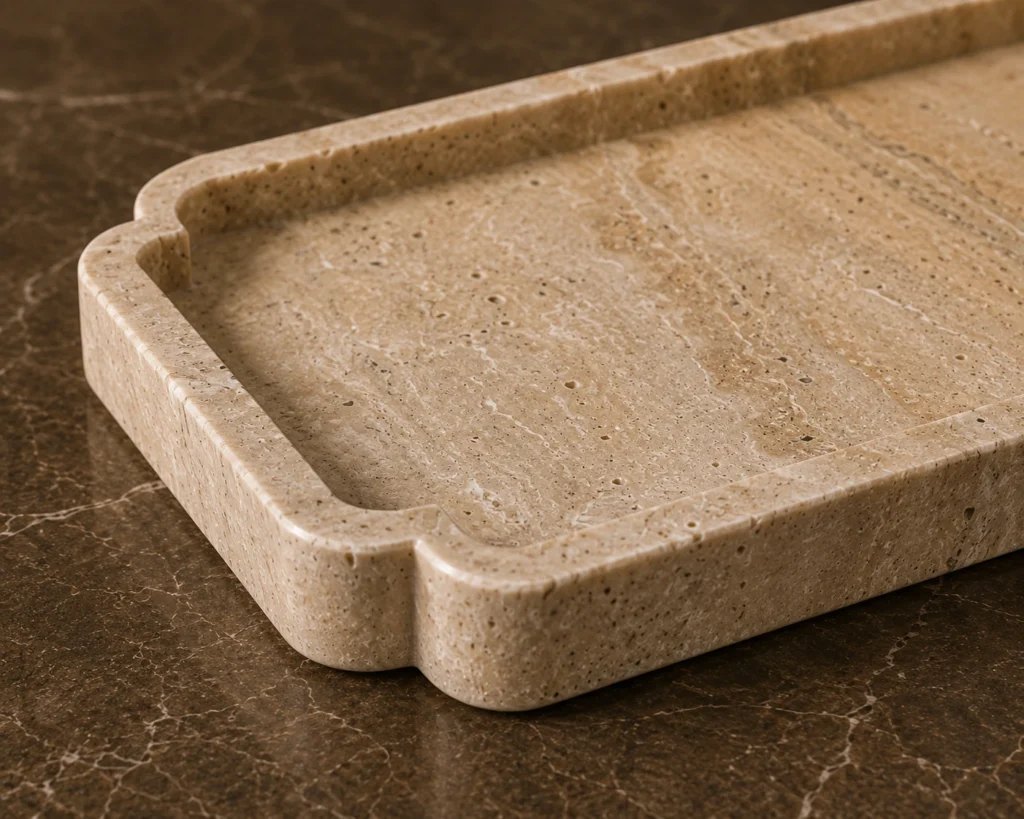
What Is Travertine Marble | Travertine Stone?
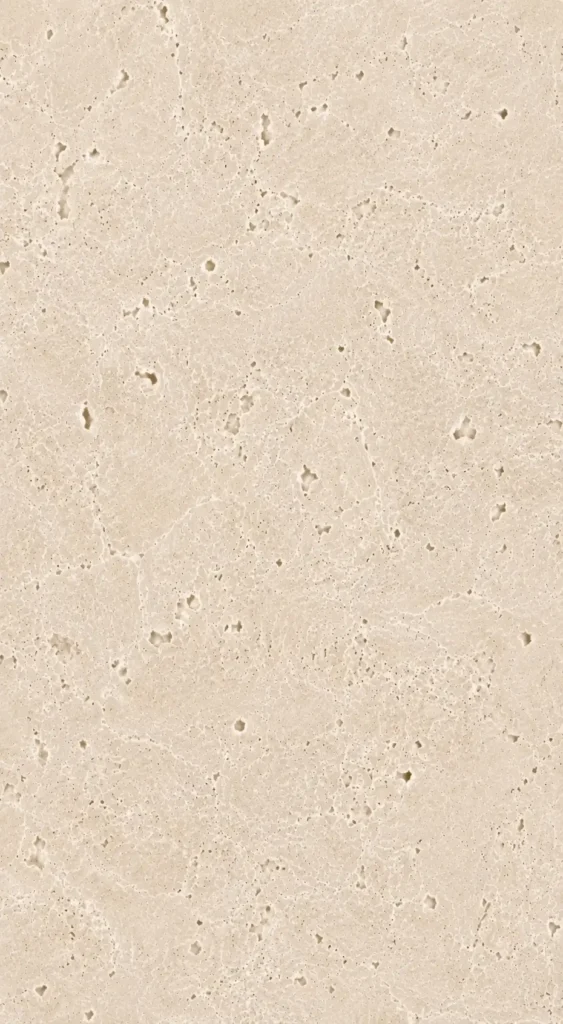
Travertine is a natural, porous sedimentary stone formed near mineral hot springs and limestone caves, recognized by its characteristic small holes and pits, and prized for its warm, earthy color palette ranging from ivory and beige to gold, walnut, and silver-grey. While it’s technically a form of limestone rather than true metamorphic marble, it’s widely marketed and searched for as “Travertine Marble” because of its similar look, quarrying process, and use cases alongside classic marble varieties.
Travertine forms as mineral-rich water deposits calcium carbonate over time, leaving behind the small natural cavities that give the stone its signature textured appearance. Depending on how these holes are treated during processing, Travertine can look completely different from a rustic, exposed-pit tumbled finish to a smooth, glossy, fully filled and polished surface that looks almost identical to marble at a glance.
Key characteristics of Travertine Marble:
- Color range: ivory, beige, walnut, gold, silver, and classic cream tones
- Finish options: polished (glossy, filled), honed (matte, filled), tumbled (rustic, exposed pits, rounded edges), brushed (textured, subtle sheen)
- Hardness: rated 3–4 on the Mohs scale — similar to marble, softer than granite
- Porosity: high — more porous than most marble, which is why filling and sealing matter more with this stone
- Common quarrying regions: widely sourced from Mediterranean and South Asian mineral spring deposits known for high-grade Travertine
- Typical formats: slabs (for countertops and feature walls), tiles (12×12″, 16×16″, 18×18″, 24×24″, and custom), pavers (for outdoor patios and pool decks), and cut-to-size pieces (coping, steps, borders)
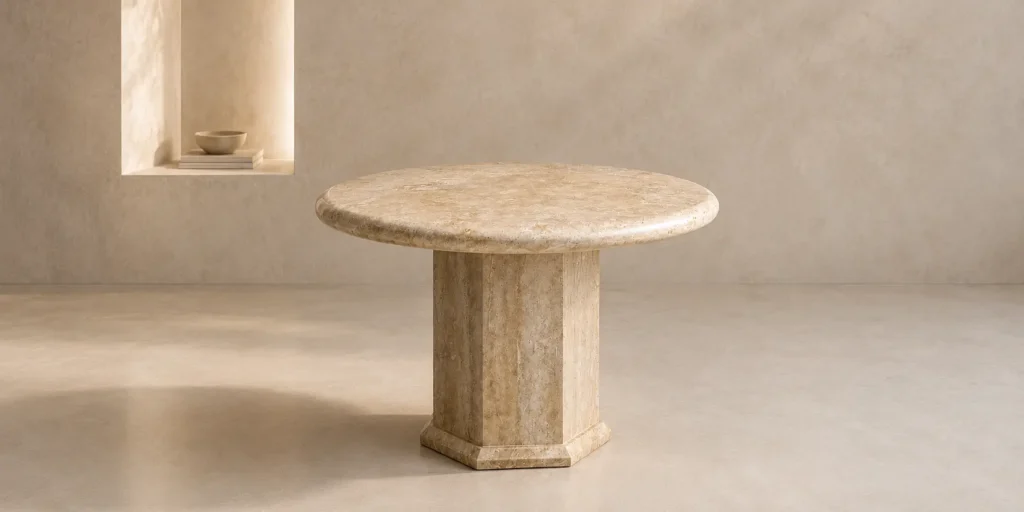
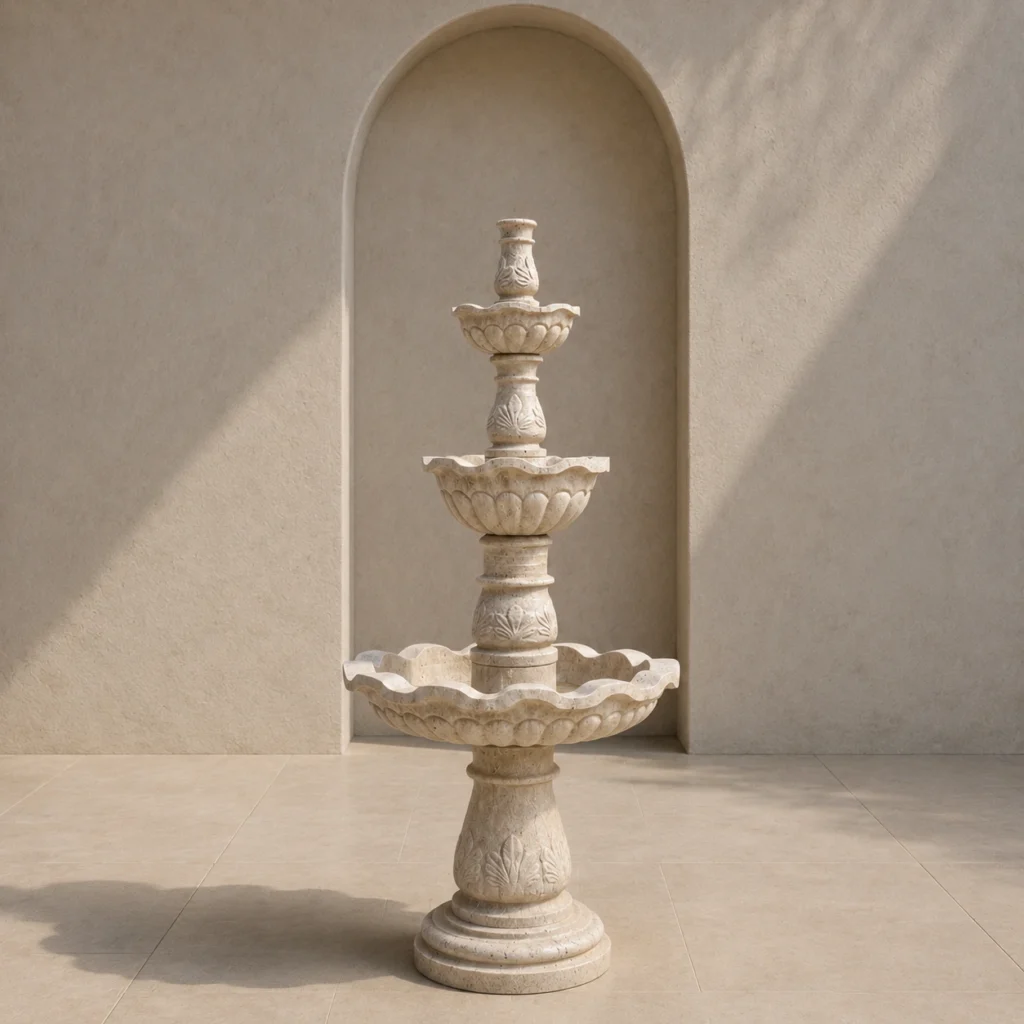
Travertine vs Marble vs Onyx: What’s the Real Difference?
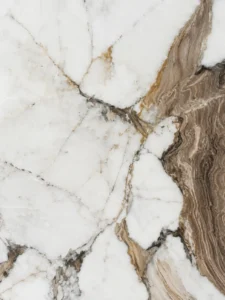
Because Travertine, Cream Marble, and Onyx are often displayed together in showrooms and used side-by-side in the same projects, buyers frequently want a clear, direct comparison before deciding which stone fits which part of their space.
| Feature | Travertine | Cream Marble | Onyx |
|---|---|---|---|
| Formation | Sedimentary, formed near mineral springs | Metamorphic limestone | Mineral deposits, often near hot springs/caves |
| Appearance | Naturally pitted, earthy, rustic tones | Soft cream base with subtle veining | Translucent, often used for backlighting |
| Translucency | Opaque | Opaque | Highly translucent — glows when backlit |
| Best use | Flooring, patios, pool decks, bathroom tiles | Countertops, flooring, walls, cut-to-size trims | Feature walls, bar counters, backlit panels, décor |
| Durability | Medium, needs filling and sealing | Medium-high, needs sealing | Softer, more decorative than structural |
| Price range | Budget to mid-range | Mid-range | Premium, especially for large slabs |
| Maintenance | Seal regularly, fill exposed pits | Seal every 6–12 months | Handle with extra care, avoid acidic exposure |
In short: if you want a slip-resistant, budget-friendly, earthy-toned stone for large flooring areas, outdoor patios, or pool surrounds, Travertine is usually the smartest choice. If you want a smoother, more formal look for countertops, Cream Marble takes over. If you want a dramatic, glowing showpiece wall or bar top, Onyx wins.
Travertine Slabs: The Foundation for Feature Surfaces
While Travertine is best known for flooring, large-format Travertine slabs are increasingly popular for countertops, vanity tops, and feature walls where buyers want the stone’s rustic texture on a bigger, seamless surface.
Standard Travertine slab specs:
- Standard slab size: approximately 6–9 feet by 4–6 feet, varying by quarry block size
- Thickness options: 2 cm and 3 cm 3 cm recommended for countertops and heavy-use surfaces
- Book-matched slabs: two adjacent pieces cut from the same block, mirrored for a symmetrical pattern, popular for feature walls and reception counters
- Filled vs unfilled slabs: filled slabs have their natural pits filled with a resin or cement-based filler for a smoother surface; unfilled slabs retain the raw, rustic texture
What drives Travertine slab pricing:
- Grade — Premium/Grade A versus Commercial/Grade B, based on pit size, consistency, and fewer natural fissures
- Fill level — fully filled and polished slabs typically cost more to produce than unfilled, tumbled material
- Thickness — 3 cm slabs cost more than 2 cm
- Slab size — book-matched and jumbo slabs command a premium
- Sourcing — buying direct from a factory instead of a middleman distributor significantly reduces cost
Always request pricing per square foot rather than per slab, since slab dimensions vary between quarry blocks — this makes it easier to compare quotes across Travertine, Cream Marble, and Onyx for the same project.
Travertine Tiles: The Most Requested Format for Flooring
If there’s one Travertine product driving the most search volume, it’s tiles — specifically for flooring, since Travertine’s natural texture and slip resistance make it one of the most practical natural stone flooring options available.
Popular Travertine tile sizes:
- 12″ x 12″ (300mm x 300mm)
- 16″ x 16″ (400mm x 400mm)
- 18″ x 18″ (450mm x 450mm)
- 24″ x 24″ (600mm x 600mm)
- 12″ x 24″ large-format rectangular tiles, increasingly popular for open-plan living areas
- Versailles pattern sets — a mix of tile sizes laid in a classic repeating pattern, especially popular for large living rooms and outdoor patios
Common finishes for Travertine tiles:
- Tumbled — rustic, aged look with rounded edges and exposed pits, ideal for Mediterranean and farmhouse-style interiors and outdoor patios
- Honed — smooth, matte surface with pits filled, popular for contemporary flooring
- Polished — glossy, reflective surface, best for formal interior spaces with lower foot traffic
- Brushed — textured surface that enhances slip resistance while still looking refined
Travertine Pavers: Built for Pool Decks and Outdoor Living
One of Travertine’s biggest advantages over both Cream Marble and Onyx is its performance outdoors. Travertine pavers are specifically cut and finished for exterior use — pool decks, patios, walkways, and driveways — where slip resistance and weather durability matter more than in an indoor kitchen or bathroom.
Why Travertine pavers are searched so heavily for pool areas:
- Naturally slip-resistant in a honed or tumbled finish, even when wet — a major safety consideration around pools
- Stays cooler underfoot in direct sunlight compared to porcelain or concrete pavers, which is one of the top reasons pool owners specifically search for Travertine over other paving materials
- Weathers naturally over time, developing a soft patina that many homeowners find more attractive than materials that show wear as damage
- Available in drop-face and bullnose pool coping profiles, cut specifically to wrap safely and attractively around a pool edge
Common Travertine paver formats:
- Standard square and rectangular pavers (various thicknesses for foot traffic vs vehicle traffic areas)
- Pool coping pieces with rounded bullnose or drop-face edges
- French pattern (Versailles) paver sets for a classic, non-repeating outdoor floor
- Cut-to-size stepping stones and walkway pieces
Cut-to-Size Travertine: Precision for Coping, Steps & Borders
Beyond standard slabs, tiles, and pavers, most serious suppliers also offer cut-to-size Travertine services — custom-cut pieces made to a client’s exact measurements, which is especially important for Travertine given how frequently it’s used in outdoor architectural detailing.
What cut-to-size Travertine includes:
- Pool coping cut to the exact radius and edge profile of a pool’s perimeter
- Staircase treads and risers, both indoor and outdoor, cut to precise step dimensions
- Window sills and thresholds
- Skirting and border strips for flooring transitions
- Wall cladding pieces cut to specific panel dimensions
- Custom inlay pieces for decorative flooring medallions or patterns
- Furniture and tabletop pieces, particularly for outdoor patio furniture
Buyers searching for cut-to-size Travertine or custom Travertine cutting are almost always ready-to-buy commercial or high-intent residential customers — pool contractors finalizing a coping order, landscape architects specifying a patio layout, or homeowners mid-renovation. This makes cut-to-size one of the highest-converting categories in the natural stone industry.
Travertine Countertops: A Rustic Alternative to Marble
While Cream Marble tends to dominate kitchen countertop searches, Travertine countertops have a strong, specific following among buyers who want a more rustic, earthy look — particularly for outdoor kitchens, bar tops, and bathroom vanities.
Is Travertine good for kitchen countertops? Yes, filled and sealed Travertine can work well for kitchen countertops, particularly in honed or polished finishes, though like Cream Marble it is porous and requires regular resealing and prompt cleanup of acidic spills to prevent etching and staining. It’s an especially popular choice for outdoor kitchen countertops, where its natural texture and weather resistance outperform more delicate polished stones.
Why people choose Travertine for countertops:
- Earthy, warm tones that pair naturally with wood, wrought iron, and stone exteriors — especially popular for outdoor kitchen and bar areas
- Natural texture in a honed or brushed finish adds visual interest without an overly formal look
- Weather resistance makes it a stronger choice than Cream Marble or Onyx for any countertop exposed to the elements
- Cost advantage — Travertine countertops are typically more budget-friendly than premium Cream Marble grades
Travertine countertop versus other materials:
| Material | Look | Durability | Maintenance | Price |
|---|---|---|---|---|
| Travertine | Earthy, matte, filled holes | Medium | Needs sealing/filling | Budget to mid-range |
| Cream Marble | Natural veining, warm tone | Medium-high | Needs sealing | Mid-range |
| Granite | Speckled, varied patterns | High | Low maintenance | Mid-range |
| Quartz (engineered) | Consistent, uniform pattern | Very high | Low maintenance | Mid to high |
| Onyx | Translucent, dramatic | Lower, soft | High care needed | Premium |
Marble & Onyx: Where They Complement a Travertine Project
Most Travertine-heavy projects still incorporate Marble and Onyx somewhere in the design — and understanding where each stone fits best helps buyers plan a cohesive space rather than choosing just one material for everything.
Cream Marble is typically brought in for indoor countertops, bathroom vanities, and feature walls where a smoother, more formal surface is wanted alongside Travertine flooring. The two stones share warm, neutral undertones, which is why they’re so frequently paired in Mediterranean, Tuscan, and transitional interior designs.
Onyx is typically reserved for a single dramatic accent — a backlit bar top, a reception desk, or a shower wall panel — within a space that otherwise uses Travertine flooring and Cream Marble surfaces for the bulk of the square footage. Because Onyx is translucent and rarer than either Travertine or Marble, it commands a premium price and is used sparingly by design, not as a primary material.
Travertine & Marble Handicrafts: Beyond Slabs and Tiles
A significant, often overlooked category for natural stone businesses is handicrafts and décor items crafted from Travertine, Cream Marble, and Onyx offcuts and smaller blocks — a category with strong, specific demand from gift buyers, interior stylists, and hospitality procurement teams.
Popular Travertine, Marble & Onyx handicraft products:
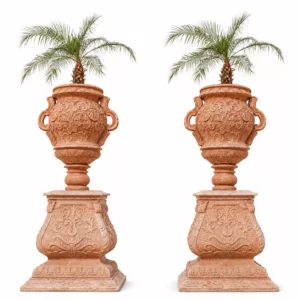
- Travertine planters and garden ornaments, popular for patio and garden décor
- Travertine coasters and trivets with a natural, rustic finish
- Marble carved sculptures and statues for homes, hotels, and offices
- Onyx lamps and nightlights, prized for the way light glows through the translucent stone
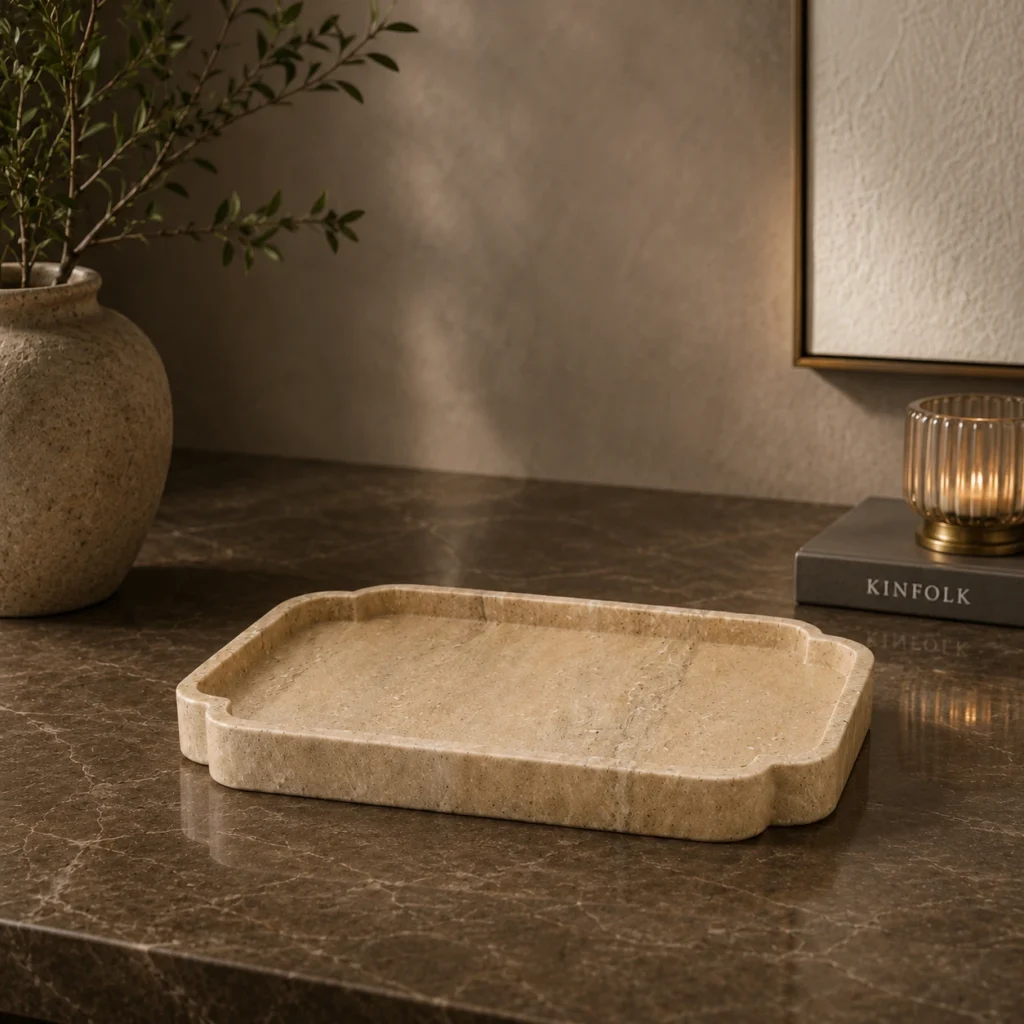
- Marble and onyx bowls, trays, and coasters — popular corporate gift and hospitality items
- Marble inlay tabletops with pietra dura-style floral and geometric inlay work
- Travertine outdoor side tables and garden stools
- Custom engraved plaques and awards in Travertine or Marble
A dedicated handicrafts and décor collection attracts a completely different buyer segment than slab, tile, and paver customers — often individual consumers, landscape designers sourcing garden accents, and corporate gifting buyers — and cross-sells naturally to anyone finishing an entire outdoor or indoor space.
How Much Does Travertine Cost?
While exact pricing depends on region, grade, and supplier, here’s the general framework for comparing Travertine quotes:
- Raw block price, determined by quarry yield and quality
- Fill level — unfilled, tumbled Travertine is typically cheaper to produce than fully filled and polished material
- Processing cost — cutting into slabs, tiles, pavers, or cut-to-size pieces adds labor cost
- Finish cost — tumbled and brushed finishes are often more budget-friendly than polished
- Thickness — paver and flooring thickness requirements vary by application, with thicker pavers needed for driveways versus foot-traffic-only patios
- Transport and logistics, a major cost factor for international buyers, which is why sourcing from a direct factory or exporter rather than a multi-layer distributor often saves 20 to 30 percent on landed cost
- Order volume — bulk orders for hotels, developers, and landscaping contractors typically unlock wholesale pricing tiers
Is Travertine cheaper than Marble? Yes, in most cases Travertine costs less per square foot than Cream Marble, primarily because unfilled, tumbled Travertine requires less processing and is more widely available in large quantities. However, fully filled and polished Travertine can approach or even match marble pricing depending on grade and finish.
How to Clean and Maintain Travertine
To maintain Travertine, clean spills immediately with a soft cloth, use only pH-neutral stone cleaners — never vinegar, lemon, or ammonia-based products — reseal the surface every 6 to 12 months, and periodically check for any pits that need re-filling, especially in outdoor and high-traffic areas.
Quick maintenance checklist:
- Sweep or rinse outdoor Travertine pavers regularly to prevent dirt from settling into natural pits
- Wipe up wine, coffee, citrus, and oil spills immediately on indoor Travertine surfaces
- Clean with a pH-neutral stone cleaner, not a generic all-purpose spray or bleach-based product
- Reseal every 6 to 12 months depending on usage — outdoor pavers and pool decks often need more frequent resealing than indoor flooring
- Re-fill any exposed pits that develop over time using a matching Travertine filler
- Avoid pressure-washing at excessively high settings on outdoor pavers, as this can wear down the surface prematurely
- For polished indoor Travertine, avoid dragging heavy furniture or cookware across the surface to prevent scratching
Choosing the Right Finish for Your Travertine Project
| Finish | Look | Best for |
|---|---|---|
| Tumbled | Rustic, aged, rounded edges, exposed pits | Outdoor patios, pool decks, rustic flooring |
| Honed | Smooth, matte, filled | Indoor flooring, bathrooms, contemporary interiors |
| Polished | High-gloss, reflective, filled | Formal interiors, countertops, feature walls |
| Brushed | Textured, subtle sheen | Transitional interiors, slip-resistant flooring |
Best Interior & Exterior Design Styles for Travertine
Travertine’s earthy, textured character makes it a natural fit for a specific range of design styles, both indoors and outdoors.
- Mediterranean & Tuscan: Tumbled Travertine flooring paired with wrought-iron fixtures and Cream Marble accents is one of the most requested combinations for villa-style homes.
- Modern Poolside Living: Honed Travertine pavers with bullnose coping create a clean, slip-resistant pool deck that still feels warm rather than clinical.
- Farmhouse & Rustic: Brushed or tumbled Travertine flooring pairs naturally with reclaimed wood and wrought-iron detailing.
- Transitional Indoor-Outdoor Living: Using the same Travertine tile format both inside and just outside a sliding door creates a seamless visual flow between indoor living space and an outdoor patio.
- Luxury Spa & Wellness: Honed Travertine walls and flooring, often paired with a small backlit Onyx feature, are a popular combination for high-end spa and bathroom design.
Travertine in Commercial and Landscaping Projects
Beyond residential patios and pool decks, Travertine is a favorite among landscape architects, hotel developers, and commercial contractors working on large-scale outdoor and indoor-outdoor projects.
Common commercial applications:
- Resort and hotel pool decks, where large areas of honed or tumbled Travertine paving need to be slip-resistant, weather-durable, and visually consistent across thousands of square feet
- Commercial courtyards and walkways, where Travertine’s natural, non-slip texture reduces liability risk compared to smoother stone or tile options
- Restaurant and café patios, often combining Travertine flooring with Cream Marble tabletops for a cohesive indoor-outdoor look
- Public plazas and civic buildings, where Travertine’s durability and classic appearance suit long-term, high-traffic installations
- Residential developments and villa communities, where builders standardize on Travertine paving across dozens or hundreds of individual homes for cost efficiency and visual consistency
For commercial-scale outdoor projects, consistency across large paved areas is critical — another reason procurement teams prefer sourcing directly from a single factory that can guarantee batch consistency across an entire order, rather than combining pavers or tiles purchased from multiple smaller vendors over time.
Sourcing Travertine, Marble & Onyx: What Commercial Buyers Should Ask
Architects, landscape designers, and procurement teams researching a natural stone factory in Pakistan — or a Pakistani stone exporter for an international project — should evaluate suppliers on the following criteria before placing a bulk order. These are the same standards Pakistan Marble & Onyx holds itself to on every order:
- In-house processing capability — does the supplier cut, fill, and finish on-site, or do they outsource to third parties, which adds cost and reduces quality control?
- Fill quality — for filled and polished Travertine, ask specifically what filler material is used and how consistent the fill quality is across a batch
- Grading transparency — can they clearly explain the difference between Grade A/Premium and Grade B/Commercial material, and provide photos or samples of the actual batch rather than just a catalog image?
- Cut-to-size and coping turnaround time — for pool coping and paver orders, ask for a realistic production timeline, not just a shipping estimate
- Combined catalog depth — a supplier who stocks Travertine, Cream Marble, and Onyx together, plus a handicrafts line, simplifies sourcing for multi-material projects like resorts and villas
- Sample availability — reputable suppliers will always send physical slab, tile, or paver samples before a bulk order, since color, pit size, and tone can vary meaningfully between batches
- Packaging and export experience — for international shipments, ask specifically about crating and palletizing standards for pavers and slabs, which are fragile and prone to chipping without proper protection
Buyers who skip these questions and choose suppliers purely on the lowest quoted price per square foot are the ones most likely to encounter inconsistent fill quality, delayed coping orders, or damaged shipments during transit.
Why Buy Travertine, Marble & Onyx From Pakistan Marble & Onyx
Many architects, contractors, and landscape designers look for a single source that can supply all three stones — Travertine, Cream Marble, and Onyx — as slabs, tiles, pavers, cut-to-size pieces, and handicrafts, rather than juggling multiple vendors. As a Pakistan-based marble and onyx factory and exporter, Pakistan Marble & Onyx was built around exactly that need. Here’s why working with a single, direct supplier matters:
- Consistent quality control across an entire project, especially when large outdoor paving areas need to match in tone and pit consistency across thousands of square feet
- Simplified logistics — one shipment, one point of contact, one invoice, whether you’re ordering locally within Pakistan or exporting internationally
- Better bulk pricing across combined slab, tile, paver, and cut-to-size orders, since Pakistan Marble & Onyx controls quarrying and processing in-house rather than marking up material bought from third parties
- Faster turnaround for cut-to-size and pool coping orders when the factory controls the entire cutting and finishing process in-house
- Access to handicraft add-ons — planters, coasters, garden ornaments — to complete a full outdoor living package without sourcing separately
This full-catalog, one-stop capability is what turns a single inquiry into a long-term customer relationship for both residential renovations and large commercial and landscaping contracts, and it’s the foundation of how Pakistan Marble & Onyx works with architects, contractors, and homeowners across every project size.
A Practical Buying Checklist Before You Order Travertine
Before placing an order for Travertine slabs, tiles, pavers, cut-to-size pieces, or countertops, run through this checklist to avoid the most common mistakes buyers make:
- Request physical samples of the actual batch, not just catalog photos, since pit size, fill quality, and tone can vary between lots
- Confirm whether you need filled or unfilled material based on the application — unfilled/tumbled for rustic outdoor looks, filled for smoother indoor surfaces
- Confirm paver or slab thickness matches your project’s foot-traffic or vehicle-traffic requirements
- Ask whether the quoted price includes cutting, edge-profiling, and delivery, or if these are billed separately
- Clarify turnaround time for any pool coping or cut-to-size work before committing to an installation date
- Decide on your finish — tumbled, honed, polished, or brushed — based on the area’s slip-resistance and traffic needs
- Ask about sealing and re-filling recommendations specific to the exact stone batch you’re purchasing
- For large outdoor projects, confirm the supplier can guarantee consistent tone and pit size across the full order quantity
- For bulk or commercial orders, request a written quality grading standard (Premium/Grade A vs Commercial/Grade B) in the contract
- Ask about crating and palletizing standards if the order is being shipped internationally
Working through this list with your supplier before finalizing an order is the single easiest way to avoid delays, inconsistent tone, and unexpected costs once installation begins.
Understanding Travertine Grades: What “Grade A” Really Means
One of the most confusing parts of buying Travertine is that grading terminology isn’t standardized across every supplier, which is why buyers should always ask a supplier to explain their specific grading system rather than assuming “Grade A” means the same thing everywhere.
General grading factors to look for:
- Pit consistency — Premium-grade Travertine has smaller, more uniform pits, while lower grades may have larger, irregular holes that require more filler material
- Fissure and crack frequency — higher grades have fewer natural fissures running through the stone, reducing the risk of cracking during cutting or installation
- Color consistency — top-grade slabs and tiles within the same batch should have minimal color variation, which matters most for large flooring or paving areas where mismatched tone stands out
- Thickness consistency — premium material is cut to a more precise, uniform thickness across an entire order, reducing installation issues with uneven flooring
- Finish quality — for filled and polished Travertine, higher grades have a smoother, more seamless fill with less visible patching
Because Travertine is naturally more porous and pitted than Cream Marble, grading matters even more here — a lower-grade batch can look noticeably different once installed across a large pool deck or living room floor than it did in a small showroom sample. Always ask to see a larger sample area, not just a single hand-sized swatch, before committing to a bulk order.
Common Mistakes to Avoid When Buying Travertine
Even experienced contractors occasionally run into avoidable issues with Travertine orders. Here are the most frequent mistakes buyers make, and how to avoid them:
- Ordering unfilled Travertine for an indoor kitchen countertop. Unfilled, tumbled Travertine is beautiful outdoors but can trap food debris and liquids in its pits indoors. For countertops, always specify filled and polished or filled and honed material.
- Choosing polished Travertine for a pool deck. A high-gloss polished finish becomes dangerously slippery when wet, which is exactly the opposite of what a pool deck needs. Tumbled or honed finishes are the correct choice for any wet, walked-on outdoor surface.
- Underestimating batch-to-batch color variation. Because Travertine forms naturally around mineral springs, no two quarry blocks are perfectly identical. For large projects, order all material from the same batch or lot number wherever possible, and request extra material as a buffer for future repairs.
- Skipping the sealing schedule. Travertine’s higher porosity compared to marble means it needs more diligent, regular resealing — skipping this step is the single most common reason homeowners see staining or pit discoloration within the first year or two.
- Choosing the wrong paver thickness for the application. Pavers for a pedestrian-only patio can be thinner than pavers used in a driveway or vehicle-accessible area — always confirm the correct thickness with your supplier based on expected load.
- Not confirming pool coping profiles in advance. Bullnose, drop-face, and square-edge coping profiles all look different and serve different safety and drainage purposes around a pool edge — this should be decided and confirmed with your supplier before cutting begins, not after.
Avoiding these mistakes up front, in partnership with an experienced direct supplier, is far cheaper than correcting them after installation.
Frequently Asked Questions
What is Travertine used for? Travertine is used for flooring, pool decks, outdoor patios, pavers, bathroom tiles, countertops, wall cladding, and decorative handicraft items like planters, coasters, and garden ornaments.
Is Travertine good for kitchen countertops? Yes, filled and sealed Travertine can work for kitchen countertops, particularly in honed or polished finishes, though it is porous and requires regular resealing and prompt cleanup of acidic spills. It’s especially popular for outdoor kitchen countertops.
What is the difference between Travertine, Marble, and Onyx? Travertine is a porous, earthy sedimentary stone best suited for flooring, patios, and pool decks; Cream Marble is a durable, opaque metamorphic stone ideal for countertops and indoor flooring; Onyx is a translucent stone best used for backlit feature walls and decorative pieces.
Is Travertine cheaper than Marble? In most cases yes, unfilled or tumbled Travertine tends to be more budget-friendly than Cream Marble, though fully filled and polished Travertine can approach or match marble pricing depending on grade.
Is Travertine good for pool decks? Yes, Travertine is one of the most popular natural stone choices for pool decks because it stays cooler underfoot in direct sunlight and offers strong natural slip resistance in a honed or tumbled finish.
How do you clean and maintain Travertine? Clean spills immediately with a soft cloth and pH-neutral stone cleaner, avoid acidic or abrasive products, reseal every 6 to 12 months, and periodically re-fill any exposed pits, especially outdoors.
What is the difference between filled and unfilled Travertine? Filled Travertine has its natural pits filled with a resin or cement-based material for a smoother surface, typically used indoors or for polished countertops, while unfilled Travertine retains its raw, rustic texture and is often preferred for outdoor patios and pool decks.
What sizes do Travertine tiles and pavers come in? Common tile sizes include 12×12″, 16×16″, 18×18″, and 24×24″, while pavers are typically cut to project-specific thickness for either foot-traffic or vehicle-traffic areas, alongside pool coping pieces with bullnose or drop-face edge profiles.
Where can I buy Travertine slabs, tiles, pavers, or cut-to-size pieces? Direct factory suppliers who process Travertine, Cream Marble, and Onyx in-house typically offer the best combination of pricing, quality control, and custom cut-to-size service for both retail and bulk commercial orders. Pakistan Marble & Onyx supplies all three stones as slabs, tiles, pavers, cut-to-size pieces, countertops, and hand-carved décor, direct from our own factory in Pakistan, for both local and international buyers.
Can Travertine, Marble, and Onyx be combined in the same project? Yes, and it’s one of the most popular design approaches in both residential and commercial projects — using Travertine for outdoor patios and pool decks, Cream Marble for indoor countertops and vanities, and a small Onyx feature for a dramatic accent, since all three stones share warm, earthy undertones that blend together naturally.
Final Takeaway
Travertine sits in a category of its own: more slip-resistant and weather-durable than Cream Marble, more budget-friendly than either Cream Marble or Onyx, and rustic in a way that suits outdoor living, pool decks, and patios better than any other natural stone on this list. Whether you’re sourcing slabs for a feature countertop, tiles for indoor flooring, pavers for a pool deck, cut-to-size coping for a custom pool edge, or handcrafted planters and garden décor.
Travertine deserves a place at the top of your shortlist for any outdoor or indoor-outdoor project. Pairing it with Cream Marble surfaces and Onyx accents from the same trusted supplier is how the best-finished homes, resorts, and commercial spaces come together combining beauty, durability, and value in a single sourcing relationship.
At Pakistan Marble & Onyx, we quarry, cut, and finish Travertine, Cream Marble, and Onyx ourselves, so every slab, tile, paver, cut-to-size piece, countertop, and handcrafted item you order comes from one trusted, quality-controlled source. Get in touch with our team today for samples, pricing, and a free quote for your next project.