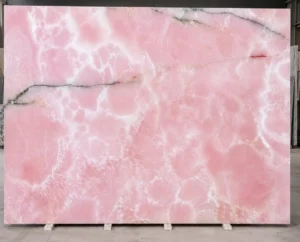
Onyx is a translucent, banded natural stone formed by mineral deposits from groundwater, and although it is commercially called onyx marble, it is not true marble in the geological sense. True marble forms through the metamorphism of limestone under heat and pressure, while onyx forms through the slow precipitation of calcium carbonate in caves and hot springs. This distinction matters greatly for architects, interior designers, and homeowners who are choosing natural stone for their next project. Pakistan Marble & Onyx has spent years sourcing, cutting, and exporting premium onyx marble, and this guide explains everything you need to know before making a purchase decision.
Introduction to Onyx Marble
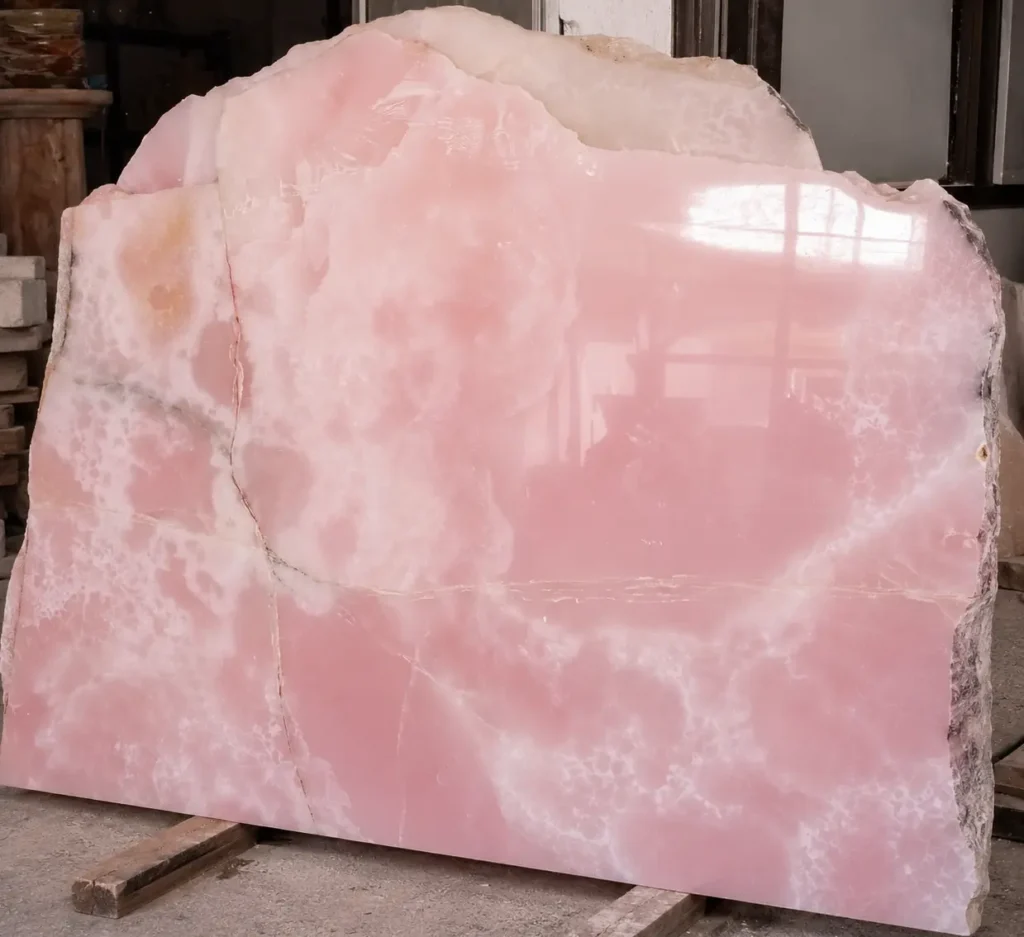
Natural stone has been used in architecture and design for thousands of years, and among the most visually striking options available today is onyx marble. Unlike traditional white or grey marble, onyx marble is prized for its glowing translucency, deep color saturation, and dramatic veining that seems to move like liquid across a polished surface. Many people search for onyx marble without fully understanding what it is or how it differs from conventional marble, which is exactly why Pakistan Marble & Onyx has created this detailed resource.
Throughout this guide, we will explore the geological origin of onyx, its chemical composition, the key differences between onyx and true marble, the various colors and types available, its physical properties, its most popular applications in modern interiors, pricing considerations, and why Pakistan Marble & Onyx has become a trusted name in sourcing and exporting this remarkable stone.
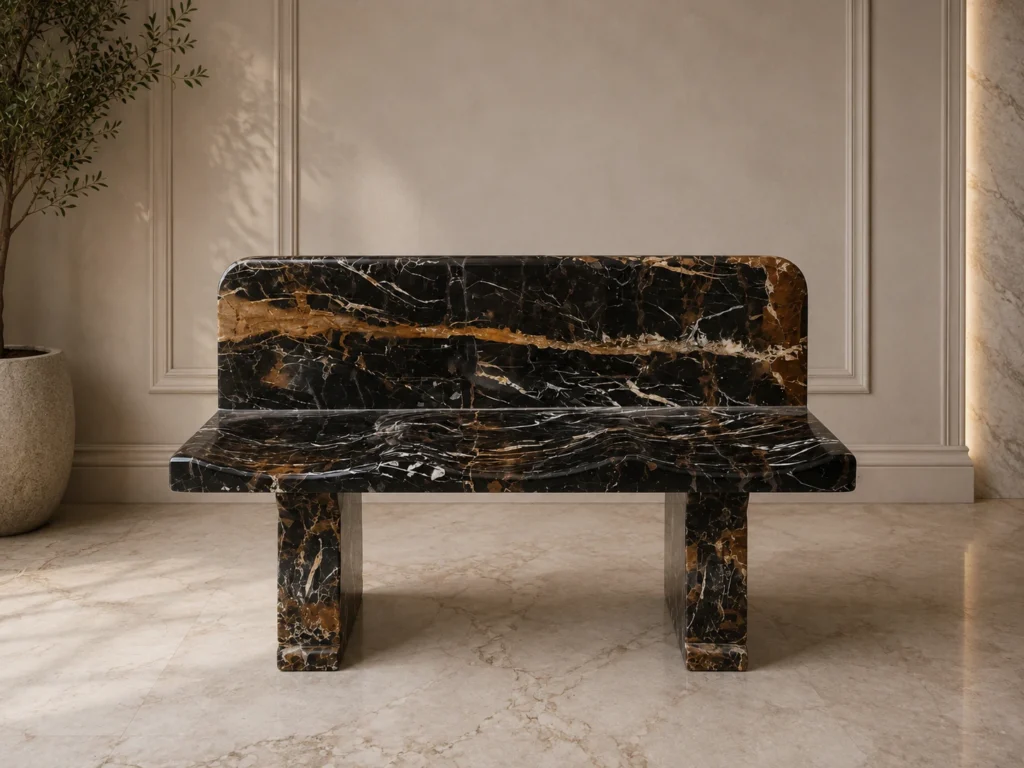
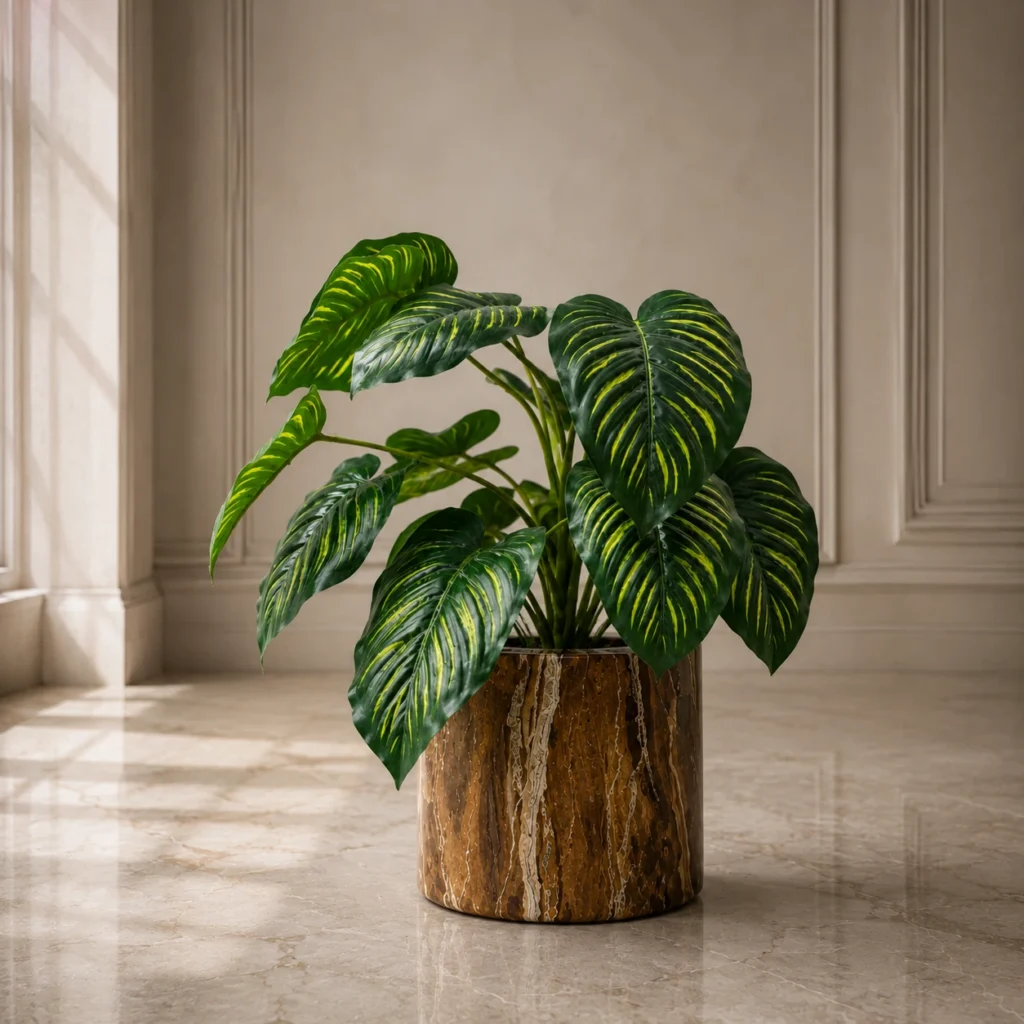
What Is Onyx Marble?
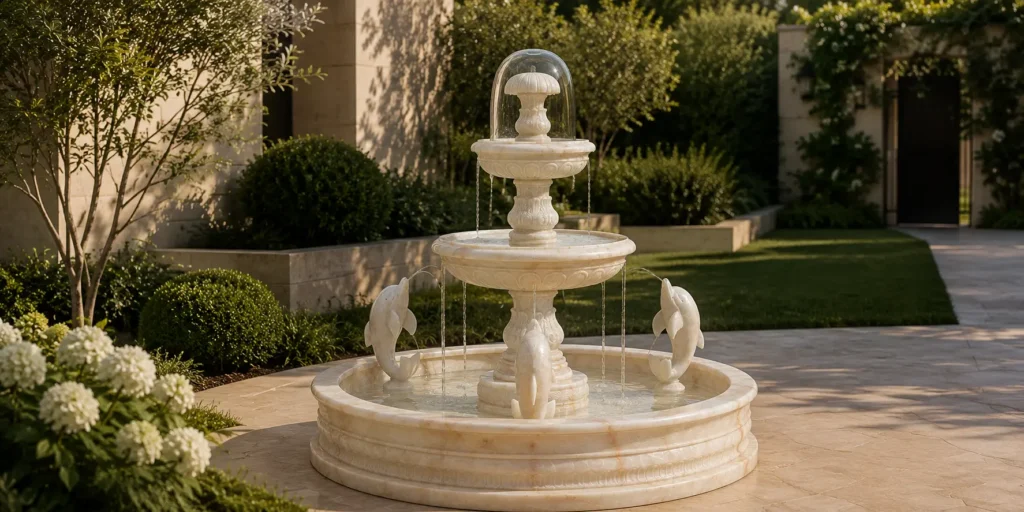
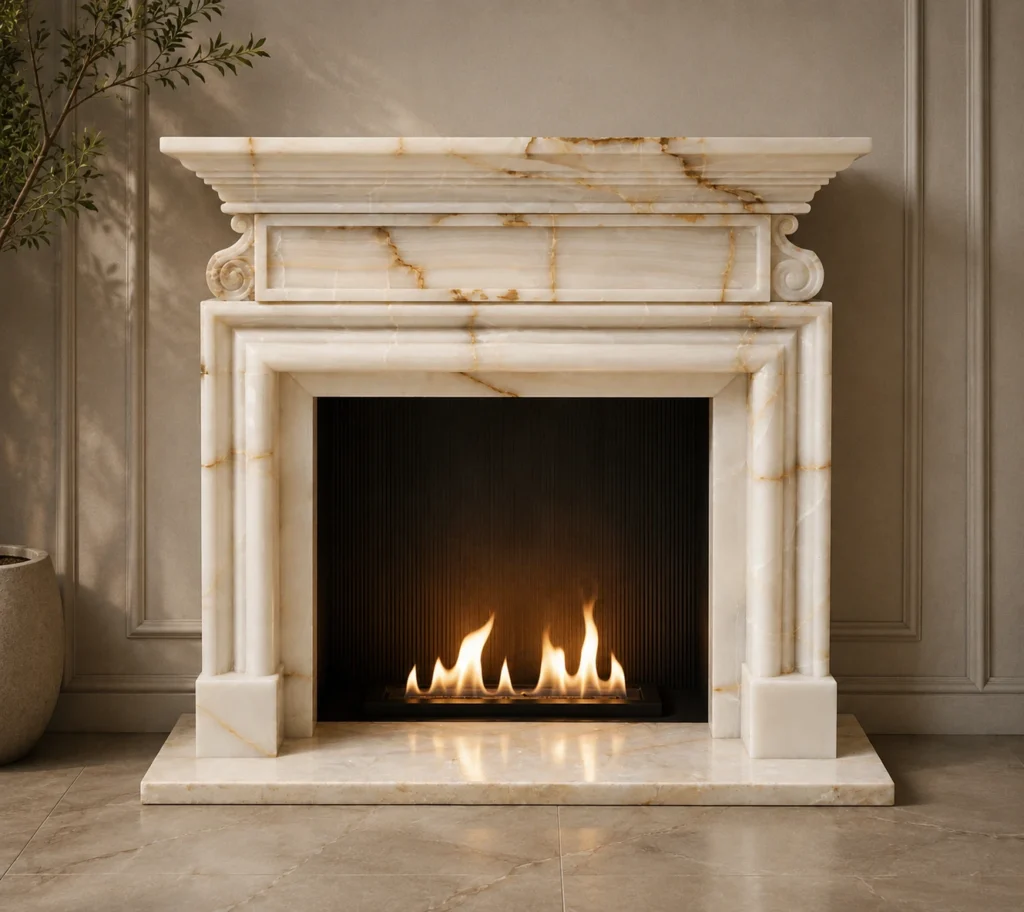
Onyx marble, often simply called onyx in the stone industry, is a dense, banded variety of calcite or aragonite that forms through the deposition of calcium carbonate from mineral rich water. This process typically occurs in limestone caves, where water dripping from cave ceilings slowly builds up layers of mineral deposits over thousands of years, and in hot spring environments, where mineral rich water precipitates calcium carbonate as it cools and evaporates.
The name onyx marble is somewhat misleading because it suggests a direct relationship to true marble, when in fact the two stones form through completely different geological processes. Onyx marble earned its name because early stone traders and craftsmen noticed its resemblance to polished marble in terms of finish and appearance, so the commercial name stuck even though the mineralogy tells a different story.
What sets onyx marble apart visually is its translucency. When cut into thin slabs and backlit, onyx marble glows with warm, luminous color, revealing intricate internal banding that looks almost like frozen liquid or flowing honey. This effect is impossible to achieve with traditional marble, which is why onyx marble has become a favorite among luxury designers who want a dramatic feature wall, bar counter, or reception desk that truly stands out.
Is Onyx the Same as Marble?
The short answer is no, onyx is not the same as marble, even though both are frequently grouped together under the broader category of natural stone or decorative stone. True marble is a metamorphic rock. It begins as limestone, which is a sedimentary rock composed primarily of calcium carbonate, and through the application of intense heat and pressure deep within the earth, the limestone recrystallizes into marble. This recrystallization process is what gives true marble its characteristic crystalline structure and its ability to take a high polish while remaining relatively uniform in composition.
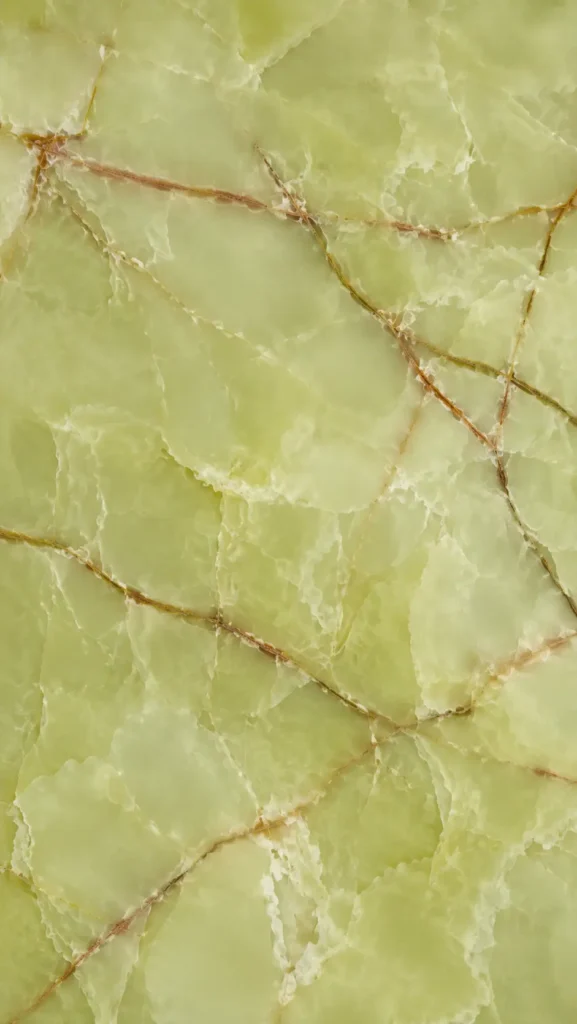
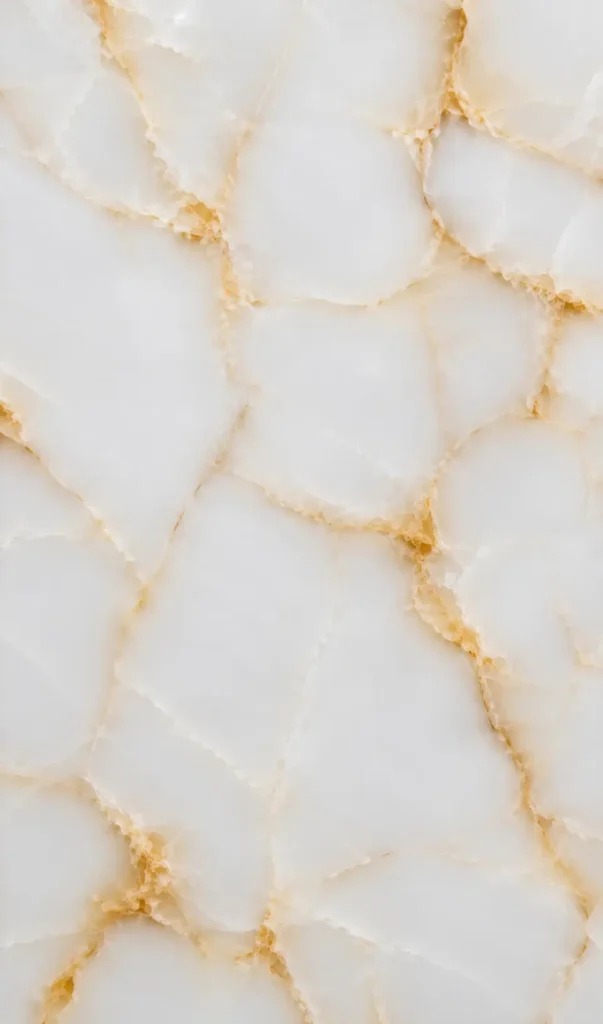
Onyx, by contrast, is technically classified as a sedimentary or chemical sedimentary deposit rather than a metamorphic rock. It forms through the direct precipitation of minerals from water solutions, without the intense heat and pressure that transforms limestone into marble. Geologists often refer to true onyx marble by its proper name, which is travertine onyx or cave onyx, to distinguish it from the metamorphic stone that consumers typically think of as marble.
Despite these geological differences, the stone and design industry has long used the term onyx marble as a matter of tradition and marketing convenience. Both stones share a similar chemical foundation in calcium carbonate, both can be polished to a glossy finish, and both are used in similar applications such as countertops, flooring, and wall cladding. This overlap in appearance and use is precisely why so many people ask whether onyx and marble are the same thing.
At Pakistan Marble & Onyx, we believe transparency with our customers is essential, which is why we always clarify this distinction upfront. Understanding that onyx and marble are different stones, even if they look similar and are sold in similar contexts, helps customers make more informed decisions about which stone best fits their project needs.
Onyx in Pakistan
Pakistan holds a significant and often underappreciated position in the global natural stone industry, with vast reserves of high quality marble and onyx concentrated primarily in the mineral rich regions of Balochistan and Khyber Pakhtunkhwa. These regions benefit from unique geological conditions that have allowed onyx deposits to form over thousands of years, resulting in stone that rivals some of the most celebrated onyx varieties found anywhere in the world.
The Chagai and Kalat districts of Balochistan are particularly well known among industry professionals for producing onyx marble with rich, vivid banding and excellent translucency. These deposits often yield striking honey, green, and white varieties that have gained increasing recognition among international designers seeking an alternative to more commonly sourced onyx from Iran, Mexico, or Turkey. Pakistani onyx is frequently praised for its distinctive color depth and the clarity of its natural veining, qualities that make each slab feel like a unique work of art rather than a mass produced material.
Despite this natural abundance, Pakistan’s onyx marble industry has historically been underrepresented in global markets compared to countries with more established export infrastructure. This is largely due to limited modernization in quarrying techniques, inconsistent grading standards, and a lack of direct access to international buyers for many smaller scale operations. In recent years, however, this landscape has begun to shift, with a growing number of companies investing in modern fabrication technology, improved logistics, and direct export relationships to bring Pakistani onyx marble to a wider global audience.
Pakistan Marble & Onyx has positioned itself at the forefront of this transformation, working directly with quarry operators across Balochistan and other resource rich regions to source premium grade onyx marble blocks. Our team conducts careful on site evaluation of raw blocks, assessing color consistency, translucency, and structural integrity before any material enters our fabrication process. This hands on approach allows us to maintain strict quality control from the quarry all the way through to the finished slab, something that is not always guaranteed with less established suppliers in the region.
Pakistani onyx marble is increasingly being specified for luxury hospitality projects, high end residential developments, and commercial interiors across the Middle East, Europe, and North America, as architects and designers discover the exceptional value and visual quality this stone offers compared to more heavily marketed alternatives from traditional onyx producing countries. The combination of competitive pricing, distinctive natural coloration, and improving export capability has made Pakistani onyx marble an increasingly attractive option for international buyers seeking something both beautiful and distinctive for their projects.
As global demand for unique, sustainably sourced natural stone continues to grow, Pakistan Marble & Onyx remains committed to showcasing the exceptional quality of Pakistani onyx marble on the world stage, offering international clients direct access to premium stone, transparent pricing, and reliable export logistics that reflect the true potential of this remarkable natural resource.
How Onyx Marble Is Formed in Nature?
The formation of onyx marble is a slow and fascinating natural process that can take thousands to millions of years to complete. There are two primary environments in which onyx marble forms.
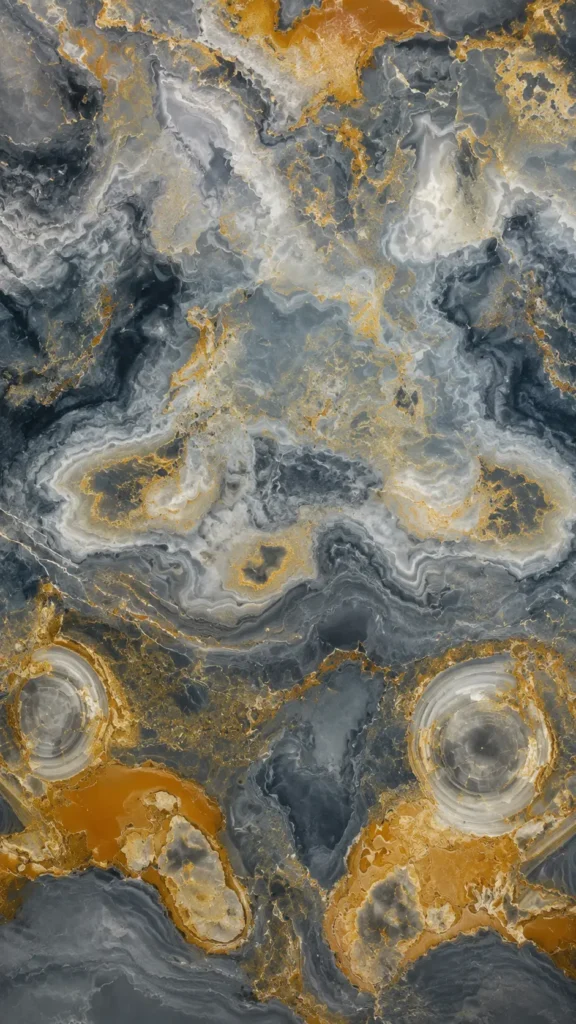
The first is within limestone caves. As rainwater percolates through limestone bedrock, it absorbs carbon dioxide from the soil and becomes slightly acidic. This acidic water dissolves calcium carbonate from the surrounding limestone as it travels downward. When the water eventually reaches an open cave chamber and begins to drip from the ceiling, the change in pressure and temperature causes the water to release carbon dioxide, which in turn causes the dissolved calcium carbonate to precipitate out of solution.
Over time, this precipitation builds up layer upon layer of banded calcite, forming the structures we recognize as stalactites, stalagmites, and flowstone deposits. When these formations are large and dense enough, they can be cut into slabs and polished, producing what the industry calls cave onyx.
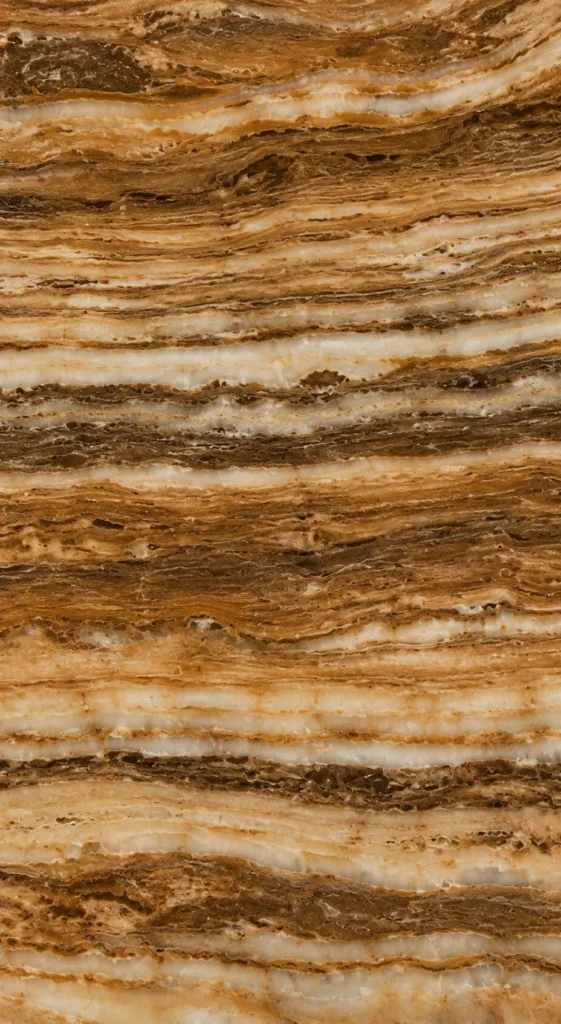
The second major formation environment is around hot springs and geothermal vents. In these settings, mineral rich water rises from deep within the earth, carrying dissolved calcium carbonate. As this water reaches the surface and cools, or as it evaporates in open air, the minerals precipitate out and accumulate in layered deposits. This type of onyx marble often exhibits particularly vivid banding and color variation because the mineral content of the water can shift over time, depositing different colored layers depending on trace elements present, such as iron, manganese, or other metallic oxides.
Both formation processes result in a stone that is fundamentally different from true marble, yet both share the visual hallmark of banded, wavy patterns that make onyx marble instantly recognizable and highly sought after in luxury design applications.
Chemical Composition and Mineral Structure of Onyx
Onyx marble is composed primarily of calcium carbonate, typically in the mineral form of calcite, although some varieties contain aragonite as well. This is the same fundamental chemical compound found in true marble and limestone, which explains why all three stones share certain physical characteristics such as their reaction to acidic substances and their relative softness compared to harder stones like granite or quartzite.
The distinctive banding seen in onyx marble is caused by variations in mineral deposition over time. As the water carrying dissolved calcium carbonate changes in chemistry, temperature, or flow rate, it deposits layers with slightly different densities, colors, and crystal structures. Trace minerals such as iron oxide can introduce warm honey, amber, or reddish tones, while manganese oxide can introduce darker brown or black streaks. Pure calcium carbonate deposits, free of trace minerals, tend to produce the whitest and most translucent bands.
This layered structure is also what gives onyx marble its translucency. Unlike true marble, which has a more uniform crystalline structure that limits light penetration, the fine banded layers in onyx marble allow light to pass through more easily, especially in thinner slabs. This is why onyx marble is frequently chosen for backlit applications where the goal is to create a glowing, luminous visual effect.
Onyx Marble vs True Marble Key Differences
Understanding the practical differences between onyx marble and true marble can help you choose the right stone for your specific project. Below is a detailed comparison covering the most important factors.
Geological formation. True marble forms through the metamorphism of limestone under heat and pressure over millions of years within the earth’s crust. Onyx marble forms through the precipitation of calcium carbonate from water in caves or hot springs, without the metamorphic transformation that defines true marble.
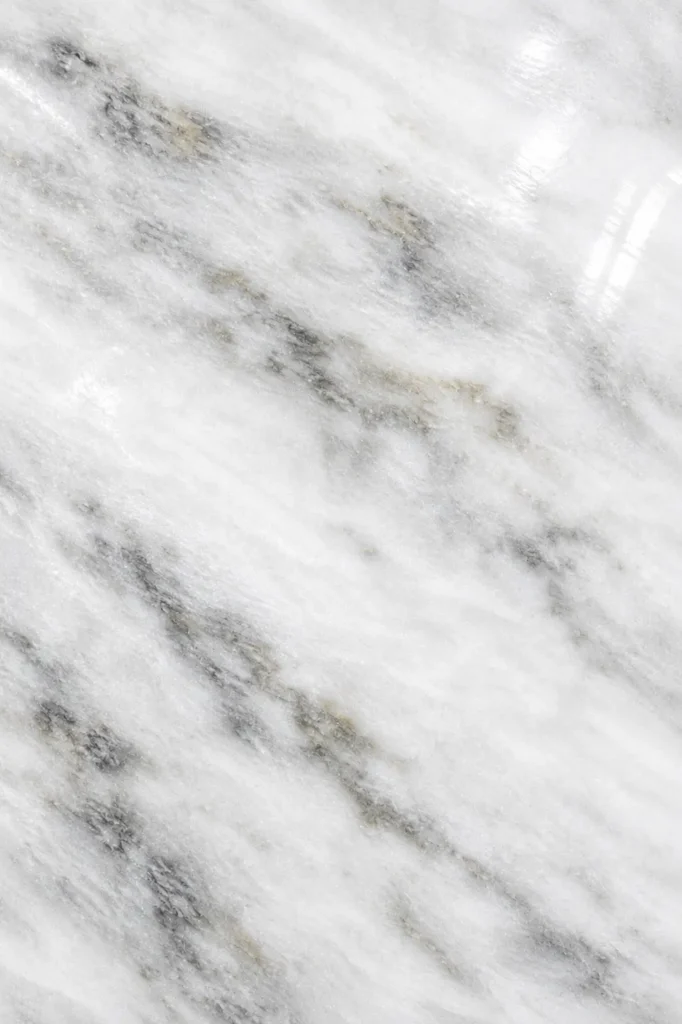
Translucency. Onyx marble is notably more translucent than true marble, especially in thin cut slabs, which allows it to be backlit for dramatic visual effects. True marble is generally opaque or only slightly translucent at its edges.
Veining pattern. True marble veining tends to appear as streaks running through a more uniform background, often created by mineral impurities during metamorphism. Onyx marble veining appears as concentric, wavy, or flowing bands that reflect its layered deposition process, giving it a more fluid and organic appearance.
Hardness and durability. Both stones sit relatively low on the Mohs hardness scale, generally between two and a half and four, meaning both are softer than granite or quartzite. Onyx marble is often considered slightly softer and more delicate than true marble, requiring extra care during fabrication and installation.
Porosity. Onyx marble tends to be more porous than dense true marble, which means it can be more susceptible to staining and etching if not properly sealed and maintained.
Typical applications. True marble is commonly used for flooring, countertops, and structural cladding due to its relative strength and uniformity. Onyx marble is more frequently reserved for decorative and feature applications such as backlit walls, bar tops, reception desks, tabletops, and small vanity surfaces where its unique translucency can be showcased.
Price point. Due to its rarity, the complexity of extracting large usable blocks, and the specialized fabrication techniques required, onyx marble is often priced higher per square foot than standard true marble varieties.
Color range. True marble typically comes in whites, greys, beiges, and blacks with occasional colored veining. Onyx marble offers a much broader palette including honey, amber, green, pink, and deep brown tones, often within a single slab.
Types and Colors of Onyx Marble
One of the most appealing aspects of onyx marble is the sheer diversity of colors and patterns available, each formed by slightly different mineral conditions during the deposition process.
White onyx marble is among the most popular choices for luxury interiors, prized for its bright, almost crystalline appearance and excellent translucency when backlit. It works beautifully in bathrooms, spas, and minimalist interior schemes.
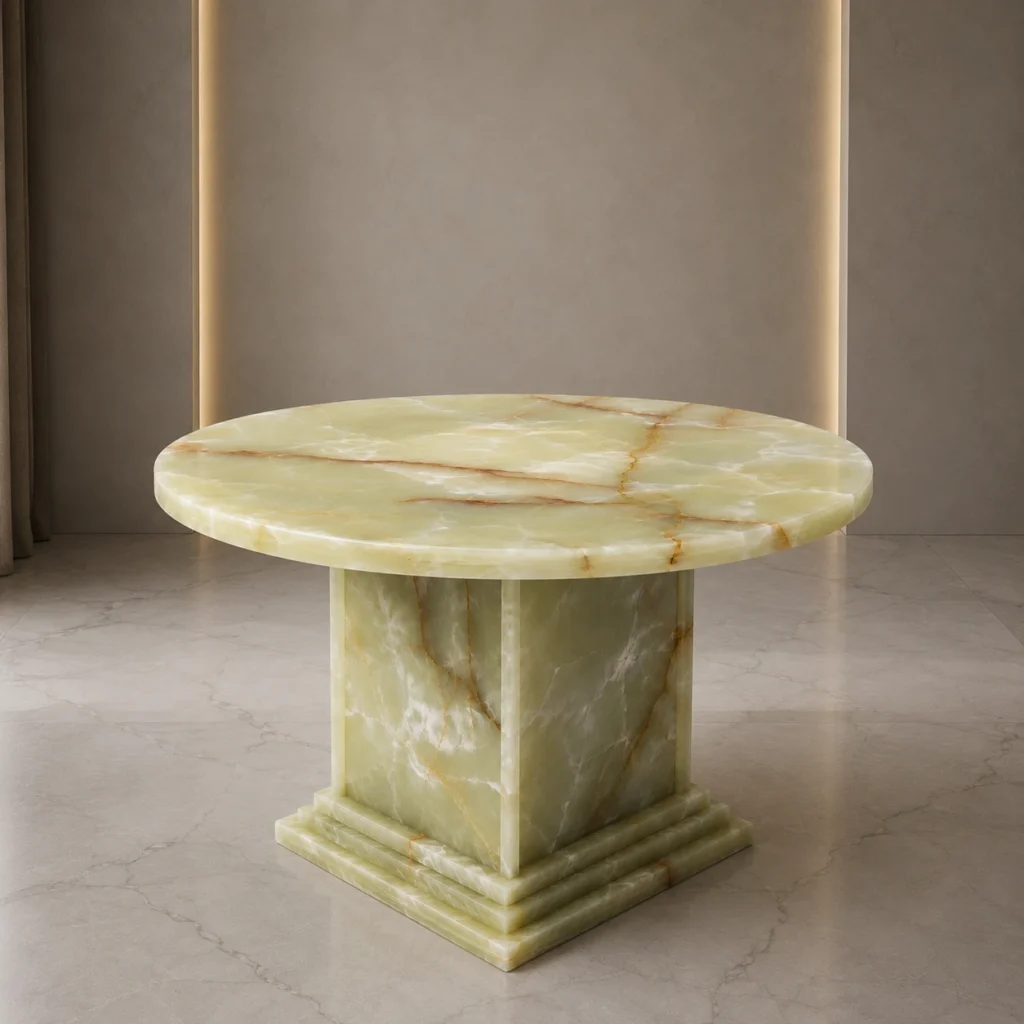
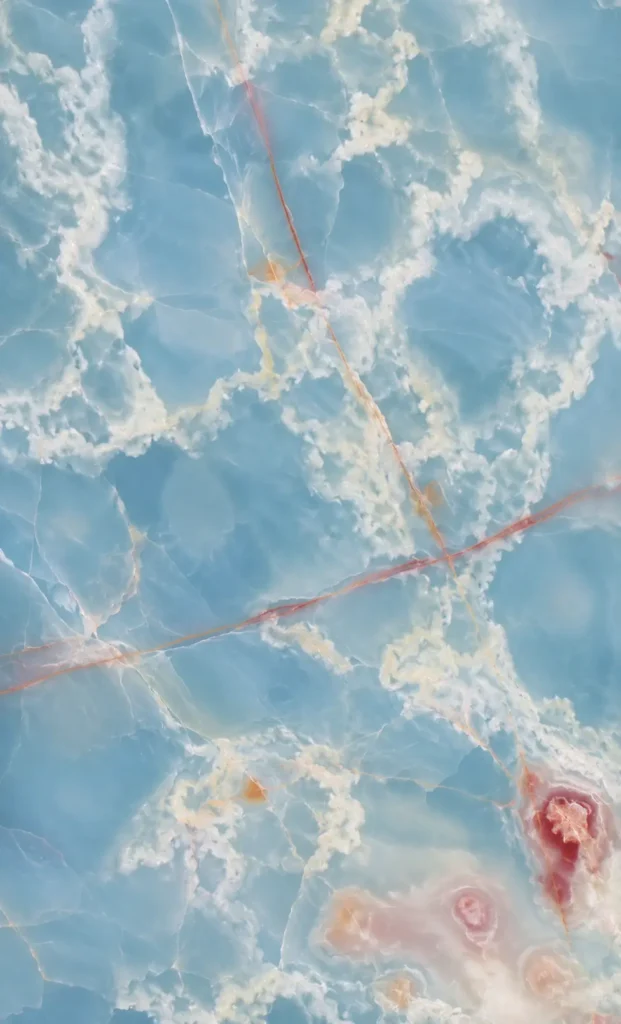
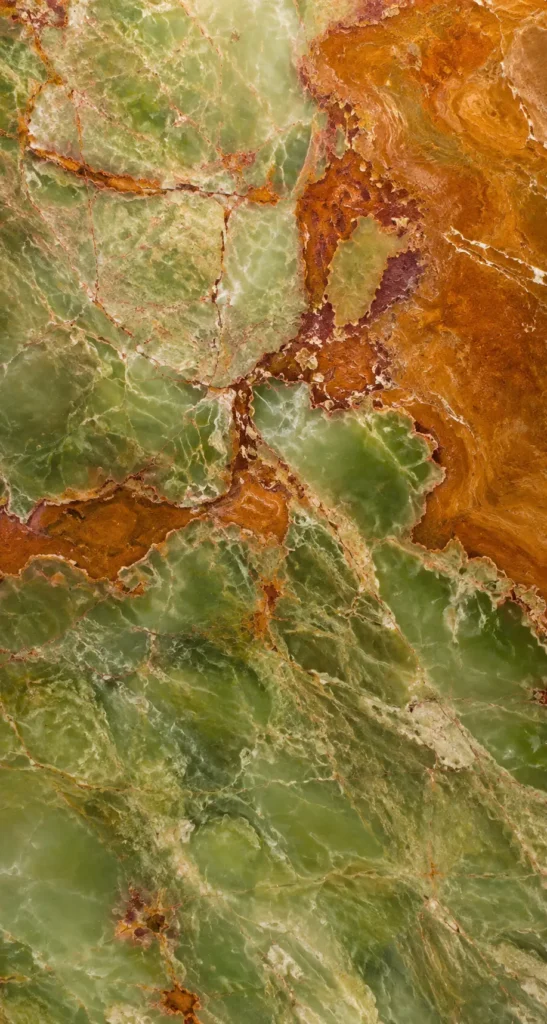
Green onyx marble features swirling bands of green, sometimes with hints of white or grey, created by trace amounts of minerals such as chromium or iron compounds. This variety is often used as a statement piece in feature walls or as an accent countertop.
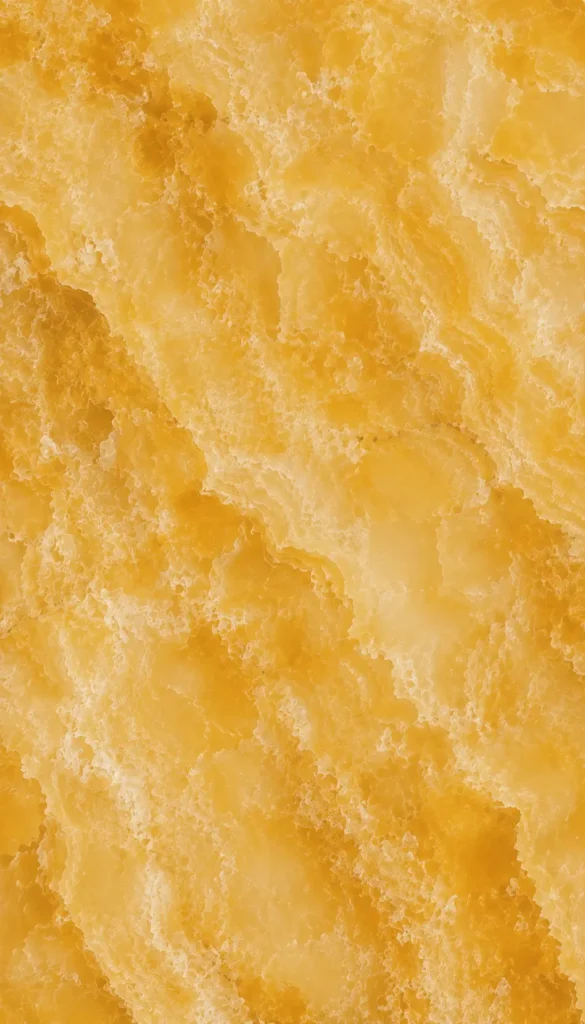
Honey onyx marble, also known as amber onyx, displays warm golden and amber tones with rich, flowing bands. This is one of the most requested varieties for backlit bar counters and reception areas because of how beautifully it glows under light.
Black onyx marble offers a dramatic, moody aesthetic with dark bands running through the stone, often used in high end bathroom vanities, accent walls, and luxury furniture pieces.
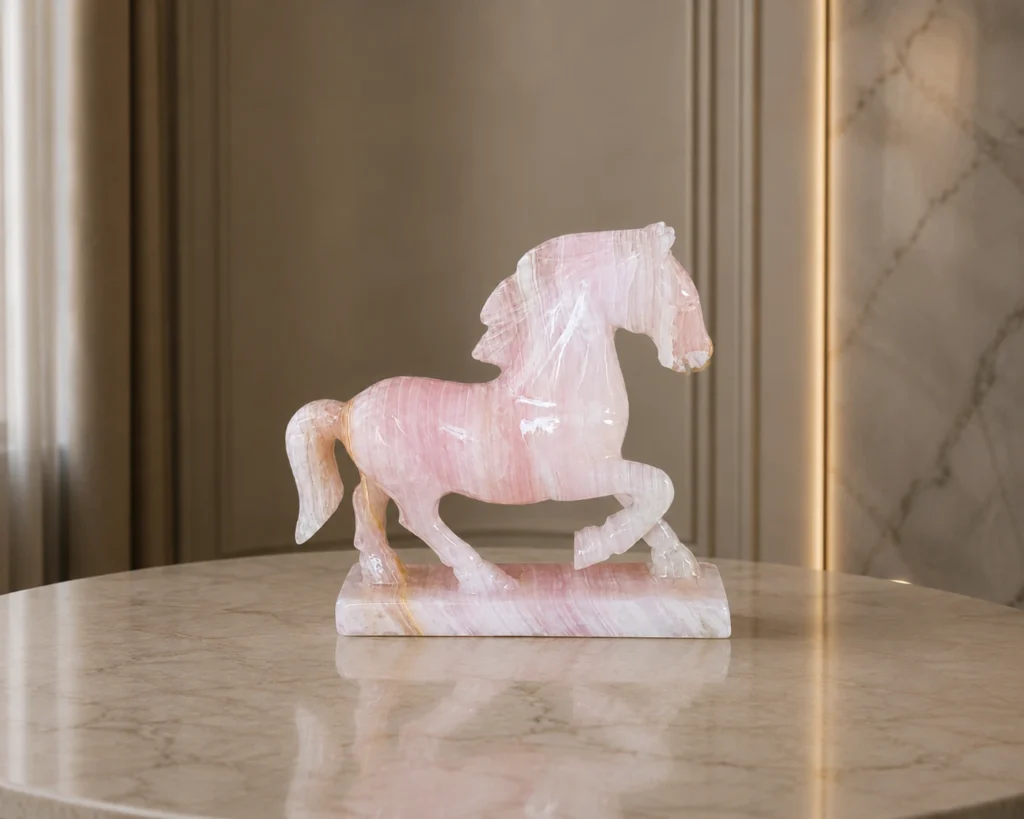
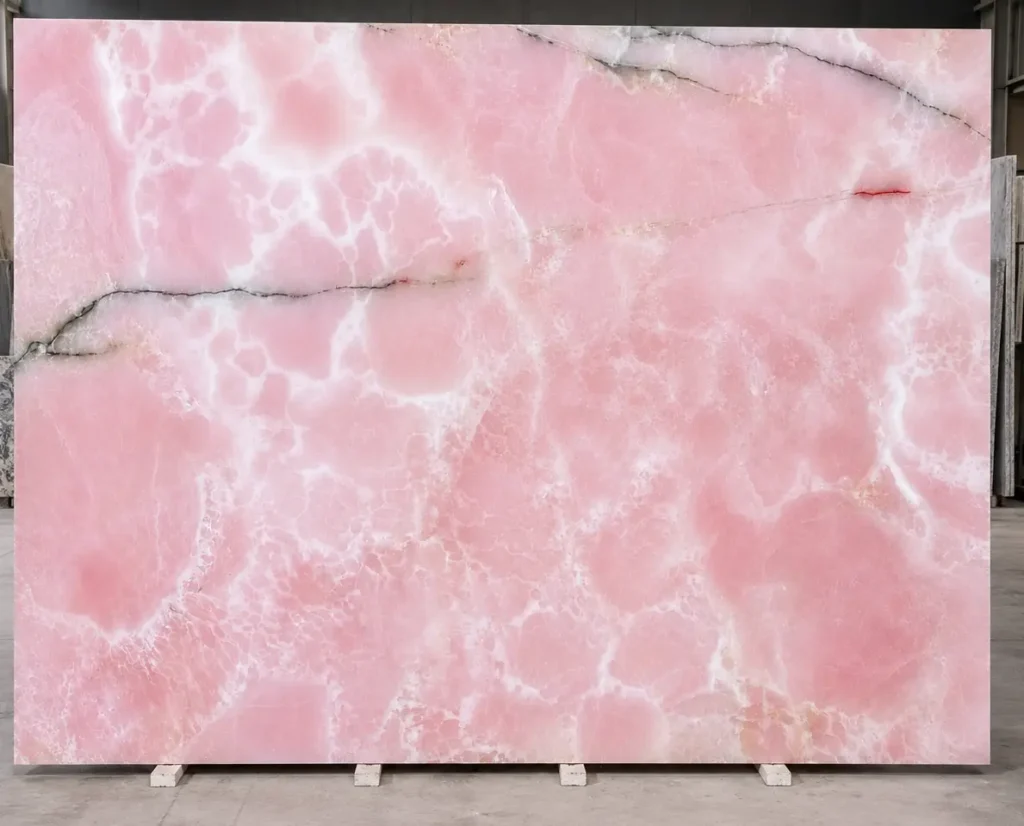
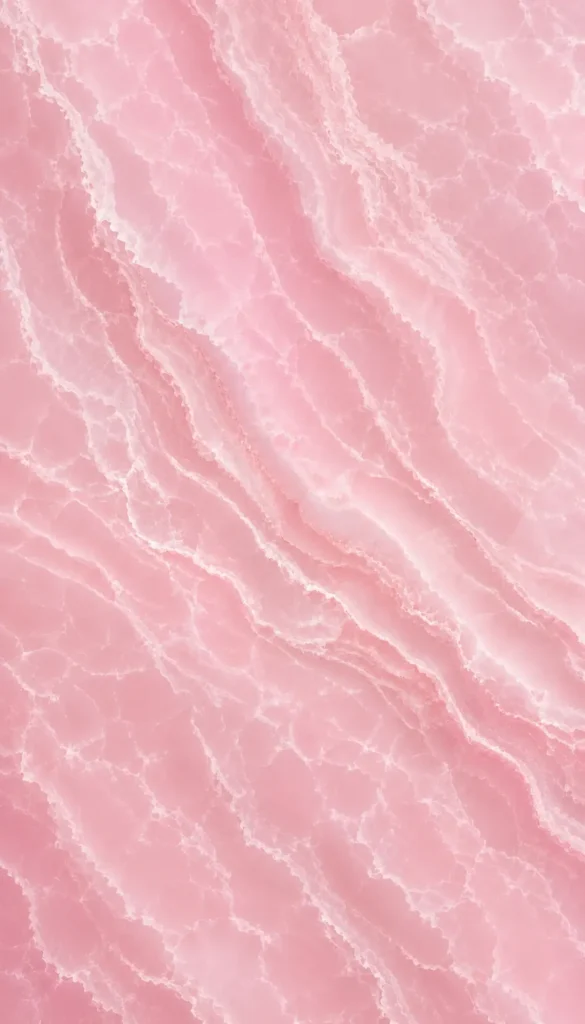
Pink onyx marble presents soft blush tones combined with white or cream banding, making it a popular choice for boutique hotels, spas, and feminine interior design schemes.
Pakistan Marble & Onyx offers a wide selection of these onyx marble varieties, sourced directly from established quarries and processed with modern fabrication techniques to ensure consistent quality across every slab.
Physical Properties of Onyx Marble
Understanding the physical properties of onyx marble is essential for anyone considering it for a construction or design project.
Hardness. Onyx marble generally falls between two and a half and four on the Mohs hardness scale, making it noticeably softer than granite or quartzite. This means it is more susceptible to scratching and requires careful handling during fabrication, transport, and installation.
Density. Onyx marble typically has a density similar to true marble, generally ranging between two and a half and two and seven tenths grams per cubic centimeter, though this can vary depending on the specific deposit and mineral content.
Translucency. As discussed earlier, translucency is one of the defining features of onyx marble, particularly in slabs cut to a thickness of around two centimeters or less. This property is rarely found in true marble and is one of the primary reasons designers choose onyx for feature lighting applications.
Porosity and absorption. Onyx marble tends to be more porous than dense true marble varieties, meaning it can absorb liquids more readily if left unsealed. Proper sealing is essential to protect onyx marble surfaces from staining, particularly in kitchen or bathroom applications where exposure to water, oils, and acidic substances is common.
Thermal behavior. Like true marble, onyx marble can be sensitive to rapid temperature changes and should not be exposed to direct heat sources such as hot pans without protective trivets or mats.
Popular Uses of Onyx Marble in Interior Design
Onyx marble has become a favorite among architects and interior designers seeking to create a memorable visual statement, and its applications span both residential and commercial projects.
Backlit feature walls represent perhaps the most iconic use of onyx marble. By installing thin onyx slabs in front of an LED lighting system, designers can create a glowing wall that highlights the natural banding and color of the stone, often serving as the centerpiece of a lobby, restaurant, or luxury residence.
Bar and reception counters frequently feature onyx marble for the same reason. A backlit onyx bar top instantly elevates the ambiance of a hospitality space, drawing attention and creating a memorable first impression for guests.
Bathroom vanities and countertops are another popular application, particularly using white or honey onyx marble varieties, which pair beautifully with modern fixtures and soft ambient lighting.
Flooring is used less frequently due to onyx marble’s relative softness and porosity compared to true marble, but it is sometimes incorporated as an accent inlay within a larger flooring design rather than as the primary flooring material throughout high traffic areas.
Wall cladding in both interior and select interior facing exterior applications allows designers to showcase large format onyx marble panels, often bookmatched to create a mirrored, symmetrical pattern that highlights the stone’s natural veining.
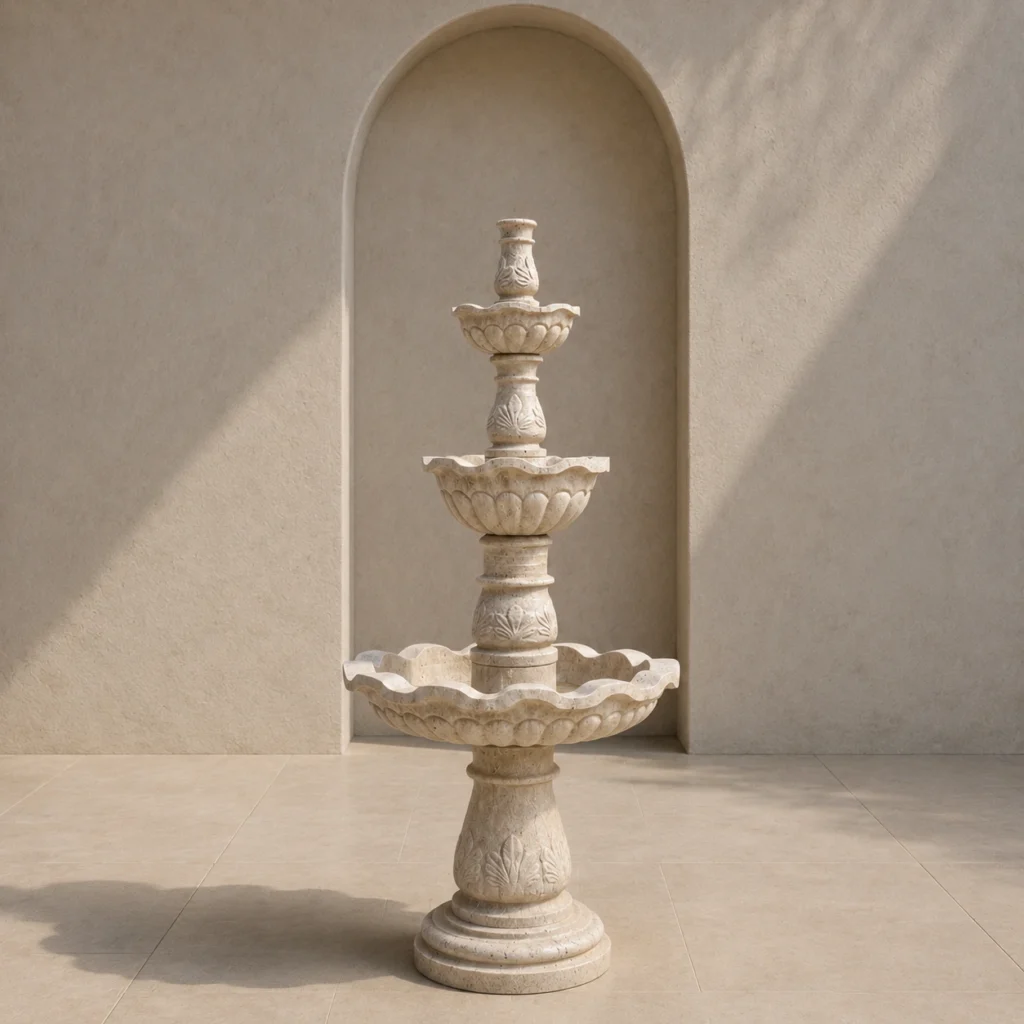
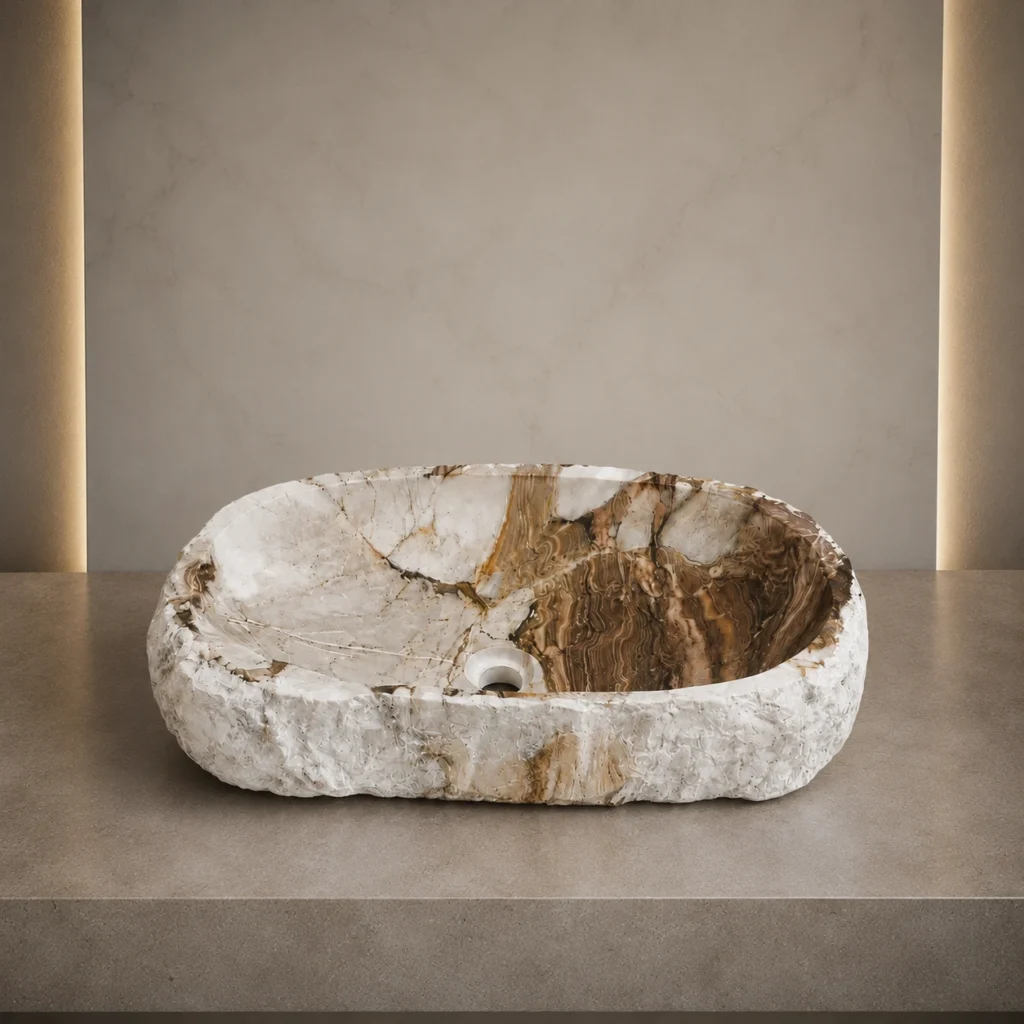
Decorative objects and furniture, including tabletops, sinks, vases, and sculptural pieces, are also commonly crafted from onyx marble, taking advantage of its workability and stunning visual appeal in smaller scale applications.
Onyx Marble Pricing and Value
The price of onyx marble varies considerably based on several factors including color rarity, slab size, thickness, quality grade, and country of origin. Generally speaking, onyx marble commands a higher price per square foot than standard true marble varieties due to the more complex extraction and fabrication process required to produce usable slabs without cracking or excessive waste.
Rarer colors such as vivid green or deep honey tones with strong translucency typically command premium pricing compared to more common white or beige varieties. Slab size also plays a significant role in pricing, as larger, crack free slabs are more difficult to extract and are therefore priced at a premium.
When budgeting for an onyx marble project, it is important to account not only for the material cost but also for the specialized fabrication, transportation, and installation expertise required, since onyx marble demands more careful handling than most other natural stones. Pakistan Marble & Onyx works closely with clients to provide transparent, detailed pricing that accounts for all these factors, ensuring there are no unexpected costs later in the project.
Why Choose Pakistan Marble & Onyx for Onyx Marble
Pakistan Marble & Onyx has built a reputation as a trusted supplier and exporter of premium natural stone, with a particular focus on high quality onyx marble sourced from some of the finest deposits in the region. Our commitment to quality begins at the quarry level, where we carefully select blocks based on color consistency, structural integrity, and minimal fracturing to ensure that every slab we produce meets the highest standards expected by architects, designers, and homeowners around the world.
Our fabrication facilities use modern cutting and polishing technology specifically calibrated for the delicate nature of onyx marble, ensuring precise thickness control for optimal translucency in backlit applications. We understand that onyx marble is not just a building material but a design statement, and we treat every slab with the care it deserves throughout the entire production process.
Pakistan Marble & Onyx also offers comprehensive export services, working with international clients across the hospitality, residential, and commercial design sectors. Our team provides detailed guidance on slab selection, bookmatching options, and finish recommendations, ensuring that every project receives stone that is perfectly suited to its intended application.
Whether you are an architect specifying materials for a luxury hotel lobby, an interior designer creating a signature backlit feature wall, or a homeowner searching for a striking bathroom vanity, Pakistan Marble & Onyx has the expertise, inventory, and dedication to help bring your vision to life.
How Onyx Marble Is Quarried and Extracted
Extracting onyx marble from the earth is a far more delicate process than quarrying true marble or granite, primarily because onyx deposits tend to form in smaller, more irregular masses compared to the large continuous rock formations typical of metamorphic marble. Quarry teams must first identify deposits with sufficient thickness and minimal internal fracturing, since even small existing cracks can cause an entire block to shatter during cutting.
Once a suitable deposit is located, extraction typically involves careful diamond wire cutting rather than the blasting techniques sometimes used in harder stone quarries. Diamond wire saws allow workers to slice through the onyx formation with minimal vibration, reducing the risk of cracking the delicate banded structure. Because onyx marble blocks are often smaller and more fragile than typical marble or granite blocks, yield rates from a single quarry site tend to be lower, which contributes to the overall higher cost of finished onyx marble products.
After extraction, blocks are transported with extra padding and support to prevent movement related stress fractures. At the fabrication facility, blocks are typically cut into slabs using specialized gang saws or bridge saws fitted with fine toothed blades designed specifically for softer, more delicate stone. Slab thickness is a critical decision point during this stage, since thinner slabs, generally around one and a half to two centimeters, allow for greater translucency and are ideal for backlit applications, while thicker slabs, often three centimeters, offer more structural strength for countertops and furniture applications where translucency is less important.
Pakistan Marble & Onyx maintains close relationships with experienced quarry operators and fabrication specialists who understand these nuances, ensuring that every batch of onyx marble we supply has been extracted and processed with the level of care this delicate stone demands.
Fabrication and Installation Considerations for Onyx Marble
Because onyx marble is softer and more porous than true marble or granite, fabricators must take additional precautions throughout the cutting, edging, and installation process. Standard practice involves reinforcing the back of onyx marble slabs with a fiberglass mesh or resin backing, particularly for thinner slabs intended for countertops, tabletops, or wall panels. This reinforcement significantly reduces the risk of cracking during transport, handling, and everyday use, without compromising the visual translucency that makes onyx marble so desirable.
Edge profiles for onyx marble tend to favor simpler designs such as a straight or gently eased edge, since more elaborate profiles like a full bullnose or ogee edge can be more difficult to achieve without chipping the delicate stone. When onyx marble is used for backlit installations, installers must carefully plan the placement of LED lighting panels behind the stone, testing light diffusion at various distances to achieve even illumination across the entire surface without visible hot spots.
Grout and adhesive selection also matters for onyx marble tile installations. A high quality, non staining epoxy based adhesive is generally recommended over standard cement based mortar, since cement based products can sometimes cause subtle discoloration in lighter onyx varieties over time. Similarly, a fine, non sanded grout is typically preferred to avoid scratching the polished surface during installation and future cleaning.
Given these specialized requirements, working with an experienced supplier and fabricator such as Pakistan Marble & Onyx is essential to ensure that onyx marble installations achieve both the visual impact and long term durability that clients expect.
Maintenance and Care Tips for Onyx Marble Surfaces
Because onyx marble tends to be more porous and softer than true marble, ongoing maintenance is an important consideration for anyone incorporating this stone into their home or commercial space. Establishing a proper care routine from the very beginning will help preserve the beauty and longevity of onyx marble for many years.
Sealing is the single most important maintenance step for onyx marble. A high quality penetrating sealer should be applied shortly after installation and reapplied periodically, typically every six to twelve months depending on the level of daily use and exposure to moisture. Sealing helps reduce the stone’s natural porosity, making it more resistant to staining from oils, wine, coffee, and other common household substances.
Daily cleaning should be done using a soft, non abrasive cloth and a pH neutral stone cleaner specifically formulated for natural stone surfaces. Harsh chemical cleaners, especially those containing acidic ingredients such as vinegar or lemon juice, should be avoided entirely, since these substances can etch the surface of onyx marble just as they would true marble, leaving dull marks that are difficult to remove without professional polishing.
Spills should be wiped up promptly, particularly acidic or oily substances, to minimize the chance of staining before the sealer has a chance to fully protect the surface. For onyx marble countertops or bar tops, it is wise to use coasters, trivets, and cutting boards to protect the surface from scratches, heat damage, and prolonged liquid contact.
If etching or minor scratches do occur, professional stone restoration services can typically buff and repolish the affected area to restore its original shine. Attempting to repair etching or scratches without proper training and equipment is generally not recommended, since improper techniques can worsen the damage or create uneven patches across the polished surface.
Onyx Marble and Sustainability Considerations
As natural stone, onyx marble is inherently a finite resource, formed over thousands to millions of years through slow geological processes that cannot be replicated on a human timescale. This makes responsible sourcing and quarrying practices particularly important for companies operating in this industry.
Pakistan Marble & Onyx is committed to working with quarry partners who follow responsible extraction practices, minimizing unnecessary waste and environmental disruption during the mining process. Additionally, because onyx marble is a completely natural material free from synthetic resins or plastics found in many engineered stone alternatives, it offers certain environmental advantages at the end of its lifecycle, since natural stone can often be repurposed, recycled into smaller decorative products, or safely returned to the earth rather than contributing to long term landfill waste in the way that some synthetic materials do.
Choosing a supplier that prioritizes transparency in sourcing, such as Pakistan Marble & Onyx, allows architects and designers to make more informed decisions about the environmental impact of their material choices while still achieving the luxurious aesthetic that onyx marble provides.
Comparing Onyx Marble to Other Popular Natural Stones
When planning a design project, it is often helpful to understand how onyx marble compares not just to true marble, but to other commonly used natural stones as well.
Onyx marble compared to granite. Granite is an igneous rock formed from cooled magma, making it significantly harder and more resistant to scratching and heat than onyx marble. However, granite lacks the translucency and dramatic banding that makes onyx marble so visually distinctive, and granite is rarely, if ever, used in backlit applications.
Onyx marble compared to quartzite. Quartzite is a metamorphic rock formed from sandstone under intense heat and pressure, resulting in a stone that is exceptionally hard and durable, often harder than true marble. While quartzite offers excellent durability for high traffic surfaces, it does not provide the same glowing translucency associated with premium onyx marble.
Onyx marble compared to travertine. Travertine is closely related to onyx in that both form through the precipitation of calcium carbonate, often in similar geological environments such as hot springs. However, travertine typically has a more porous, pitted texture with visible holes, while onyx marble tends to be denser and capable of achieving a much higher polish and greater translucency.
Onyx marble compared to engineered quartz. Engineered quartz surfaces are manufactured products combining crushed quartz with resin binders, offering excellent consistency, stain resistance, and durability. However, engineered quartz cannot replicate the natural translucency, organic veining, and one of a kind character that only genuine onyx marble can provide.
Understanding these comparisons helps clients appreciate exactly what makes onyx marble unique among natural stone options, and why it commands its place as a premium choice for statement design elements.
Frequently Asked Questions About Onyx Marble
What is the difference between onyx and marble stone?
Onyx forms through the precipitation of calcium carbonate from water in caves and hot springs, while true marble forms through the metamorphism of limestone under heat and pressure. Although both share a similar chemical foundation, their formation processes and resulting physical properties differ significantly.
Is onyx harder or softer than marble?
Onyx marble is generally considered slightly softer and more delicate than true marble, which means it requires extra care during fabrication, installation, and daily use to avoid scratching or chipping.
Why is onyx marble expensive?
Onyx marble is expensive primarily because large, crack free blocks are rare and difficult to extract, and the fabrication process requires specialized skill to preserve the stone’s translucency and delicate banding without damage.
Can onyx marble be used for kitchen countertops?
Onyx marble can be used for kitchen countertops, but due to its higher porosity and softness compared to granite or quartzite, it requires diligent sealing and careful maintenance to prevent staining and etching from everyday kitchen use.
Is onyx marble good for flooring?
Onyx marble is less commonly used for full flooring applications due to its relative softness and porosity, though it is sometimes incorporated as a decorative accent or inlay within flooring designs.
What makes onyx marble translucent?
The translucency of onyx marble comes from its fine, layered mineral deposition structure, which allows light to pass through more easily than the denser crystalline structure found in true marble, especially when cut into thin slabs.
How is onyx marble different from limestone?
Limestone is a sedimentary rock formed from compacted marine sediments and shell fragments, while onyx marble forms through the direct precipitation of calcium carbonate from mineral rich water, resulting in a denser, more banded, and often translucent stone.
Is onyx a sedimentary or metamorphic rock?
Onyx is generally classified as a sedimentary or chemical deposit rather than a metamorphic rock, since it forms through direct mineral precipitation rather than the heat and pressure transformation process that defines metamorphic rocks like true marble.
Where is onyx marble found in Pakistan?
Pakistan is home to several natural stone deposits, and Pakistan Marble & Onyx sources premium onyx marble directly from established regional quarries known for producing high quality, richly colored stone suitable for luxury design applications.
How much does onyx marble cost per square foot?
The cost of onyx marble varies widely depending on color, slab size, thickness, and quality grade, and it is generally priced higher than standard true marble due to the complexity involved in extraction and fabrication. Pakistan Marble & Onyx provides detailed, transparent quotes based on specific project requirements.
Onyx marble is a stunning natural stone that captures attention with its translucent glow, flowing bands of color, and undeniable luxury appeal, even though it is geologically distinct from true marble. Understanding this difference empowers architects, designers, and homeowners to make informed decisions when selecting the right stone for their specific project, whether that means a dramatic backlit feature wall, an elegant bathroom vanity, or a striking bar counter that becomes the centerpiece of a room.
Pakistan Marble & Onyx is proud to be a trusted source for premium onyx marble, offering expert guidance, careful sourcing, and precise fabrication to ensure every project receives stone of exceptional quality and beauty. If you are considering onyx marble for your next design project, reach out to Pakistan Marble & Onyx today to explore our available collections, request samples, or discuss custom sourcing for your specific vision.