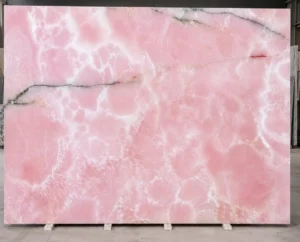
Pure Afghan White Onyx Slabs
Afghan White Onyx is a natural stone that comes from the mountains of Afghanistan. It is known around the world for its bright white color, soft wavy patterns, and the way light passes through it. This last quality is called translucency, and it is one of the main reasons people choose this stone over almost any other natural material.
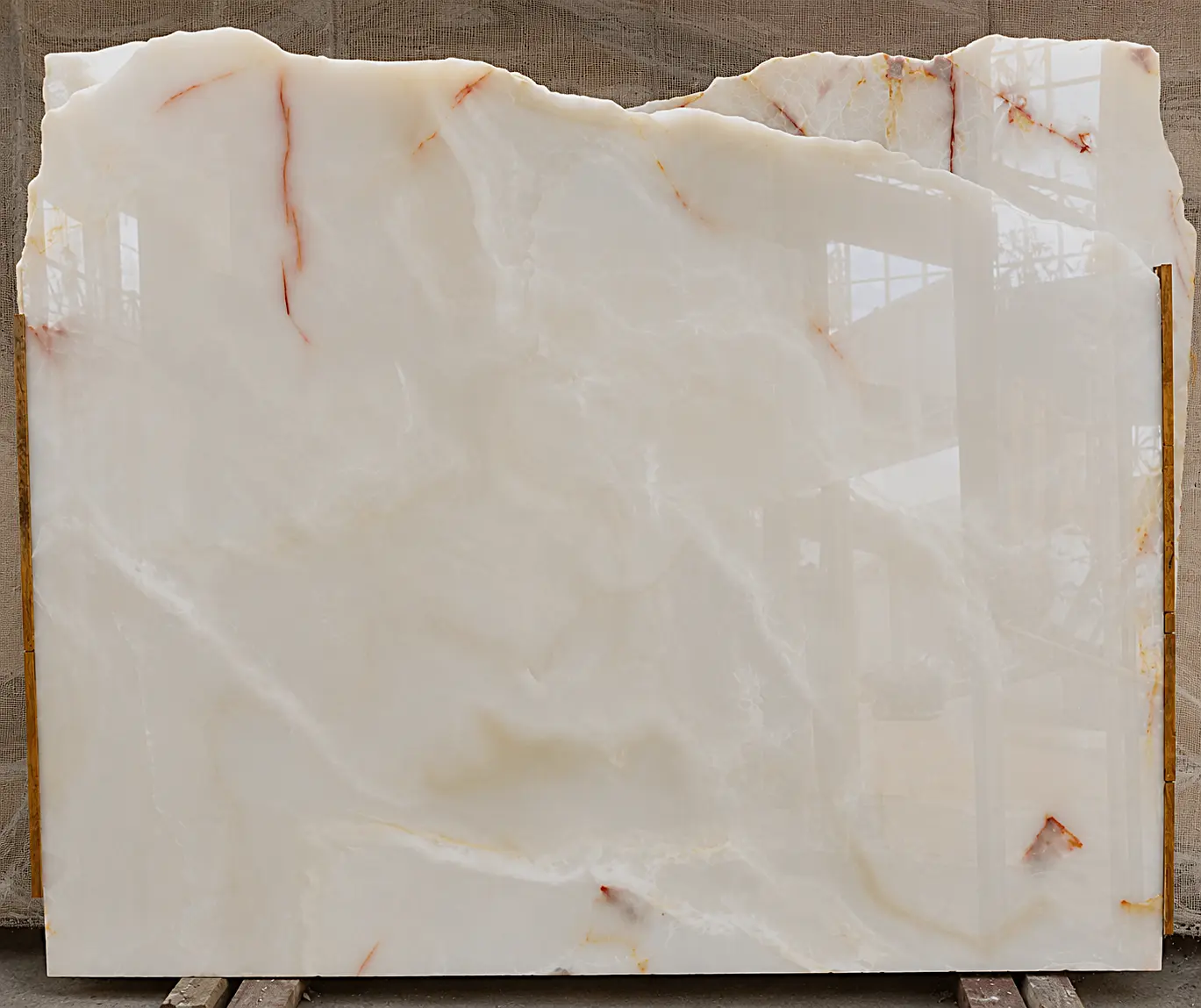
At Pakistan Marble & Onyx, we work directly with Afghan onyx blocks. We cut them into slabs, polish them, and prepare them for shipping to buyers in many countries. Our company is based in Pakistan, which is close to Afghanistan and has a long history of stone processing and export. This location gives us an advantage. We can get good quality raw blocks, process them with modern machines, and send finished slabs anywhere in the world at a fair price.
People have used onyx for thousands of years. Old civilizations carved it into bowls, statues, and small decorative pieces. Today, the biggest use of Afghan White Onyx is in modern buildings. Designers use it for walls, floors, countertops, reception desks, and bar tops. Many hotels, restaurants, and homes use onyx panels with lights behind them. When the light turns on, the stone glows and shows its natural veins clearly. This effect is hard to get with any other stone, which is why onyx remains popular even though it costs more than regular marble or granite.
In this article we will explain what Afghan White Onyx is, where it comes from, how it is cut and finished, where people use it, how much it usually costs, how to pick a good supplier, and we will answer common questions that buyers ask before placing an order. If you are an architect, a designer, a stone importer, or someone building a home and looking at onyx slabs, this guide will give you clear answers.
What Is Afghan White Onyx
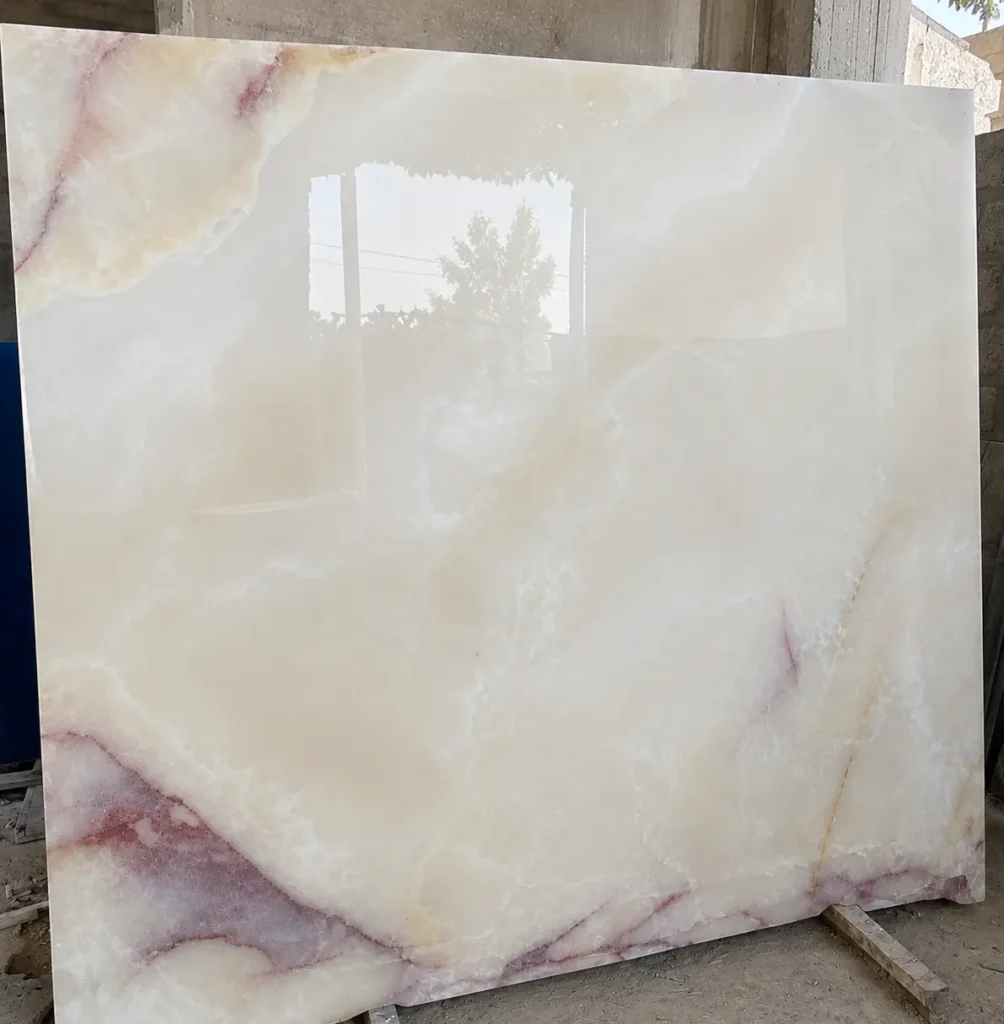
Afghan White Onyx is a type of onyx stone, which is a form of calcite or aragonite mineral that forms in layers inside caves and rock formations over a very long time. Water rich in minerals moves through rock, and slowly, layer by layer, it leaves behind deposits that build up into onyx. Because it forms in layers, onyx often has a banded or wavy look, similar to rings in wood.
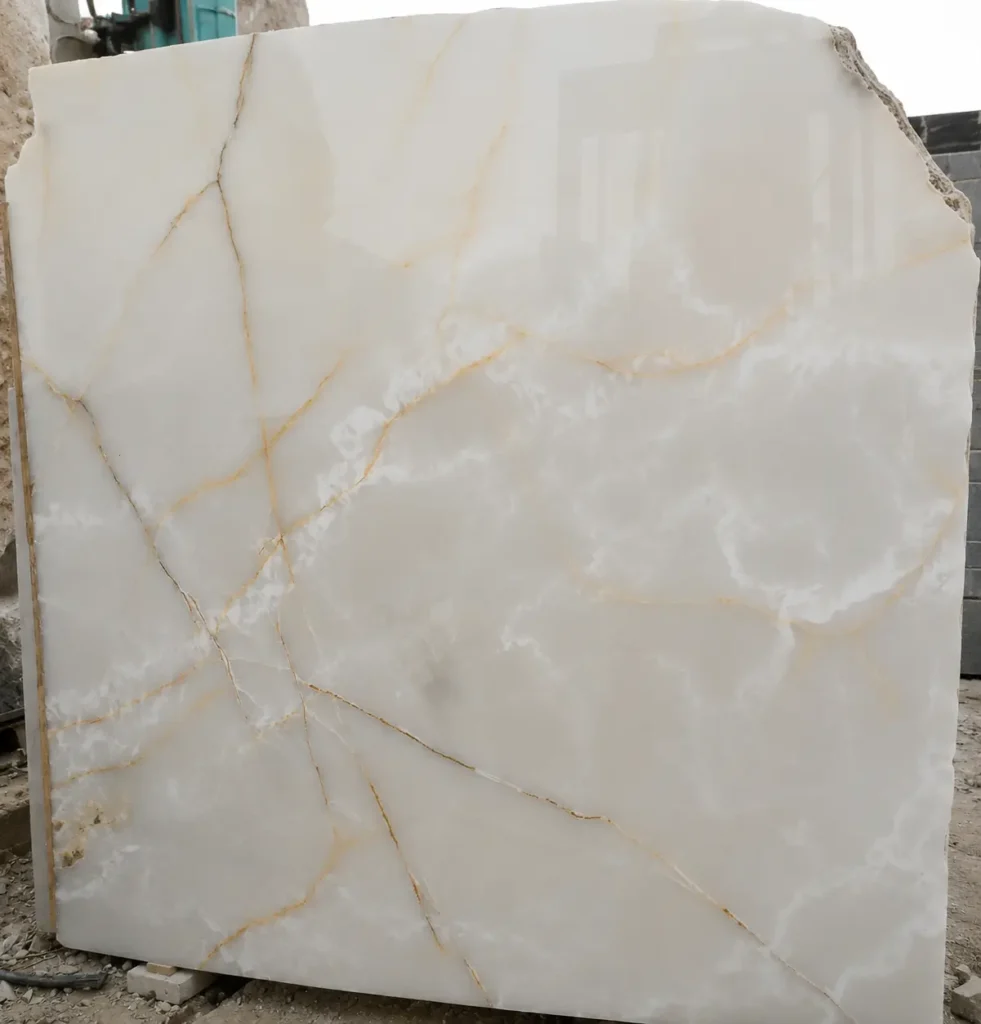
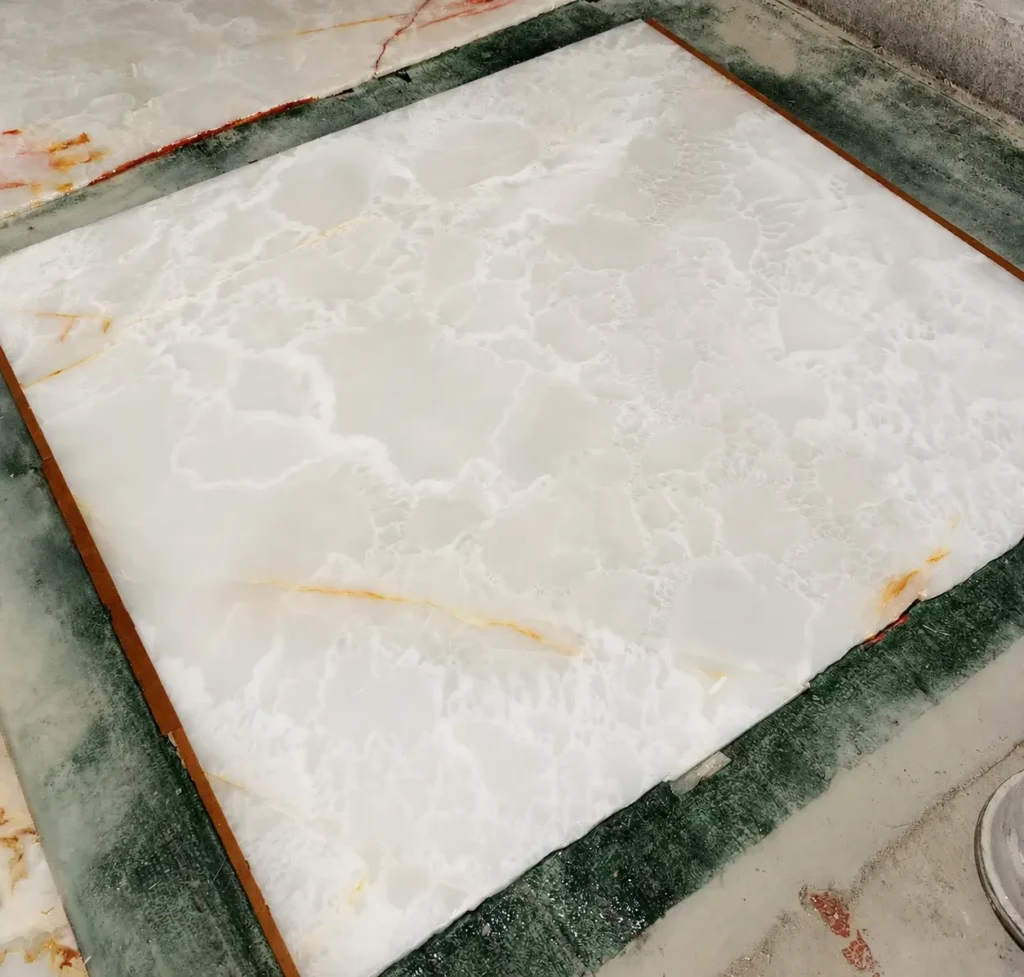
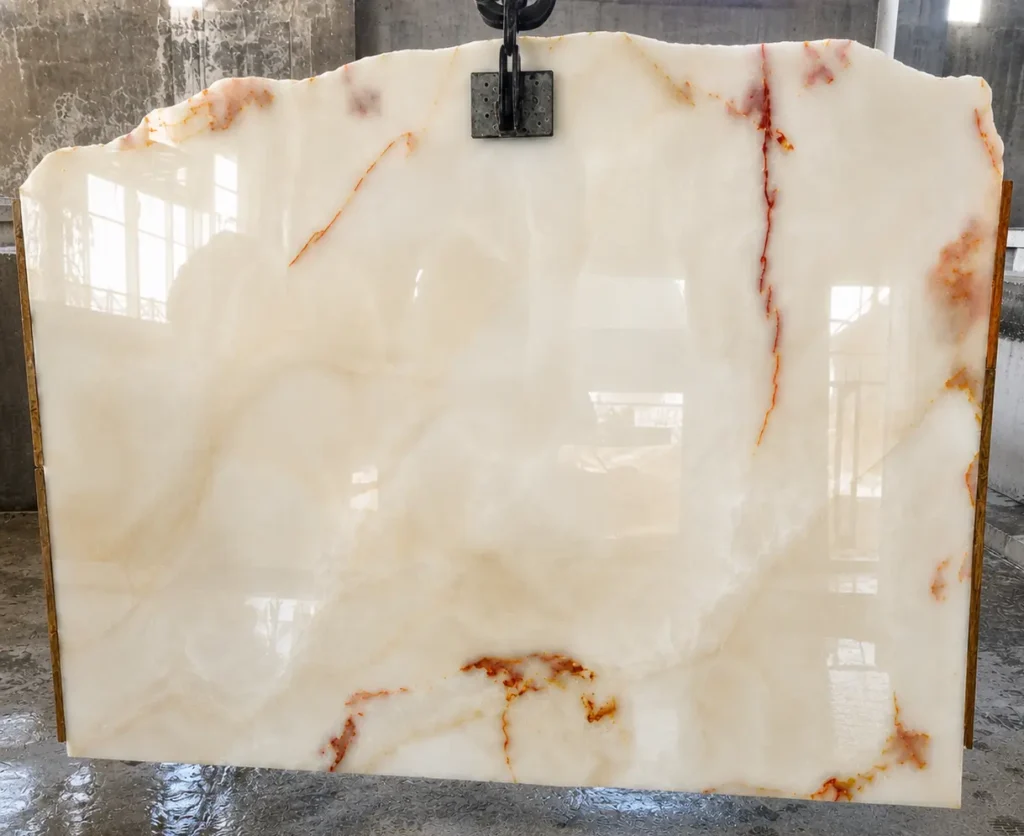
Afghan onyx is famous because of where it is found. The stone comes from specific regions in Afghanistan where the mineral conditions created large deposits of high quality onyx. The white variety is the most popular because it has a clean background color with light veins, usually in shades of gold, honey, grey, or soft brown. This combination looks elegant in almost any setting, from classic to modern.
One important thing to understand is that onyx is different from marble and granite in a key way. Marble and granite are mostly opaque, meaning light does not pass through them. Onyx, especially the white type, allows light to pass through when cut into thin slabs. This is why designers use LED lights or other light sources behind onyx panels to create a glowing wall or floor feature. Very few natural stones can do this, which makes onyx a special material in the stone industry.
Afghan White Onyx also has a softer surface compared to granite. It is more sensitive to scratches, acids, and heavy impact. Because of this, it needs proper sealing and careful handling in high traffic areas. Many buyers choose to use it in low traffic decorative spaces like accent walls, bar counters, and bathroom vanities rather than heavy use kitchen counters, though some clients do still choose it for kitchens because of its beauty.
Where Afghan White Onyx Comes From
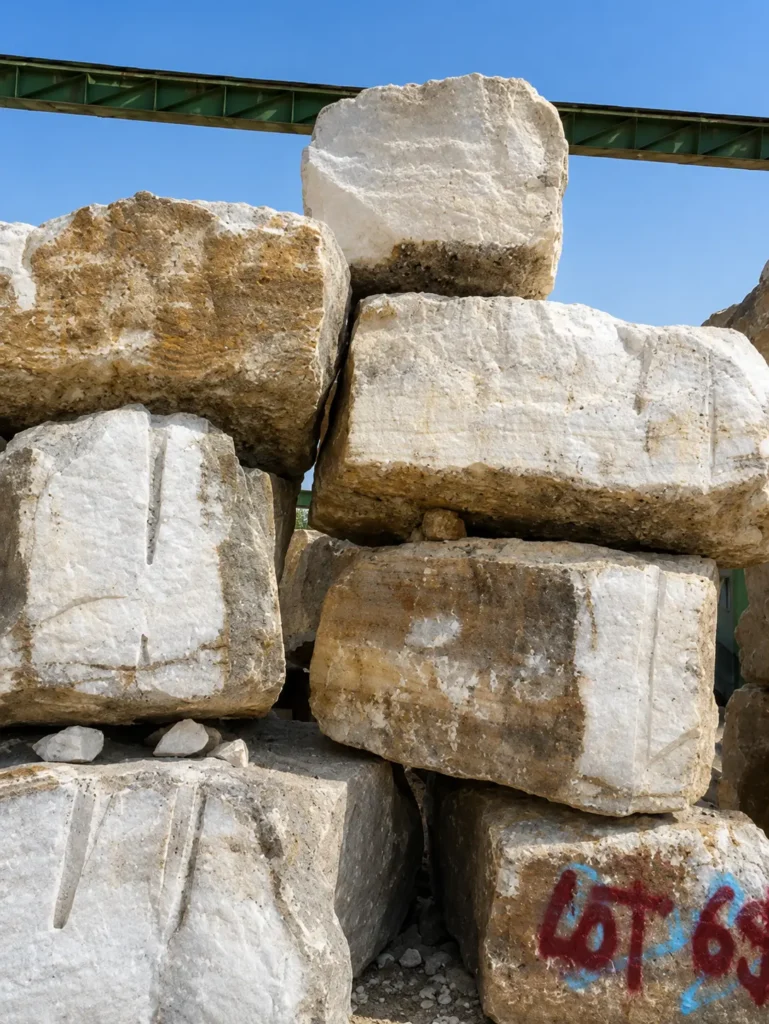
The onyx used in our slabs is quarried in Afghanistan, a country with a long history of stone mining. Afghanistan has mountains rich in minerals, and its onyx deposits are considered some of the best in the world for color, clarity, and vein pattern. The stone is extracted in blocks from the ground using specialized quarrying equipment, then transported for processing.
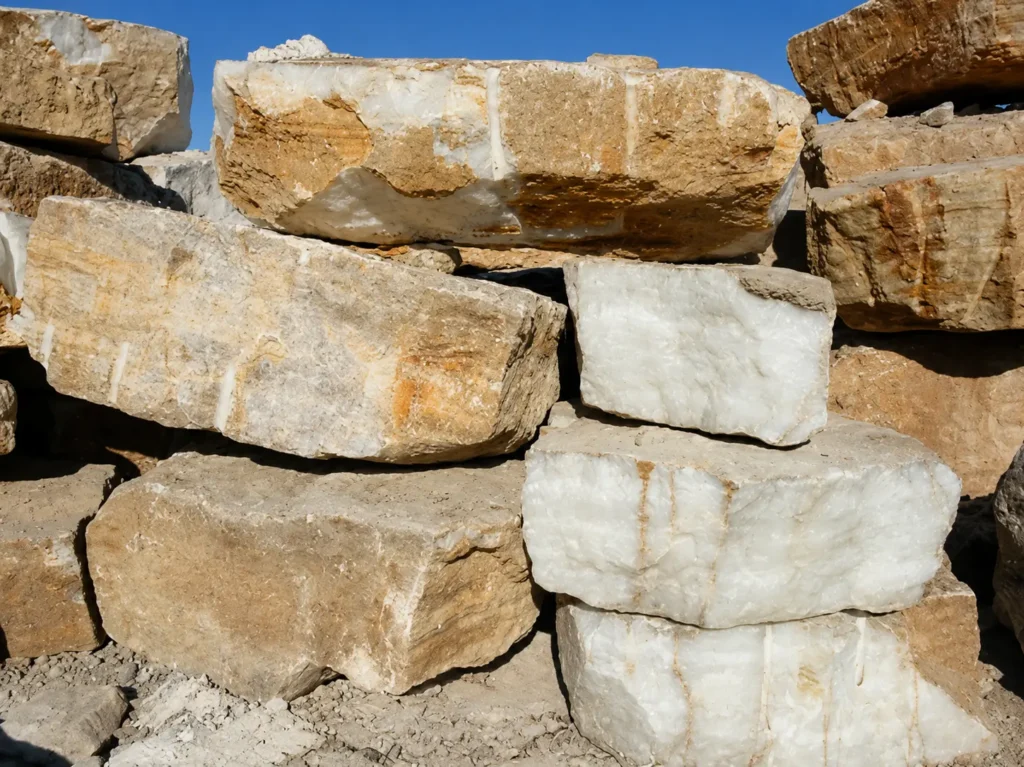
Pakistan Marble & Onyx sources these raw blocks and brings them into our processing facilities. Pakistan has developed a strong marble and onyx processing industry over many years, with skilled workers and modern gang saws, block cutters, and polishing lines. This means the rough Afghan onyx blocks are turned into finished, polished slabs ready for construction and design projects.
This connection between quarries and Pakistani processing plants is important for buyers to understand. It explains why the stone is often called Afghan onyx even though the final cutting and polishing may happen in Pakistan. The origin of the raw material is Afghanistan, but the finishing work, quality control, and export logistics happen through companies like ours based in Pakistan.
How Afghan White Onyx Slabs Are Made
Making a finished onyx slab is a careful process that involves several steps.
Quarrying the block: Workers extract large blocks of raw onyx from the mountain using diamond wire saws and other cutting tools. These blocks can weigh several tons each.
Transporting the block: The raw blocks are transported from the quarry site to processing facilities. This step requires careful handling since onyx can crack more easily than harder stones like granite.
Cutting into slabs: At the factory, the block is cut into slabs using large gang saws or block cutting machines. The thickness is usually chosen based on the final use, with common thicknesses being 2 centimeters (cm) and 3 cm for most projects.
Resin treatment: Because onyx can have natural fissures or small cracks, many slabs go through a resin treatment process. A clear resin fills these tiny gaps and strengthens the slab, making it more stable for cutting, shipping, and installation.
Polishing: The slab surface is polished using polishing machines with abrasive pads of increasing fineness. This step gives the slab its shiny, glass like finish and brings out the natural colors and veining.
Book matching: Many onyx slabs are cut from the same block and arranged side by side so the veins create a mirror image pattern. This is called book matching, and it is very popular for feature walls because it creates a symmetrical, dramatic look.
Quality control: Each slab is checked for color consistency, vein pattern, thickness, and structural integrity before it is approved for sale.
Packing and export: Finished slabs are packed in wooden crates with foam or other protective material to prevent damage during shipping. They are then loaded into containers and shipped by sea, air, or land depending on the buyer’s location and timeline.
Why Afghan White Onyx Is Popular Around the World
There are several clear reasons why designers, architects, and homeowners around the world request Afghan White Onyx for their projects.
Translucency: As mentioned earlier, this stone allows light to pass through when cut thin enough. This creates a glowing effect that no paint or artificial material can copy exactly.
Unique veining: Every slab has its own natural pattern. No two pieces look exactly the same, which gives each installation a one of a kind look.
Bright, clean color: The white background with gold or honey veins fits well with both modern minimal interiors and classic luxury interiors.
Status and luxury appeal: Onyx has long been associated with high end design. Five star hotels, luxury retail stores, and expensive homes often use onyx to create a strong impression on visitors.
Versatility: While it is a soft stone, it can still be used for many surfaces including walls, floors, tabletops, reception desks, bar counters, stair risers, and decorative panels.
Good supply from Afghanistan: Afghanistan has large deposits of onyx, meaning buyers can get consistent supply for bigger projects, unlike some rare stones that run out quickly.
Common Uses of Afghan White Onyx Slabs
Onyx slabs are used in many parts of a building. Below are the most common applications we see from our clients.
Backlit feature walls: This is the single most popular use. A wall made of onyx panels with LED lighting behind it becomes a glowing centerpiece in hotels, restaurants, offices, and homes.
Reception desks and counters: Hotels and corporate offices often choose onyx for the front desk because it gives a strong first impression to visitors.
Bar tops: Restaurants and lounges use onyx bar tops, sometimes lit from below, to create a warm and elegant atmosphere.
Bathroom vanities and countertops: Many homeowners choose onyx for bathroom counters and even shower walls, since bathrooms usually see lighter daily use compared to kitchens.
Flooring: Onyx flooring is less common because of the stone’s softness, but it is still used in low traffic decorative areas, entryways, and luxury spaces where appearance matters more than heavy durability.
Kitchen countertops: Some clients choose onyx for kitchen islands or accent counters, understanding that it needs careful sealing and gentle use to avoid staining or scratching.
Decorative objects: Smaller pieces of onyx are used for sinks, vases, lamp bases, and other decorative items, often also lit from within.
Stair treads and risers: In luxury homes and hotels, onyx staircases with lighting built into the risers create a dramatic visual effect.
Wall cladding: Full wall cladding projects use large onyx panels to cover interior walls in lobbies, spas, and other feature spaces.
Colors and Patterns Found in Afghan White Onyx
While the base is white, Afghan White Onyx slabs can show a range of natural patterns depending on the specific block they come from. Common variations include:
Golden veined white onyx: White background with warm gold or honey colored veins running through it.
Grey veined white onyx: White background with soft grey lines, giving a more neutral, modern look.
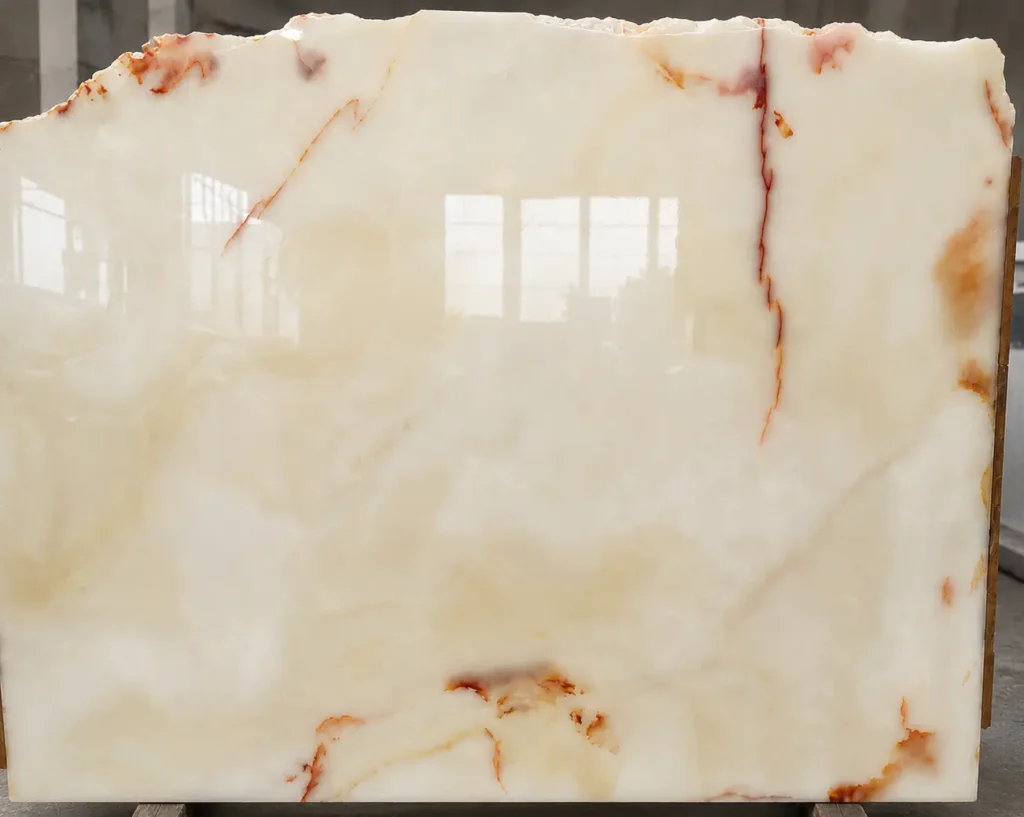
Cream and beige toned onyx: Slightly warmer white tones mixed with cream or light brown veining.
Highly translucent onyx: Slabs with fewer veins and more consistent light passing through, often chosen specifically for backlit projects.
Heavy veined onyx: Slabs with dramatic, thick veining, chosen by clients who want a bold, eye catching pattern rather than a subtle one.
Since onyx is a natural stone, no supplier can guarantee an exact match to a photo every time. This is why at Pakistan Marble & Onyx we recommend clients review actual slab photos or request samples before finalizing large orders, especially for projects where color matching across many slabs is important.
Thickness, Sizes, and Finishes Available
Slabs are typically available in the following specifications, though exact sizes can vary by block and by order.
Common thicknesses: 2 cm and 3 cm are the most requested. Thinner slabs around 1.2 cm are sometimes used for backlit panels where maximum light transmission is needed, though these thinner pieces usually require a backing material for strength.
Slab sizes: Standard slab sizes often range between 200 to 300 cm in length and 140 to 180 cm in width, but this depends on the size of the original block.
Finishes:
Polished finish, which is the most common and gives a glossy, reflective surface that shows the veining clearly.
Honed finish, which gives a smooth but matte surface, popular for flooring where less shine is preferred.
Backlit ready panels, which are slabs specifically prepared and sometimes reinforced for use with lighting systems.
Buyers can request custom sizes and thicknesses for specific projects, and our team works with clients to match the exact specifications needed for their architectural plans.
How Slabs Are Priced
Pricing for slabs depends on several factors, and it is normal for prices to vary between suppliers and even between different blocks from the same supplier. Below are the main factors that affect price.
Quality and clarity: Slabs with fewer natural fissures, more even color, and better translucency usually cost more.
Vein pattern: Unique or dramatic vein patterns can increase price, especially for book matched pairs used in feature walls.
Thickness: Thicker slabs generally cost more per square foot because more raw material is used.
Block size: Larger blocks that produce bigger slabs with fewer joints are often priced higher.
Order volume: Bulk orders for large projects often come with better pricing per square foot compared to small individual slab purchases.
Shipping and packing: Since onyx requires careful crating and protection during transport, freight costs are part of the total price, especially for international buyers.
We recommend that buyers request a formal quote based on their exact project needs, including square footage, thickness, and finish, since general price ranges online can be misleading without knowing the specific quality grade needed.
Why Choose Pakistan Marble & Onyx as Your Supplier
There are many onyx suppliers around the world, so it is fair for buyers to ask why they should work with Pakistan Marble & Onyx specifically. Here are the main reasons our clients choose us.
Direct access to raw material: We work closely with sources, giving us reliable access to good quality blocks rather than depending only on secondhand suppliers.
Modern processing facilities: Our cutting and polishing equipment allows us to produce slabs with consistent thickness, smooth finishes, and accurate sizing.
Experience in export: We have shipped onyx and marble products to clients in many countries, so we understand international packing standards, documentation, and shipping logistics.
Quality control: Every slab goes through inspection before it leaves our facility, checking for cracks, color consistency, and finish quality.
Custom orders: We work with architects and designers to provide custom cut sizes, book matched sets, and specific finishes based on project drawings.
Clear communication: Our team responds to buyer questions about sizing, pricing, lead times, and shipping so clients know what to expect at every stage of the order.
Competitive pricing: Because we are close to the source of the raw material and handle our own processing, we can offer fair pricing compared to suppliers who buy through multiple middlemen.
How to Order Slabs From Pakistan Marble & Onyx
Ordering onyx slabs for an international project can feel complicated if you have not done it before. Here is a simple outline of how the process usually works with our company.
Step one, inquiry: The buyer contacts us with details about their project, including the amount of material needed, preferred thickness, and any specific color or vein preferences.
Step two, samples and photos: We share photos of available slabs or send physical samples so the buyer can confirm the color and pattern before placing a full order.
Step three, quotation: Based on the buyer’s requirements, we provide a detailed quote including price per square foot, thickness options, and estimated shipping costs.
Step four, order confirmation: Once the buyer approves the quote, we confirm the order and begin preparing the slabs, including any custom cutting or book matching requested.
Step five, quality check and packing: Before shipping, each slab is inspected again and carefully packed in crates designed to protect the stone during transport.
Step six, shipping and delivery: We arrange shipping by sea freight for most international orders, though air freight is available for smaller or urgent orders. We provide tracking information and documentation needed for customs clearance.
Step seven, after sales support: Our team remains available to answer any questions about installation, care, and maintenance after the slabs arrive.
How to Care for Afghan White Onyx Slabs
Since onyx is a softer, more sensitive stone compared to granite, proper care extends its life and keeps it looking beautiful for many years.
Sealing: Onyx should be sealed with a good quality stone sealer, and this should be repeated periodically based on how the surface is used.
Avoid acidic substances: Lemon juice, vinegar, and other acidic liquids can etch the surface, so spills should be cleaned quickly, especially on countertops.
Use gentle cleaners: Harsh chemical cleaners should be avoided. A mild soap and water solution or a cleaner made specifically for natural stone is best.
Avoid heavy impact: Because onyx is softer than granite, dropping heavy or sharp objects on it can cause chips or cracks.
Use coasters and trivets: For countertops and bar tops, using coasters under glasses and trivets under hot items helps protect the surface from heat and moisture rings.
Professional maintenance: For large installations like feature walls or flooring, periodic professional cleaning and resealing keeps the stone in its best condition.
With proper care, Afghan White Onyx can remain a beautiful part of a building for decades, which is part of why it continues to be chosen for long term architectural and design projects.
Countries We Export To
Pakistan Marble & Onyx exports Afghan White Onyx slabs to clients across many regions, including the Middle East, Europe, North America, and parts of Asia. We work with importers, stone distributors, interior design firms, and construction companies who need reliable supply for ongoing or large scale projects. Our export experience means we understand the paperwork, shipping timelines, and packing standards required to move heavy, fragile stone slabs safely across long distances.
Whether a client needs a single container for a boutique hotel project or ongoing shipments for a distribution business, our team can scale the order size and shipping arrangement to fit the buyer’s needs.
Frequently Asked Questions About Afghan White Onyx Slabs
What is Afghan White Onyx used for?
Afghan White Onyx is mainly used for backlit feature walls, countertops, bar tops, reception desks, bathroom vanities, and decorative wall cladding. Its translucency makes it especially popular for lit features in hotels, restaurants, and luxury homes.
Why is Afghan White Onyx more expensive than marble?
Onyx generally costs more than marble because it is rarer, requires more careful handling during quarrying and processing, and often needs resin treatment and reinforcement due to its natural fissures. Its translucency and unique patterns also add to its value.
Is Afghan White Onyx durable enough for kitchen countertops?
Onyx is softer than granite and more sensitive to scratches and acidic substances. It can be used for kitchen countertops, but it requires proper sealing and careful daily use to avoid damage over time. Many clients prefer it for lower traffic areas like bathrooms or accent counters instead.
How thick are Afghan White Onyx slabs?
The most common thicknesses are 2 cm and 3 cm. Thinner slabs around 1.2 cm are sometimes used for backlit panels but usually need a backing material for extra strength.
Can Afghan White Onyx be backlit?
Yes, this is one of its most popular features. Because the stone allows light to pass through, it is commonly installed with LED lighting behind it to create a glowing wall, floor, or counter feature.
Where does Afghan White Onyx come from?
The raw onyx blocks are quarried in Afghanistan, in mountain regions known for producing high quality onyx. Companies like Pakistan Marble & Onyx source these blocks and process them into finished slabs for export.
How do I know if an onyx slab is good quality?
Look for consistent color, clear translucency when held up to light, minimal visible fissures, and a smooth polished finish. Requesting photos or samples before ordering helps confirm quality before a large purchase.
Does Pakistan Marble & Onyx ship internationally?
Yes, we export Afghan White Onyx slabs to clients around the world, including the Middle East, Europe, North America, and Asia, with proper packing and shipping arrangements for safe delivery.
What is the difference between Afghan onyx and other onyx sources?
Afghan onyx is known for its bright white background color, clear translucency, and attractive natural veining, which many designers consider superior to onyx from some other regions. Supply from Afghanistan is also relatively steady, supporting larger project needs.
Can I get custom sizes or book matched slabs?
Yes, we work with architects and designers to provide custom cutting and book matched slab pairs, which are ideal for symmetrical feature walls where matching veins on both sides create a mirror effect.
Final Thoughts on Afghan White Onyx Slabs
Afghan White Onyx remains one of the most requested natural stones for luxury interior projects around the world. Its glowing translucency, unique veining, and bright white color give designers a material that stands out from ordinary marble and granite. From hotel lobbies to private homes, this stone continues to be chosen by people who want their space to feel special and memorable.
At Pakistan Marble & Onyx, we are committed to providing high quality Afghan White Onyx slabs, processed carefully and shipped reliably to clients around the world. Whether you need a single feature wall or a large volume order for an ongoing project, our team is ready to help you find the right slabs, at the right price, delivered on time.
If you are planning a project with Afghan White Onyx, reach out to our team with your requirements. We will guide you through sample selection, pricing, and shipping so your project moves forward smoothly from start to finish.