The Travertine Tray: A Small Slab of Quarry, Shaped for Everyday Use
What travertine actually is, how it compares to marble and onyx, why it makes such a good tray, and how to keep one looking right for years.
Hand Finished
What Is Travertine, Exactly
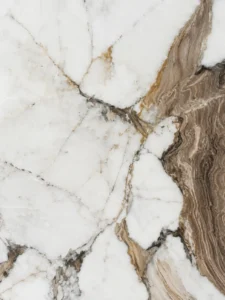
Travertine is a form of limestone that builds up in layers around mineral hot springs, which is why a finished piece often shows small pits, soft bands, and warm cream to honey tones running through it. Those pits are not a flaw. They are the fingerprint of how the stone actually formed, and they are part of why every travertine tray reads as a natural object rather than a manufactured one.
The process behind that pitted surface began thousands of years ago, as mineral rich water moved through the ground and slowly deposited calcium carbonate in thin, repeating layers. Trapped air and organic material left tiny voids in the stone as it hardened, and those voids are the small holes you can see and feel on a travertine surface today. Quarry workers cut the resulting rock into blocks, and each block carries its own private record of how the water moved and settled over time.
Because the stone forms in horizontal layers, a block of travertine can be cut and finished in a way that keeps its banding visible, so a tray cut from one block will always carry a slightly different pattern than a tray cut from the next. If you want a piece that looks the same as a photo down to the millimeter, travertine will frustrate you. If you want a piece that looks like it belongs to a specific block of earth, that is exactly what it offers.
“A travertine tray does not try to look like anything else. It looks like the ground it came from.”
On a dresser, entryway console, or bathroom counter, that quality does a lot of quiet work. It gives a small, useful object the same presence as a piece of stone sculpture, without asking for a pedestal. And because travertine has been quarried and used in architecture for thousands of years, from Roman aqueducts to modern lobby floors, a small tray cut from the same stone carries a bit of that history into a much more ordinary daily routine, sitting next to a set of keys or a stack of rings.
Travertine vs Marble vs Onyx
Pak Onyx works in three related but distinct materials, and it helps to know how they differ before you choose a piece. All three are natural stones quarried and finished by hand, but each behaves and looks a little differently on a shelf or countertop.
| Stone | How It Forms | Typical Look | Best For |
|---|---|---|---|
| Travertine | Layered deposits from mineral springs | Warm, pitted, banded in cream and honey tones | Trays, tiles, slabs, casual everyday pieces |
| Marble | Limestone reshaped by heat and pressure | Smooth surface with sweeping crystalline veins | Serving trays, vanities, formal surfaces |
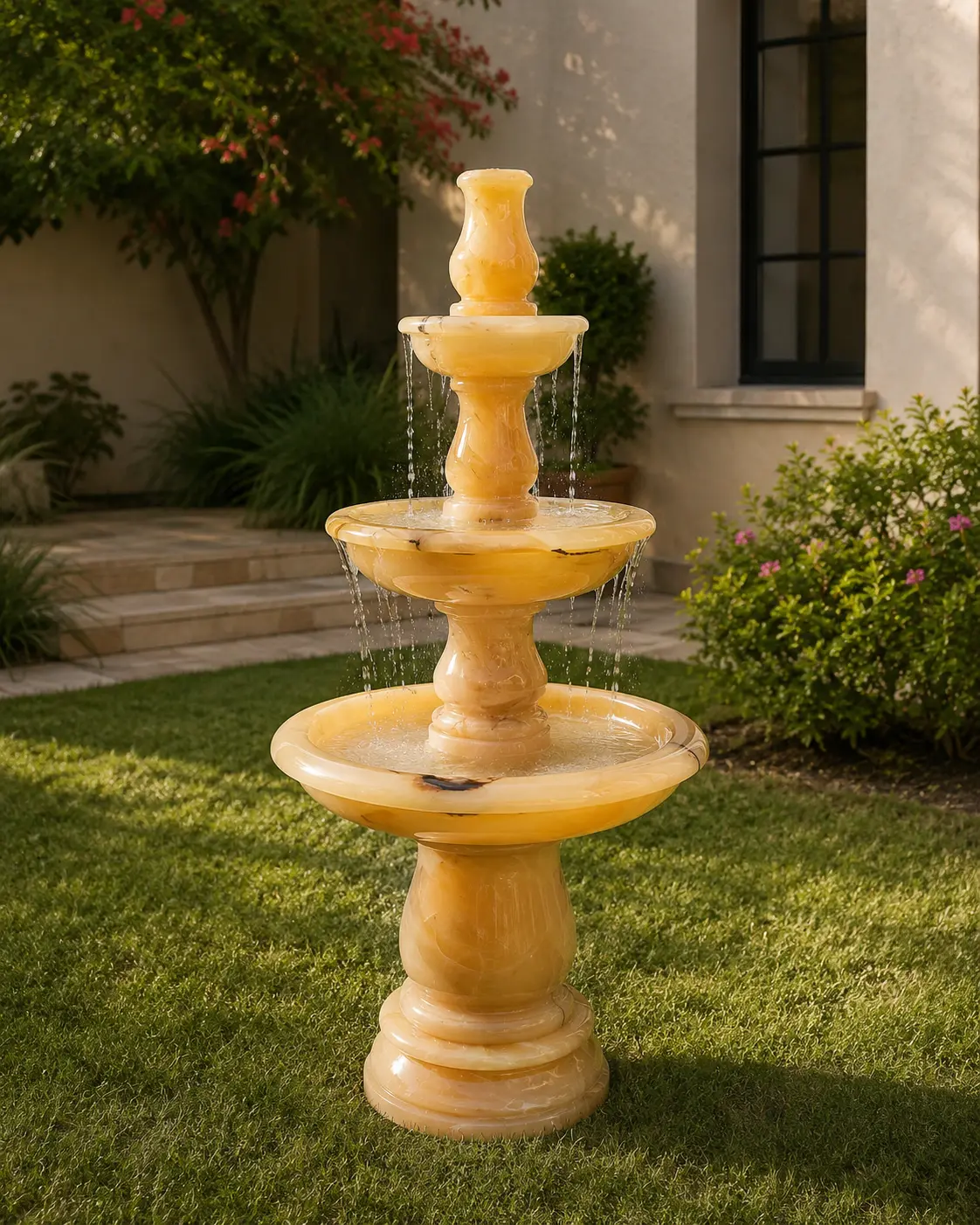
| Onyx | Mineral deposits, often translucent bands | Rich color, can glow when lit from behind | Sinks, fountains, statement lighting pieces |
None of the three is objectively better than the others. A travertine tray suits a relaxed, textured interior where you want a piece that looks handled and lived with. A marble piece leans more formal and polished. Onyx tends to be the showpiece, chosen for a sink or fountain where light and color can do the talking. Many of our customers end up with a mix, using travertine for the small daily objects and saving onyx for one larger centerpiece.
Styling a Travertine Tray, Room by Room
A tray this size does not need a dedicated spot in your home. It just needs a flat surface and a reason to catch what would otherwise end up scattered across a counter. Here is how the two pieces in this guide tend to get used.
Bedroom Nightstand or Dresser
The flower shaped jewelry tray works well beside a lamp, holding rings, a watch, and a set of keys so none of it ends up lost in a drawer. Its scalloped edge also reads well against a plain nightstand, giving an otherwise flat surface a bit of shape.
Bathroom Counter or Vanity
The rectangular travertine tray earns its keep here, corralling hand soap, a rolled towel, or a small diffuser so water rings and toothpaste do not land directly on stone or laminate countertops. Its raised rim keeps smaller items from rolling into the sink.
Entryway Console
Set near a front door, either tray becomes a landing spot for keys, sunglasses, and loose change, the kind of small catchall that quietly prevents daily clutter from spreading across the rest of the house.
Coffee Table or Bar Cart
The longer rectangular tray also holds its own on a coffee table, grouping candles, coasters, or a small stack of books, or on a bar cart, keeping bottles and glassware contained on one defined surface.
Home Office Desk
A smaller tray on a desk can hold paperclips, a charging cable, or a pair of reading glasses, giving a work surface one deliberate, weighted object among the digital clutter of a laptop and monitor.
Two Travertine Trays Worth Knowing
Both pieces below are carved from solid travertine and finished by hand, so the exact veining you receive will vary slightly from the photos. That variation is expected, and it is part of what you are buying.
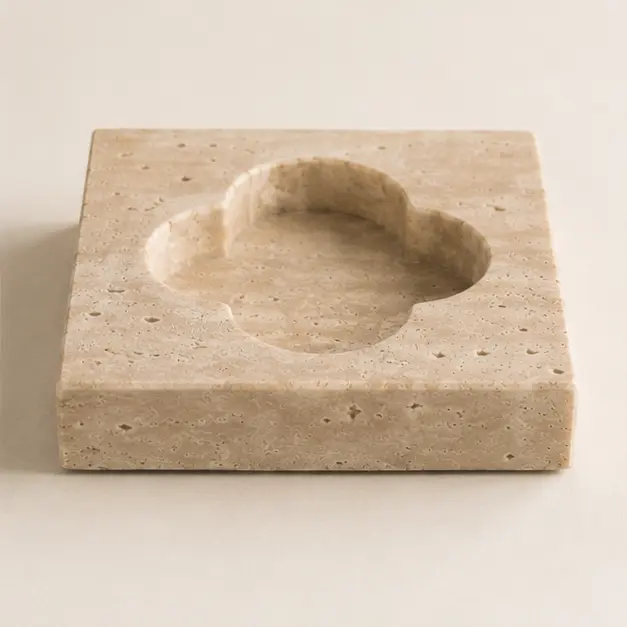 Jewelry Tray
Travertine Jewelry and Accessory Tray
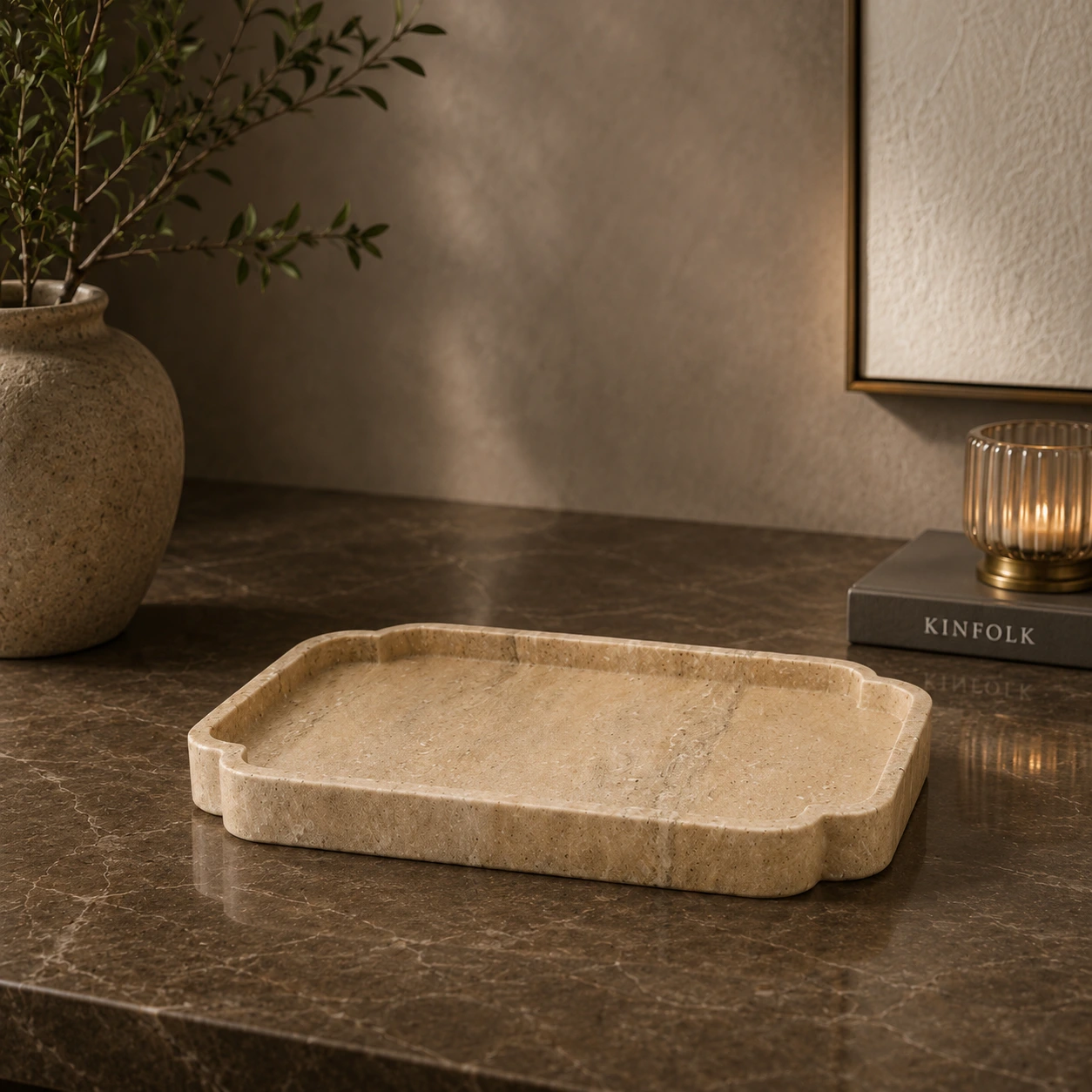
A scalloped, flower shaped catchall with a deep, single carved well. Rings, studs, and small change sit low in the stone instead of sliding off a flat surface, which makes it a natural fit for a nightstand or bathroom counter.
- MaterialSolid Travertine
- FinishHand Finished, Matte
- UseJewelry, Keys, Small Items
Vanity Tray
Travertine Marble Vanity and Serving Tray
A longer, rectangular tray with a raised rim on all sides, built to hold perfume bottles, soap, or a small plant grouping without anything rolling off the edge. The scale works equally well on a vanity, a coffee table, or a kitchen counter.
- MaterialSolid Travertine Marble
- FinishHand Finished, Polished Rim
- UseVanity, Bar, Coffee Table
How a Pak Onyx Tray Gets Made
Every tray starts as a raw block pulled from a quarry in Pakistan, a region with a long tradition of stone cutting and a wide range of travertine, marble, and onyx deposits within reach of local workshops. Once a block reaches the workshop, it is inspected for the direction of its natural banding, since cutting with or against that grain changes how the finished veining will read.
From there, a rough shape is cut using diamond blade saws, and the interior well of the tray is carved out in stages rather than in a single pass, which reduces the risk of chipping the porous stone. The piece then moves to hand finishing, where a craftsperson smooths the interior and edges, checks the rim for consistent height, and decides how much of the stone’s natural pitting to leave open versus lightly filled.
The last stages are cleaning, a light polish or matte finish depending on the piece, and a protective sealant that helps the tray resist everyday spills without changing its natural color. Because so much of this work is done by hand rather than by a fully automated production line, output is slower, but it also means small imperfections and natural stone character are preserved instead of sanded into uniformity.
This same process, sourcing, cutting, hand finishing, and sealing, is used across the rest of the Pak Onyx collection, from slabs and tiles to sinks, vanities, and fountains, so a tray purchased today shares its origin with the larger stone pieces in a home.
Caring for a Travertine Tray
Travertine is soft compared to granite or quartz, and it is porous, so it responds best to gentle, consistent care rather than heavy scrubbing. None of the steps below are complicated, they just need to become habit.
Wipe, Do Not Soak
Use a soft cloth with warm water and a drop of mild soap. Skip anything abrasive, and dry the surface right after cleaning it so water does not sit in the stone’s natural pores.
Keep Acids Away
Lemon juice, vinegar, and most glass cleaners will etch travertine on contact, leaving a dull mark that will not wipe away. Read labels before you reach for a spray bottle near the tray.
Reseal Once a Year
A yearly coat of a breathable stone sealer keeps the naturally porous surface more resistant to oil, makeup, and everyday stains, without trapping moisture underneath.
Lift, Do Not Drag
Travertine is heavy but can chip at the edges. Pick the tray up when moving it rather than sliding it across a counter or shelf.
Blot Spills Right Away
If perfume, makeup, or colored liquid spills on the tray, blot it with a dry cloth immediately instead of wiping, which can spread the stain into the stone’s pores.
Keep It Out of Direct Sun
Prolonged direct sunlight can gradually shift the tone of natural stone over years. A spot with indirect light will keep the color closer to how it looked on delivery.
Choosing the Right Tray for Your Space
With natural stone, a few extra questions before you buy will save you a return later. Here is what to think through.
Measure the Surface First
Travertine is heavy and not meant to be moved often, so measure the exact spot you have in mind, whether that is a nightstand, a vanity ledge, or a section of console table, before choosing between the flower shaped tray and the longer rectangular one.
Match the Finish to the Room
A matte finish, like the one on the jewelry tray, tends to suit softer, more casual spaces such as a bedroom. A polished rim, like the one on the vanity tray, picks up more light and reads slightly more formal, which works well in a bathroom or entryway with reflective surfaces nearby.
Expect Natural Variation
Because each tray is cut from a different section of a travertine block, the exact pattern of pits and bands you receive will differ from the product photos in small ways. This is standard for natural stone and is not considered a defect.
Think About What It Will Hold
A deep, single well tray like the jewelry piece suits small, loose items that would otherwise scatter. A flatter, wider tray with a raised rim suits objects with their own footprint, like bottles, candles, or a stack of items you want visually grouped rather than contained.
A Travertine Tray as a Gift
Natural stone pieces travel well as gifts because they do not depend on a specific taste in color or pattern the way textiles or printed decor often do. A warm, neutral travertine tray tends to suit a housewarming, a wedding registry, or a birthday for someone who already owns most of what they need and would rather receive something with weight and permanence than another small appliance.
The jewelry tray in particular works as a personal gift, since it is sized for a single dresser or nightstand and does not require the recipient to rearrange a room around it. The larger vanity tray suits a shared space, like a couple’s bathroom counter or a new apartment’s entryway, where it can be one of the first intentional objects in the home.
Frequently Asked Questions
A travertine tray is carved from a single block of travertine, a banded natural stone formed near mineral springs. Every tray keeps the pitting, veining, and tone shifts of the raw block, so no two trays look exactly alike.
Yes. Travertine is dense and heavy enough to sit still on a dresser or counter, and its cool matte surface is gentle on rings, watches, and other small daily items. Its neutral tone also pairs with most bedroom and bathroom palettes.
Wipe the tray with a soft, slightly damp cloth and mild soap, then dry it right away. Avoid vinegar, lemon, or other acidic cleaners since they etch travertine, and reseal the stone about once a year to keep it resistant to stains.
No. Both are natural stones, but travertine is a type of limestone formed from mineral spring deposits and typically has a more porous, layered surface, while marble forms under heat and pressure and shows sweeping crystalline veining.
Travertine can handle brief contact with water, which is why it works near a sink or bathtub, but it should not sit in standing water or freezing outdoor conditions for long periods, since moisture trapped in its pores can eventually cause flaking.
Price depends on the size of the block used, the shape carved from it, and the finishing work involved, so a small jewelry tray typically costs less than a larger serving or vanity tray. Exact pricing is listed on each product page.
Pak Onyx sources travertine and onyx from quarries in Pakistan, then finishes each piece by hand, so the trays, slabs, sinks, and fountains in the collection carry the same regional stone character throughout.
More From the Pak Onyx Collection
A tray is often the smallest way into working with natural stone. If it fits your space, these are the pieces that go with it.